George Anjay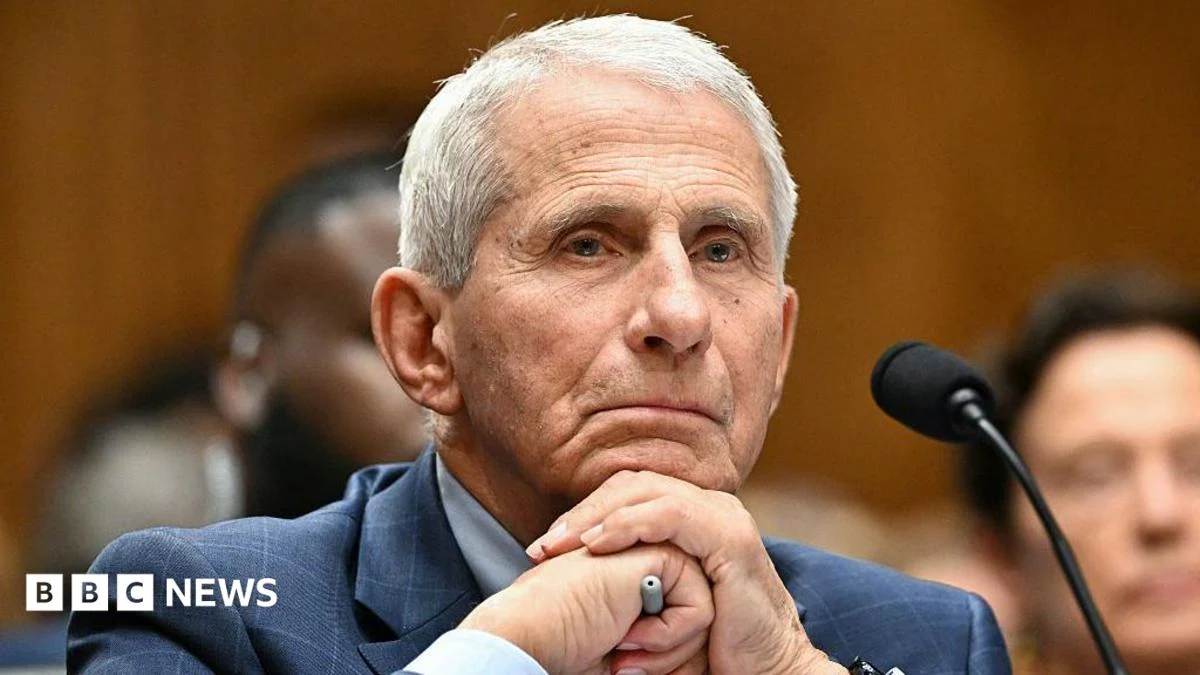
Former top US health official Dr. Anthony Fauci invoked his Fifth Amendment right against self-incrimination during a fiery US Senate hearing on Wednesday, refusing to answer questions regarding the origins of COVID-19. The 85-year-old former director of the National Institute of Allergy and Infectious Diseases (NIAID) cited concerns that his testimony would be used by Republicans to prosecute him for perjury, a charge he vehemently denies. This dramatic refusal cast a pall over the proceedings, escalating the already considerable tensions between Fauci and his Republican critics.
Fauci, a central figure in the US response to the pandemic, stated that he was acting on the advice of his attorneys. He explained his decision to the Senate Committee on Homeland Security, expressing his deep respect for the legislative branch while acknowledging the legal peril he perceived. "Contradicting himself under oath could be legally perilous for him," the original report noted, highlighting the gravity of the situation. Fauci has previously testified on multiple occasions regarding COVID-19 and its origins, always maintaining his innocence against accusations of concealing information or misleading the public. He has consistently described these allegations as "simply preposterous."
The Fifth Amendment, a cornerstone of American jurisprudence, protects individuals from being compelled to testify against themselves in criminal proceedings. This constitutional safeguard is designed to prevent coercion and ensure a fair legal process, preventing the government from unfairly shifting the burden of proof onto the accused. Invoking this amendment is not an admission of guilt but rather a strategic protection against potential legal ramifications.
Adding a layer of complexity to Fauci’s situation is a pre-emptive pardon granted by former President Joe Biden. This pardon shields him from federal prosecution for actions taken between 2014 and 2025. However, it does not extend to potential charges arising after this period, including any related to his testimony before the Senate committee, nor does it preclude state or local charges. This nuance means that while protected from certain federal indictments, Fauci remains theoretically vulnerable to other legal actions.
During the hearing, Fauci specifically targeted Senator Rand Paul, a vocal critic who has spearheaded the Republican push for accountability. Fauci accused Paul of an "obvious obsession" with prosecuting him, asserting that the senator’s sole motivation for calling him before the committee was to elicit a statement that would support his repeated public declarations that Fauci should end up "behind bars." Paul, a former eye surgeon before entering politics, continued his aggressive questioning despite Fauci’s refusal to answer, even suggesting that the committee would vote on a resolution to hold Fauci in contempt of Congress.
Republicans have focused their inquiries on the shifting public health guidance issued during the pandemic, arguing that these changes, as more information about the virus emerged, demonstrated a lack of transparency or competence. Fauci has consistently defended the evolving recommendations as a reflection of the scientific process and the rapid learning curve associated with a novel pathogen.
The tension reached a boiling point when one of Fauci’s lawyers, David Schertler, attempted to interject during Paul’s questioning. Schertler was subsequently removed from the hearing room, a move he later decried as "outrageous." Schertler characterized Paul’s actions as proof of the "baseless and vindictive nature of this proceeding and Rand Paul’s personal vendetta against Dr Fauci."
The political fallout from the hearing was immediate. Former President Donald Trump, a frequent antagonist of Fauci during the pandemic, took to social media to label the former health official "crazy." Trump reiterated his long-held belief that the virus originated in a Wuhan laboratory in China, accusing Fauci of "always trying to protect China." The debate over the origins of COVID-19 has been a deeply divisive issue in the United States, with Trump and public health officials, including Fauci, often clashing on the matter. Their disagreements extended to the handling of the pandemic and the promotion of unproven treatments.
Senator Paul, in particular, has been a prominent advocate for the lab-leak theory, suggesting that while Fauci publicly espoused a natural origin for the virus, he privately harbored doubts. This theory posits that COVID-19 escaped from the Wuhan Institute of Virology. The World Health Organization (WHO), in a 2025 report, identified the natural-origins theory—the zoonotic transmission from animals to humans—as the "best supported" explanation based on available evidence. However, the WHO also concluded that the determination of the virus’s origin remains "inconclusive" pending further information.
Adding to the controversy, Senator Paul recently released excerpts from Fauci’s pandemic-era diary. These entries revealed Fauci’s initial musings on fame and the nascent understanding of COVID-19’s origins. The diary entries suggest an early openness to both the natural origin and lab-leak theories. However, as the pandemic progressed, Fauci appears to have become more convinced of a natural origin. In one February 2020 entry, Fauci noted that scientists on a conference call did not have "total agreement" on the virus’s source. Later, he wrote that he was "almost certain that the virus evolved naturally from a species jump, even though… I keep an open mind about the possibility of a lab leak." He also emphasized that "just because two alternatives are possible that does not mean that they are equally probable."
Fauci’s refusal to testify deeply angered some Republicans, including Senator Ron Johnson, who declared his intention to pursue a subpoena to compel Fauci’s testimony. Following the hearing, the Republican attorney general of Florida announced an investigation into Fauci.
Conversely, several Democratic senators defended Fauci, with Senator Maggie Hassan describing the hearing as "designed to entrap" him. This suggests a stark partisan divide in the perception of Fauci’s role and the legitimacy of the Republican-led inquiry.
The intense scrutiny and animosity directed at Fauci are not new. He has faced death threats throughout and following the pandemic, a situation exacerbated when former President Trump removed his security protection last year. Despite the controversies, Fauci was widely regarded as a trusted voice within the US government during the initial, critical phases of the pandemic response, a period defined by rapid scientific discovery and urgent public health measures. It is worth noting that Fauci and Trump were not always adversaries; in 2021, Trump awarded Fauci a presidential commendation for his contributions to the US COVID-19 vaccine project, Operation Warp Speed. This historical context adds another layer to the complex and often contradictory public perception of Dr. Fauci.




 Nakalama John
 atisusanti
 Ramos Leo