
 Ramos Leo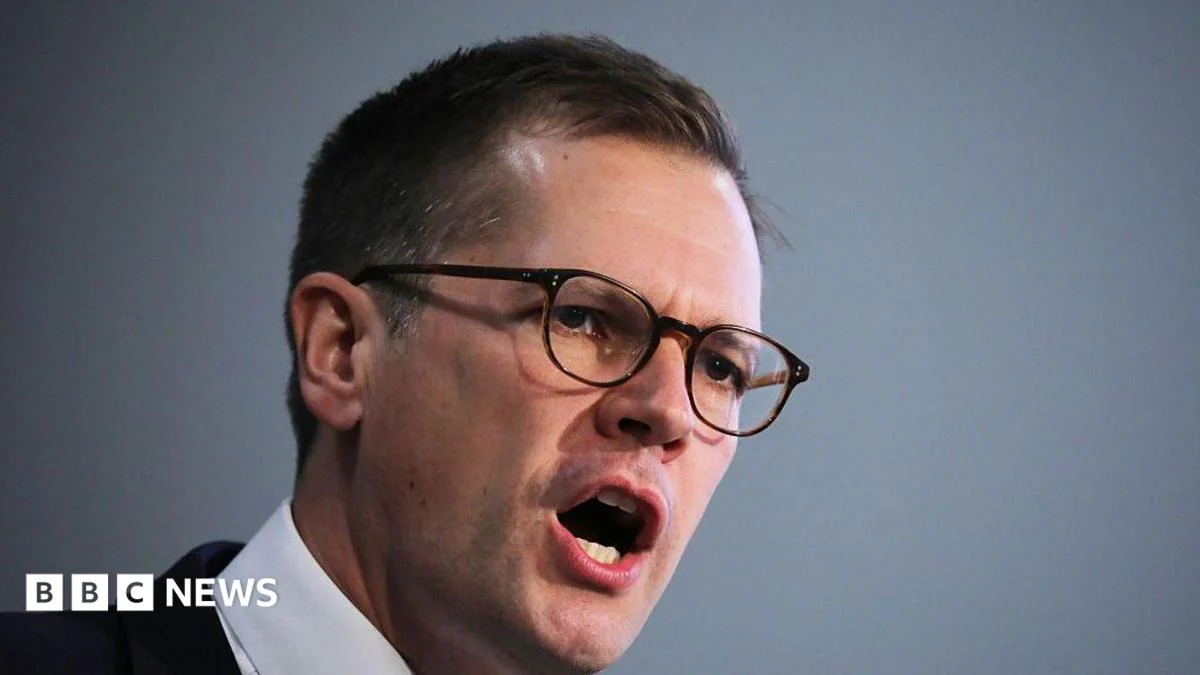
Prime Minister Burnham, while acknowledging the critical need for systemic reform in social care, has maintained a more cautious stance on funding. He has indicated a clear preference for first thoroughly examining existing departmental budgets and identifying potential efficiencies before contemplating the politically contentious route of tax rises. Despite this, he has deliberately refrained from ruling out tax increases altogether, conceding that "difficult decisions" inevitably lie ahead. The specifics of these funding options are anticipated to be detailed in a review led by Baroness Casey, which Burnham has expedited for publication next summer.
Jenrick, a former Conservative minister who defected to Reform UK, articulated his party’s firm position that any proposed social care reforms should be financed through stringent cuts elsewhere. Specifically, he advocated for a reduction in the foreign aid budget and a curtailment of benefit payments for migrants. His most pointed attack, however, was directed at what he termed a universal "death tax," a phrase loaded with historical and political resonance. "He won’t, he can’t, he will not rule out a death tax," Jenrick declared at a press conference, challenging Burnham to "rule out this tax, end the uncertainty, end the worry today."
The "death tax" moniker harks back to Burnham’s tenure as Health Secretary in Gordon Brown’s Labour government in 2009. At that time, proposals were floated for a compulsory levy on individuals, which could be deferred until after their death, effectively allowing the state to recoup care costs from their estates. This idea proved to be a political lightning rod, drawing fierce condemnation from the Conservative Party, who successfully branded it as a "death tax," contributing to its eventual abandonment. While Burnham has not mentioned reintroducing an adult social care levy in this precise form in his current capacity as Prime Minister, the historical precedent casts a long shadow over the present debate. Burnham himself, when addressing reporters on Wednesday, clarified that his 2009 proposals were specifically designed to prevent individuals from being forced to sell their homes to cover the exorbitant costs of long-term care, a concern that remains central to the social care crisis.
The new Prime Minister has made it clear that fixing the ailing social care system is among his administration’s highest priorities. Beyond expediting Baroness Casey’s review, he has stressed the need for it to comprehensively consider how a future "national care service" would be funded. His vision includes a system that becomes "highly integrated" with the National Health Service, aiming for a seamless provision of care. As an immediate measure, Burnham announced he would collaborate with Chancellor John Healey to examine ways to boost the pay and training of care workers, a sector he acknowledges as "scandalously underpaid." Crucially, he committed to funding these initial improvements from existing budgets, underscoring his desire to exhaust current resources before broaching the subject of new taxes for the wider systemic overhaul.
Jenrick, as Reform UK’s Treasury spokesman, elaborated on his party’s alternative funding strategy. He argued that significant sums could be liberated by tackling government "waste" and by drastically reining in the foreign aid budget. "I could not look the British taxpayer in the eye and impose a tax – another tax – before I had stopped sending taxpayers’ money to rich countries overseas," he asserted, framing his party’s approach as fiscally responsible and prioritizing domestic needs. Furthermore, Jenrick contended that a Reform government would address the chronic staffing shortages in social care by ceasing the issuance of visas for overseas workers, instead focusing on training and employing more British citizens, thereby redirecting funds and creating domestic job opportunities.
The Conservative Party, now in opposition, has echoed Reform UK’s call for fiscal prudence, urging Prime Minister Burnham to rule out both tax rises and further borrowing to fund social care. Tory leader Kemi Badenoch penned a letter to Burnham earlier this week, emphasizing that "any solution to the issues around social care must also be fair to those who have made provisions and saved up over the course of their lives." This statement reflects a core Conservative principle of protecting personal savings and rewarding individual responsibility, setting the stage for a potential ideological clash over the burden of social care costs.
Jenrick’s impassioned speech came just a day after Prime Minister Burnham initiated efforts to build cross-party consensus on social care reform. Burnham held discussions with Liberal Democrat leader Sir Ed Davey and Shadow Health Secretary Stuart Andrew, aiming to secure broad political backing for any future changes. Notably, Conservative leader Kemi Badenoch was unavailable for these initial talks. Both Reform UK and the Green Party were conspicuously absent from the invitation list, a snub that prompted expressions of disappointment from both. Jenrick, however, claimed he was "not surprised" that Reform leader Nigel Farage had not been asked to attend, asserting that "Andy Burnham knows that Nigel will never go along with the betrayal of people who’ve paid in all their lives."
Despite Reform UK not having a dedicated health spokesperson, Jenrick vigorously defended his party’s commitment to health and social care. "We are absolutely at the coalface of this, trying to do our utmost to support people in difficult times. Don’t tell us we don’t care about this issue. We really do," he insisted, countering any suggestion that Reform’s focus lay elsewhere. This robust defense underscores the increasing importance of social care as a frontline political issue, demanding attention from all parties.
Adult social care, which encompasses state support to help individuals live more independently, has proven to be an intractable policy challenge for successive administrations. Unlike the NHS, which is free at the point of use, social care is not universally free. In England and Northern Ireland, individuals with savings or assets exceeding £23,250 are generally not entitled to financial assistance with care costs from their local council, leaving many facing substantial bills that can rapidly deplete lifelong savings. Different eligibility rules apply in Wales and Scotland, reflecting the devolved nature of health and social care policy across the UK. The complexity arises from the diverse needs of the population, the escalating costs associated with an aging demographic, and the fundamental philosophical question of who should bear the financial responsibility for long-term care – the individual, the family, or the state. Burnham’s push for a "highly integrated" national care service aims to address the current fragmentation and provide a more equitable and comprehensive system, but the funding mechanism remains the most significant hurdle. The political rhetoric surrounding a "death tax" highlights the acute sensitivity of this issue and the electoral risks associated with any proposals perceived as unfair or burdensome to the elderly and their families. The upcoming Casey review, therefore, carries immense weight, as its recommendations on funding will not only shape the future of social care but also test the political resolve and ingenuity of the new government.


 George Anjay
 Nakalama John
 atisusanti
 Roy Suryo
 Nana Banana