
 Nakalama John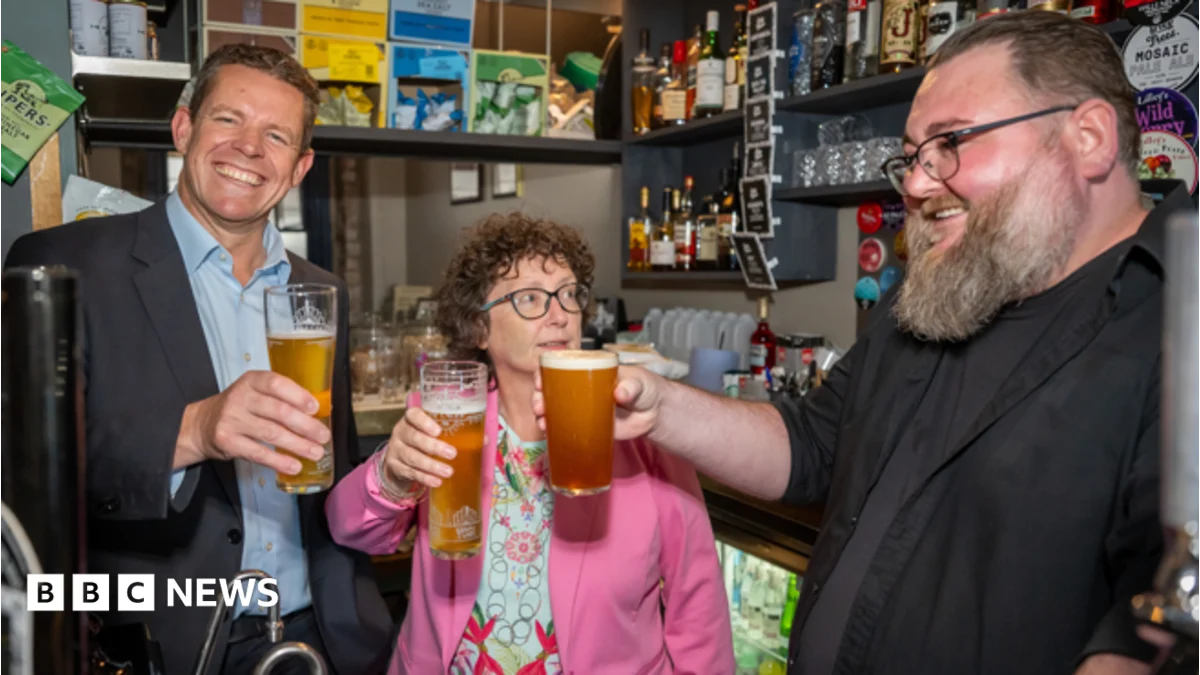
David Chapman, the discerning director of UK Hospitality Cymru, eloquently articulated the current predicament faced by the sector, describing the challenge of running a business as akin to "plate spinning when you’re riding an exercise bike." This vivid analogy underscores the relentless and precarious nature of navigating the contemporary economic landscape. Chapman elaborated on the multi-faceted financial burdens, stating, "You have massive amounts of taxation coming from all areas. We have a VAT problem besides business rates. We also have high inflation in the industry over the last few years. Energy costs have been high. Labour costs have gone up incredibly, really, with the National Insurance changes."
The intricate web of taxation represents a primary concern for the industry. While business rates are a devolved matter, allowing the Welsh Government to implement this cut, the overarching structure of VAT remains under the purview of the UK Government. The persistent 20% VAT rate, particularly in comparison to lower rates in some European competitors, places Welsh hospitality businesses at a competitive disadvantage, eroding profit margins that are already thin. Coupled with the local burden of business rates, these taxes cumulatively constrain investment and operational flexibility.
Inflation, a pervasive economic force over recent years, has disproportionately impacted the hospitality sector. The costs of essential supplies, from food and beverages to linens and cleaning products, have escalated sharply, forcing businesses to either absorb these increases, thereby reducing profitability, or pass them on to consumers, risking a downturn in demand. This inflationary spiral creates a challenging environment for pricing strategies and long-term financial planning, making it difficult for businesses to predict future costs or set competitive prices.
Furthermore, the volatility of energy markets has presented an unprecedented challenge. Following the global energy crisis, businesses have faced significantly elevated gas and electricity bills, often without the same price caps or support mechanisms available to domestic consumers. These exorbitant energy costs consume a substantial portion of operational budgets, diverting funds that might otherwise be allocated to staff training, infrastructure improvements, or marketing initiatives. The uncertainty surrounding future energy prices continues to be a major concern for operators across Wales.
Labour costs have also seen significant upward pressure. Increases in the National Minimum Wage and National Living Wage, while vital for ensuring fair pay, directly impact the wage bill of labour-intensive sectors like hospitality. The recent changes to National Insurance contributions have added another layer of complexity and expense for employers, further tightening already strained budgets. Beyond direct wage costs, businesses are also contending with ongoing staff shortages, which necessitate higher wages to attract and retain talent, alongside increased training costs and potential reliance on agency staff.
Chapman summarises these combined pressures as "a very difficult job, a really difficult balancing act to keep going." The sheer effort required merely to maintain operations leaves little room for innovation, expansion, or strategic development. Many businesses have found themselves in a continuous struggle for survival, rather than thriving and contributing fully to the Welsh economy.
Despite these profound challenges, Chapman expressed a clear and optimistic welcome for the business rates cut. He views it as "the beginnings of a change which I hope will permanently enable our businesses to look at growth and to look at further employment, and to start to plan ahead." This forward-looking perspective highlights the potential transformative impact of the relief. For many businesses, the reduction in fixed costs like business rates can free up capital, allowing for crucial investments in premises upgrades, technology adoption, or staff development. More importantly, it can provide the confidence needed to consider expansion, create new jobs, and develop long-term strategies, moving beyond a purely reactive mode of operation. This shift from survival to strategic planning is vital for the long-term health and vibrancy of these sectors.
The UK government, acknowledging its distinct responsibilities, highlighted its own efforts to support the hospitality sector in England. A spokesperson pointed out that the Chancellor, in his initial weeks in office, prioritised support by implementing a 20% cut in business rates for pubs, social clubs, and live music venues in England. This serves as a benchmark, and the Welsh Government’s decision to offer a more substantial 30% cut for a broader range of businesses – including hotels and gyms – reflects a potentially more aggressive approach to sector support within its devolved powers.
The spokesperson further clarified the mechanics of devolution, stating: "As business rates are devolved, the business rates cut also means extra funding for the Welsh government, which can choose how to allocate it." This mechanism, often governed by the Barnett formula, means that UK Government spending decisions in England can trigger consequential funding for the devolved nations. The Welsh Government’s choice to allocate this additional funding, alongside its own resources, towards a deeper and wider business rates relief demonstrates its strategic intent to bolster these key industries.
Furthermore, the UK Government spokesperson referenced the "Great British Summer Savings" initiative, claiming it "benefited businesses and families from across the country, including Wales." The scheme, designed to stimulate consumer spending, was intended to increase footfall for businesses in these sectors over the summer months, thereby "getting more people through the door and boosting local economies." While the scheme aimed to provide a direct boost to demand, the effectiveness and long-term impact on Welsh businesses specifically would require detailed analysis, particularly given the concurrent cost pressures that may have mitigated some of the benefits.
Beyond the immediate relief, the broader economic context underscores the importance of this intervention. The hospitality, leisure, and fitness sectors are not merely commercial entities; they are integral to the social fabric and economic vitality of Wales. Pubs serve as community hubs, hotels are cornerstones of the vital tourism industry, and gyms contribute significantly to public health and wellbeing. Collectively, these sectors employ tens of thousands of people across Wales, offering diverse employment opportunities, often for young people and those seeking flexible work.
For Wales’s tourism sector, which is a major contributor to the national economy, the health of hotels and related businesses is paramount. A strong hospitality offering is crucial for attracting both domestic and international visitors, who in turn support a wider ecosystem of local businesses, from independent shops to attractions and transport providers. The stability provided by reduced business rates can encourage investment in tourism infrastructure, enhance visitor experiences, and ultimately strengthen Wales’s position as a premier tourist destination.
Industry leaders, such as the Federation of Small Businesses (FSB) Wales and local Chambers of Commerce, are likely to echo Chapman’s sentiments, highlighting the disproportionate burden business rates place on smaller enterprises. For many independent pubs, boutique hotels, and local gyms, business rates represent one of their largest fixed costs, regardless of profitability. A 30% reduction can be the difference between remaining viable and facing closure. These organisations have consistently advocated for a more fundamental reform of the business rates system, often calling for it to be more closely linked to a business’s ability to pay, rather than solely property values.
While this 30% cut is a welcome short-term measure, the broader conversation around long-term sustainability and systemic reform will undoubtedly continue. The "plate spinning" analogy points to structural issues that extend beyond a single year’s rates relief. Calls for a re-evaluation of the VAT regime for hospitality, sustained energy support for businesses, and a comprehensive review of the entire business rates mechanism are likely to gain further traction. The Welsh Government’s decision marks a significant step, providing immediate relief and a glimmer of hope for a sector that has endured extraordinary challenges, allowing it to look forward to a future where growth and long-term planning are once again within reach.

 George Anjay
 atisusanti
 Ramos Leo
 Roy Suryo
 Nana Banana