Nana Banana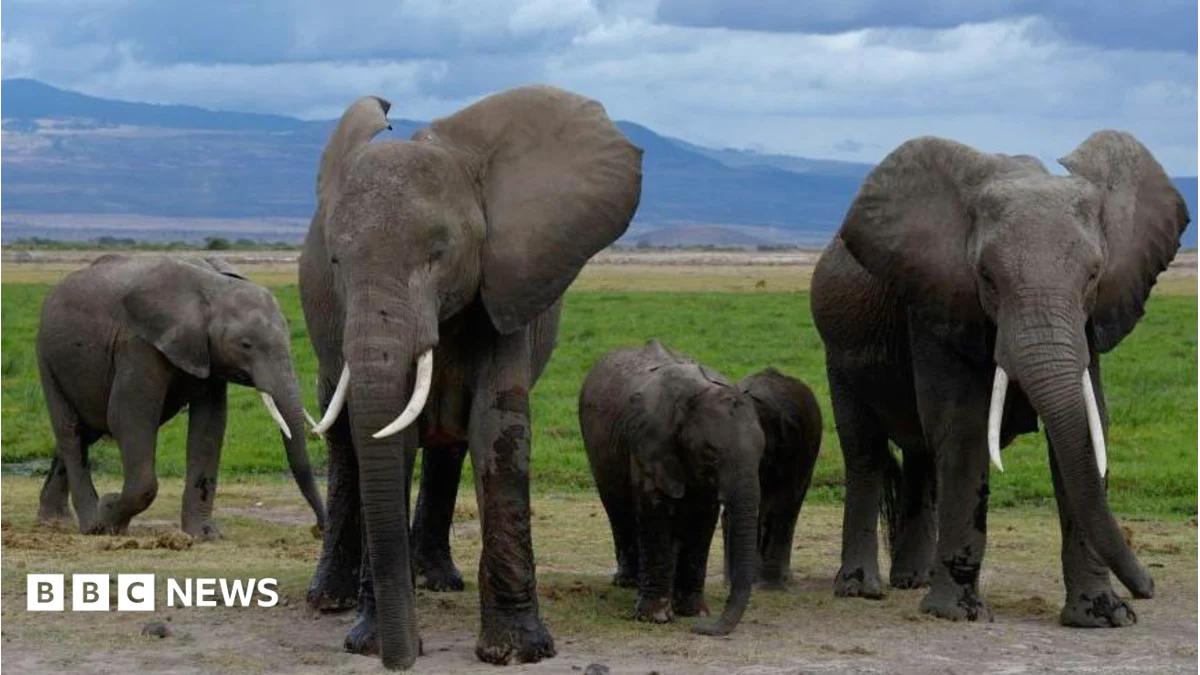
Fifteen elephants discovered deceased in southern Kenya, just outside the renowned Amboseli National Park, are strongly suspected to have succumbed to poisoning after consuming tomatoes that had been treated with pesticides on nearby agricultural lands. The tragic incident, spanning a month between June 24 and July 24, 2026, marks a deeply concerning development for conservation efforts in one of Africa’s most iconic wildlife landscapes. Preliminary laboratory tests conducted by the Kenya Wildlife Service (KWS) have alarmingly detected cyanide in samples retrieved from the animals’ carcasses, pointing directly towards a chemical agent as the cause of death.
The grim discovery unfolded over several weeks, with ten of the elephants initially found exhibiting severe signs of paralysis, a distressing precursor to their demise within a mere two days. The remaining five elephants were already deceased by the time they were located, their bodies silent witnesses to the swift and lethal effects of the toxins. Such symptoms are highly consistent with cyanide poisoning, which can rapidly disrupt cellular respiration, leading to organ failure and paralysis. The KWS has initiated a comprehensive investigation into the deaths, collaborating with various experts to ascertain the exact pesticide used and the precise circumstances leading to the elephants’ exposure.
For the time being, wildlife officials have definitively ruled out foul play, specifically poaching, a significant achievement for a region that has historically battled against illegal wildlife trade. This distinction is crucial, as the Amboseli ecosystem has seen considerable success in recent decades in cracking down on poaching, making these deaths particularly shocking and indicative of a different, insidious threat. The KWS’s rapid response and transparency in sharing initial findings underscore the gravity of the situation and their commitment to understanding and preventing future occurrences.
Seeking to alleviate public apprehension, wildlife authorities have communicated through local media that the toxic substances identified as the cause of the elephants’ deaths pose no immediate risk to human populations. This assurance is based on current understanding that direct consumption of the contaminated produce by humans is unlikely, and the toxins are unlikely to leach into widespread water sources in concentrations harmful to humans. However, the incident undeniably highlights broader concerns regarding food safety, agricultural practices, and the potential for environmental contamination in areas where wildlife and human settlements increasingly overlap.
This tragedy has amplified long-standing concerns regarding the rapid expansion of farming activities in areas adjacent to the park. As human populations grow and agricultural demands intensify, the boundaries between protected wildlife habitats and cultivated lands become increasingly blurred. Elephants, driven by their natural instincts to forage for food and water, often stray onto farmland, particularly during dry seasons when natural resources within the park may be scarce. These incursions inevitably lead to human-wildlife conflict, with farmers often resorting to measures, including the use of pesticides, to protect their valuable crops. The elephants, in their search for sustenance, inadvertently consume these treated plants, with devastating consequences.
The Amboseli ecosystem, a vast and biologically rich area that majestically straddles the border with Tanzania, is globally renowned for its spectacular wildlife, especially its large elephant herds. Framed by the iconic snow-capped peak of Mount Kilimanjaro, it represents a critical stronghold for African elephants and a vital migratory corridor for numerous other species. Organizations like the Amboseli Trust for Elephants (ATE) play an indispensable role in monitoring the movements and health of these magnificent animals, maintaining detailed records of individual elephants. According to figures compiled by ATE, the Amboseli ecosystem supported a thriving population of more than 2,000 elephants as of 2025, making the loss of fifteen individuals a substantial blow to the herd’s overall health and genetic diversity.
Officials have underscored that this incident represents the first time in decades that elephant mortalities on such a scale, attributable to non-poaching causes, have been recorded in the region. This statistic starkly contrasts with the successful anti-poaching campaigns that have largely secured the area for its elephant population. The carcasses discovered include elephants of different ages and sexes, suggesting that the deaths are not confined to a single family unit or demographic. This varied representation among the deceased is particularly alarming, indicating a widespread exposure rather than a targeted incident, and it could impact the herd’s social structure and future breeding capacity. The loss of matriarchs, for instance, can have profound, long-term effects on the survival and behavior of an elephant family.
Understanding the root causes of this incident necessitates a deeper look into agricultural practices in the region. Many small-scale farmers, often facing economic hardship and lacking access to sustainable pest control alternatives, rely on readily available and sometimes potent chemical pesticides to protect their crops, especially high-value produce like tomatoes. There may be insufficient awareness regarding the environmental impact of these chemicals, their persistence in the environment, or the specific dangers they pose to wildlife. The use of highly toxic compounds like cyanide-based pesticides, even when intended for agricultural purposes, poses an extreme risk when elephants or other wildlife ingest treated plants.
Moving forward, comprehensive strategies are urgently needed to mitigate such conflicts. These must include enhanced farmer education programs focusing on safe and responsible pesticide application, promoting integrated pest management (IPM) techniques, and exploring eco-friendly alternatives. Furthermore, robust land-use planning is essential to create effective buffer zones between agricultural areas and wildlife habitats, potentially through the establishment of wildlife corridors that allow elephants to move safely without encroaching on farms. Implementing effective deterrents, such as electric fences, chili fences, or beehive fences, around agricultural lands can also provide non-lethal solutions to keep elephants away from crops.
The KWS, in collaboration with local communities, conservation organizations, and government agencies, must spearhead efforts to develop and implement these preventative measures. This includes providing economic incentives or compensation schemes for farmers who incur crop damage from wildlife, thereby reducing the motivation for drastic measures. Community engagement is paramount, ensuring that local populations understand the value of wildlife conservation and are active participants in finding sustainable solutions that benefit both people and elephants.
The Amboseli elephant deaths serve as a stark reminder of the delicate balance required when human development intersects with critical wildlife habitats. While the immediate focus remains on completing the investigation and understanding the full scope of this tragedy, the incident underscores the urgent need for a holistic approach to conservation that addresses both human livelihoods and wildlife protection. The long-term health and survival of Amboseli’s iconic elephants, and indeed, the entire ecosystem, depend on collaborative, well-informed, and sustainable solutions that prevent such heartbreaking incidents from ever recurring.




 George Anjay
 Nakalama John
 atisusanti
 Ramos Leo