
 George Anjay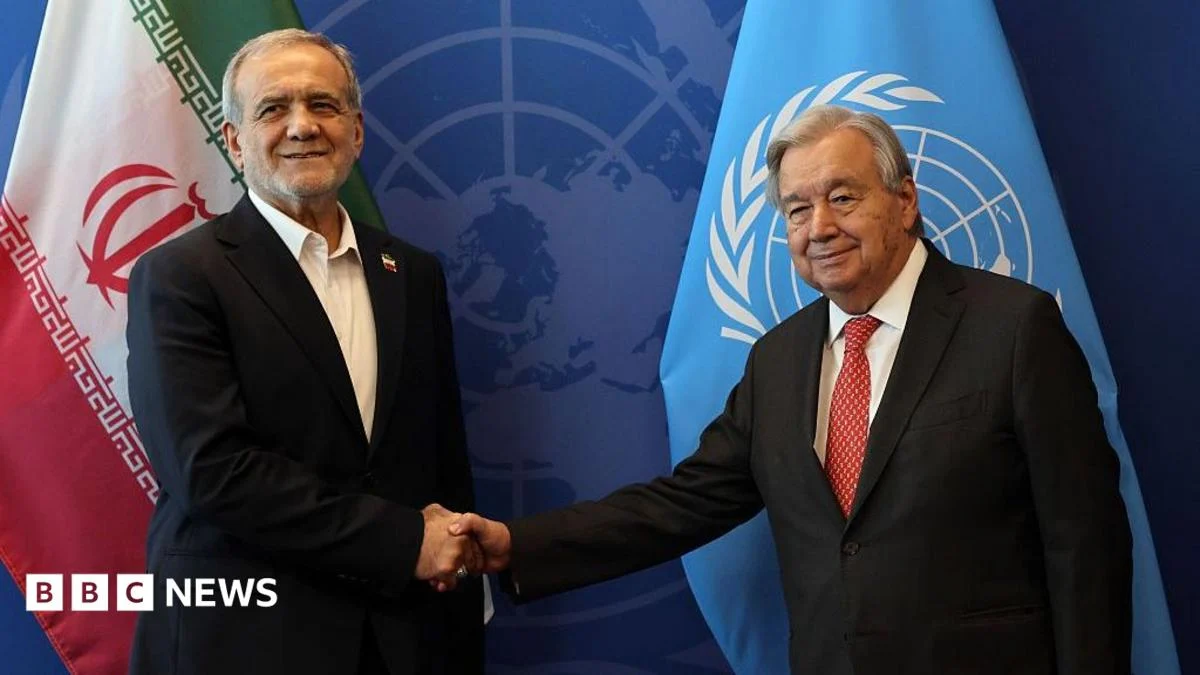
The United States government has officially granted visas to a delegation of Iranian officials, enabling them to travel to New York for the upcoming United Nations General Assembly (UNGA) meetings. This decision comes at a critical juncture, as the protracted conflict between the US and Iran has now entered its seventh month, with no discernible end in sight. While the core delegation, which reportedly includes Iranian President Masoud Pezeshkian and Foreign Minister Abbas Araghchi, has been granted access, the US State Department has emphasized that they will be subject to stringent travel restrictions and prohibitions on the purchase of certain American products.
A spokesperson for the US State Department confirmed the visa approvals on Thursday, underscoring the nation’s commitment to its obligations as the host country for the UN headquarters. "Consistent with our host country obligations, the core delegation from the Iranian regime will be able to attend UN General Assembly High Level Week," the spokesperson stated, adding that the delegation would operate under specific travel limitations. These restrictions include prohibitions on acquiring luxury goods and other specified American products, a policy that reflects the current strained diplomatic climate. The department also noted that this year’s delegation would be notably smaller than in previous years.
The context of this decision is deeply intertwined with the ongoing hostilities. The war, which commenced in February, has had far-reaching consequences, including a significant surge in global energy prices and the destabilization of neighboring countries. The State Department’s announcement comes amid persistent reports of escalating military actions and geopolitical tensions. The administration’s stance on the Iranian delegation’s presence at the UNGA is a delicate balancing act, aiming to uphold diplomatic protocols while simultaneously conveying a message of disapproval and concern regarding Iran’s actions.
In a particularly pointed statement, State Department Spokesman Tommy Pigott elaborated on the rationale behind the restrictions, drawing a stark contrast between the privileges afforded to the Iranian delegation and the hardships faced by the Iranian populace. He articulated the US position by stating that the delegation would be prevented from engaging in "shopping sprees" while the Iranian people grapple with severe shortages of water and electricity, endure "brutal repression," and suffer from "soaring inflation." Pigott’s remarks, disseminated via the social media platform X, served as a public warning to New York businesses, urging them to "be on guard" against selling restricted goods to the Iranian delegation. He further elaborated, "We will not let the Iranian regime’s elites exploit UNGA for a luxury retail splurge paid for by the Iranian people’s suffering, all while the regime funnels Iran’s wealth to support its terrorist proxies." While Pigott did not explicitly mention any specific intelligence regarding the delegation’s plans to purchase luxury items, the warning underscored the administration’s vigilance and its intention to curb any perceived exploitation of diplomatic access for personal enrichment.
This year’s UNGA, the 81st session, is currently in progress, with the High-Level General Debate, the central event of the annual gathering, scheduled to commence on Tuesday. This segment of the assembly typically features addresses from world leaders, providing a global platform for diplomatic discourse and policy pronouncements. Notable speakers anticipated for Tuesday include US President Donald Trump, UK Prime Minister Andy Burnham, and French President Emmanuel Macron. Wednesday’s agenda is expected to feature addresses from the leaders of Ukraine, Syria, and Iran, making their participation, and the implications of their presence under US-imposed restrictions, a focal point of international attention.
The ongoing conflict with Iran has generated significant public and political pressure on the White House to actively pursue avenues for de-escalation and resolution. The war, which began on February 28th with joint attacks launched by the United States and Israel, has since evolved into a complex and multifaceted confrontation. In response to the initial attacks, Iran has engaged in a series of retaliatory actions, including repeated attacks on US bases and allied states in the Gulf region, as well as continued aggression towards Israel. This cyclical pattern of conflict and reprisal has heightened regional instability and global concern.
Adding another layer of complexity to the US’s diplomatic posture at the UNGA, the BBC recently reported that the United States had denied a visa to Palestinian President Mahmoud Abbas and his delegation, preventing their attendance at the assembly. This marks the second consecutive year that the White House has refused visas to the Palestinian delegation, citing a lack of recognition for their legitimacy. This decision, coupled with the granting of visas to the Iranian delegation under strict conditions, highlights the nuanced and often contradictory nature of US foreign policy in the Middle East. The administration’s approach to different actors in the region appears to be guided by a complex calculus of strategic interests, diplomatic protocols, and domestic political considerations. The contrasting decisions regarding the Iranian and Palestinian delegations underscore the intricate geopolitical landscape and the challenges of navigating international relations in a period of heightened conflict and diplomatic tension. The presence of the Iranian delegation, even under restrictions, signals a continued, albeit strained, engagement with Tehran, while the exclusion of the Palestinian delegation reflects a more hardline stance.


 Nakalama John
 atisusanti
 Ramos Leo
 Nana Banana