Ramos Leo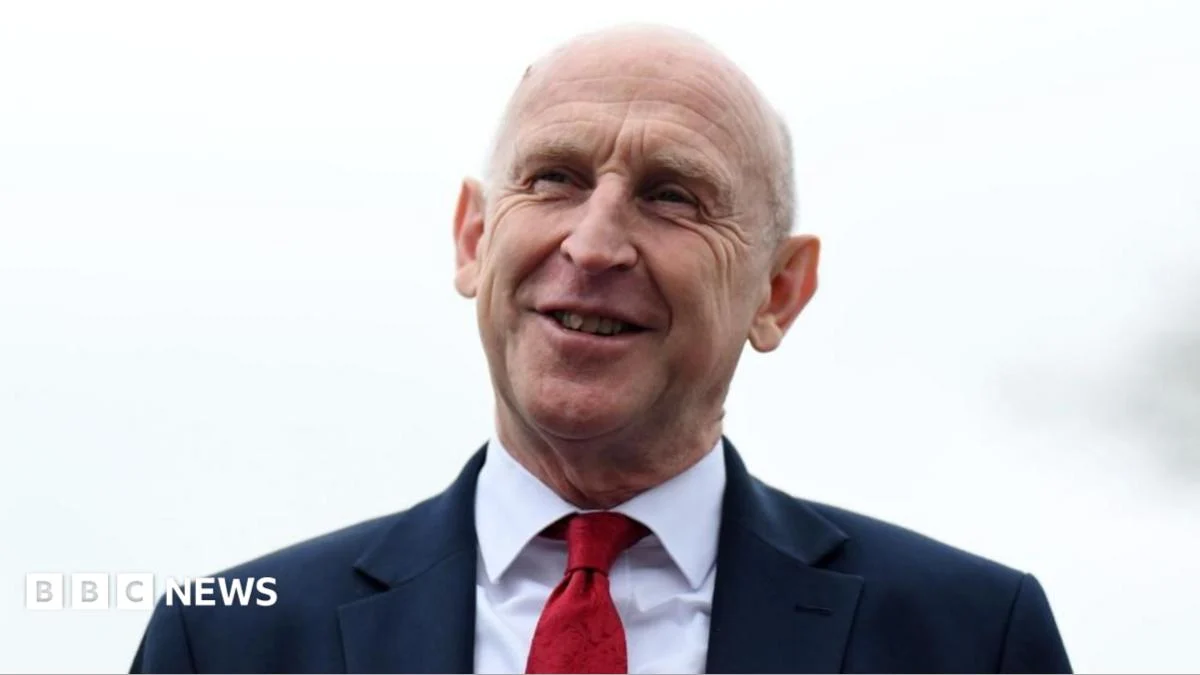
The "Made in Europe" programme, officially known as the Industrial Accelerator Act (IAA), is currently under deliberation within the EU. Its primary objective is to fortify European manufacturing by implementing measures and potentially restrictions on goods originating from outside the bloc, particularly those benefiting from state subsidies or unfair practices. For the UK, there is palpable concern within government circles that without specific provisions, this initiative could inadvertently erect new barriers, isolating British firms from vital European supply chains and stifling their access to the continent’s lucrative market.
Healey’s agenda for the meeting with EU finance ministers, collectively known as the EcoFin Council, will extend beyond the IAA. He plans to advocate for enhanced UK-EU partnerships across key strategic sectors, specifically identifying technology, defence, and manufacturing as areas ripe for closer collaboration. Treasury sources indicate that the Chancellor will explicitly call on the EU to design the "Made in Europe" programme in a manner that actively deepens ties with the United Kingdom, rather than establishing additional hurdles to trade and cooperation. This pragmatic approach aims to leverage shared challenges, such as aggressive Chinese industrial policies, to foster mutual benefit.
A significant part of Healey’s appeal will draw on lessons learned from past friction points. Officials expect him to remind European finance ministers of the collapse of talks last year concerning Britain’s potential involvement in an EU defence loans scheme. That particular dispute, which saw negotiations falter over the quantum of financial contribution the UK would be expected to make, serves as a cautionary tale. The Chancellor’s team is keen to avoid a similar impasse, emphasising the importance of finding flexible and mutually agreeable solutions for association with critical EU initiatives. The UK’s commitment to European security and its substantial defence capabilities are expected to be highlighted as compelling reasons for inclusion in defence-related financial mechanisms.
The broader context for the IAA is the growing global concern over China’s industrial might and its methods. Many Western economies, including both the EU and the UK, accuse Beijing of employing extensive state subsidies, intellectual property theft, and market-distorting practices, particularly in sectors like electric vehicles, steel, and solar panels. These practices lead to overcapacity and unfair competition, threatening domestic industries and jobs. The EU’s IAA is, in part, a response to these pressures, mirroring initiatives like the US Inflation Reduction Act, which also contains provisions to incentivise domestic production and reduce reliance on external supply chains. For the UK, which faces similar threats to its own manufacturing base, aligning with the EU’s efforts rather than being sidelined is seen as strategically imperative.
Treasury officials have made it clear that a central tenet of Healey’s strategy is to mitigate the economic impact of Brexit. While acknowledging the UK’s departure from the EU, the current government is focused on forging a more constructive and pragmatic relationship, seeking to build closer ties where beneficial without compromising British sovereignty or incurring disproportionate costs. The Chancellor’s perspective is rooted in a belief that a robust and interconnected European economy, encompassing both the EU and the UK, is ultimately more resilient and prosperous for all.
Healey himself articulated this vision, stating: "The next chapter of Britain’s growth story will be written in more places. To me, closer ties with the EU means British businesses – wherever they are based across the UK – get better access to both the supply chains and the customers they need to grow." This statement encapsulates the government’s dual objective: fostering domestic growth through international engagement, particularly with its closest geographical neighbours and largest trading partners. It underscores a shift towards a more collaborative and less confrontational stance in post-Brexit relations.
The focus on technology firms, defence companies, and manufacturing during the Dublin meeting is deliberate. These sectors represent areas where the UK possesses significant expertise and economic output, but also where intricate supply chains and regulatory alignment with the EU are crucial. In technology, for instance, collaboration on areas like semiconductors, artificial intelligence, and cybersecurity is vital for maintaining a competitive edge and ensuring supply chain resilience. For defence, the ongoing war in Ukraine has underscored the necessity of robust European defence capabilities and interoperability, making the UK’s contribution even more significant. Manufacturing, from advanced aerospace components to pharmaceuticals, relies heavily on integrated cross-border operations. "The chancellor wants to make sure nothing holds them back," a Treasury source affirmed, highlighting the proactive stance to protect these vital industries.
This diplomatic engagement in Dublin comes against a backdrop of broader efforts to reset the UK-EU relationship. A previously planned "reset summit" between the two entities was unfortunately delayed following Sir Keir Starmer’s unexpected resignation as prime minister. That summit was intended to broaden the scope of UK-EU dialogue beyond the immediate economic consequences of Brexit, encompassing strategic foreign policy, security cooperation, and shared global challenges. Treasury sources now anticipate this crucial high-level meeting will take place in November, signalling a desire from both sides to establish a more stable and forward-looking framework for engagement.
Adding another layer of complexity and importance to Healey’s current financial deliberations is the recent revelation that he is actively considering a bid for the UK to join a new global investment bank specifically aimed at boosting defence spending. This institution, known as the Defence, Security and Resilience Bank (DSRB), is being spearheaded by Canada and seeks to enable governments to borrow at lower costs to increase their military expenditures. The move represents a significant departure from the stance of his predecessor, Rachel Reeves, who had previously rejected the idea, reportedly due to concerns about additional national debt or the viability of such a mechanism.
Healey’s openness to the DSRB reflects the escalating global geopolitical instability and the imperative for the UK to significantly increase its defence commitments, including meeting its NATO target of spending 2.5% of GDP on defence. Financing these growing commitments is emerging as one of the Chancellor’s most pressing challenges as he prepares for the upcoming Budget in October and the subsequent spending review next year. The DSRB could potentially offer a novel avenue for securing the necessary funds without placing undue strain on conventional public finances, thereby freeing up resources for other domestic priorities. His presence in Dublin, advocating for inclusion in EU industrial schemes, must therefore be viewed through the lens of a Chancellor navigating a complex landscape of international economic competition, geopolitical security, and domestic fiscal pressures, all while striving to define Britain’s post-Brexit role on the global stage.


 George Anjay
 Nakalama John
 atisusanti
 Nana Banana