
 George Anjay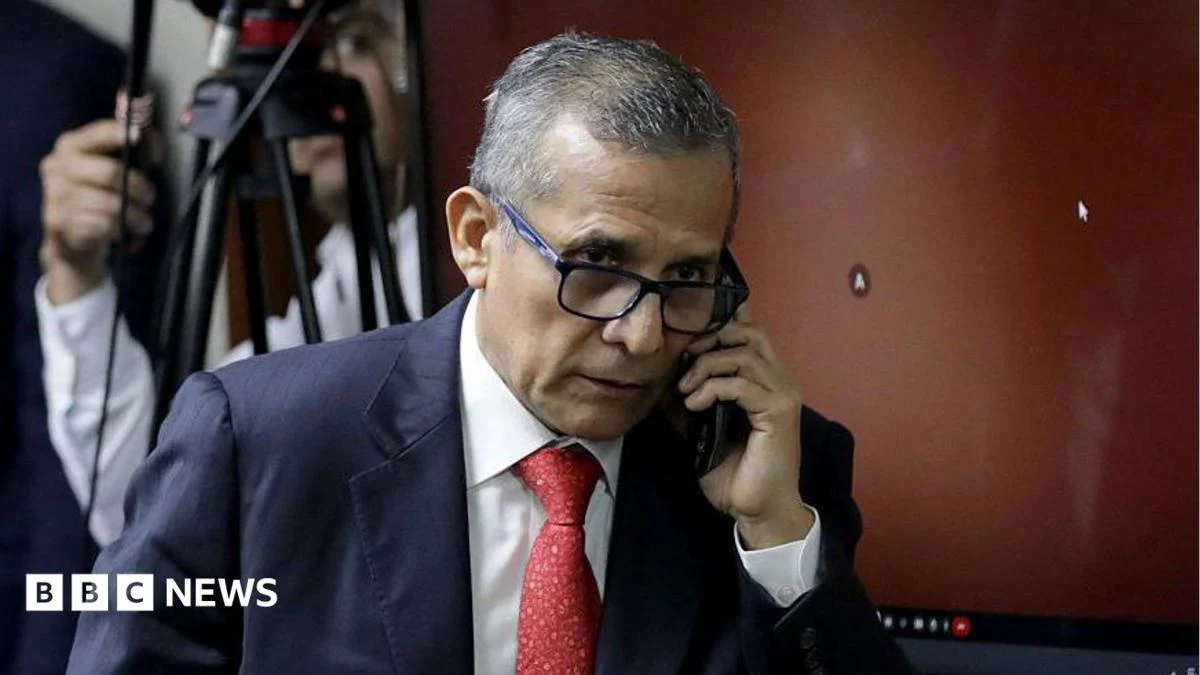
Peru’s constitutional court has dramatically overturned a 15-year prison sentence previously handed to former President Ollanta Humala, who had been convicted of corruption. The landmark ruling effectively declares the entire criminal proceedings against him null and void, paving the way for his release from Barbadillo Prison in the capital, Lima, according to local media reports.
Humala, who served as Peru’s president from 2011 to 2016, was convicted in 2025 of accepting illegal campaign funds. Specifically, the conviction centered on accusations of receiving illicit contributions from the Venezuelan president and the Brazilian construction giant Odebrecht to finance his electoral campaigns in 2006 and 2011. The former president had consistently maintained his innocence and had vowed to appeal the verdict.
Following the constitutional court’s decision, Humala’s lawyer, Julio Espinoza Goyena, took to social media to announce the court’s finding. He stated that the court had determined that the contributions his client received for his electoral campaigns "do not constitute money laundering." Espinoza Goyena further asserted that the Criminal Chamber currently overseeing the case is obligated to order the definitive dismissal of all proceedings and secure the immediate freedom of former President Ollanta Humala.
The corruption case against Humala and his wife, Nadine Heredia, began to unfold shortly after his presidential term concluded in 2016. This period coincided with the widespread revelations of the Odebrecht scandal, a massive corruption scheme where the construction company admitted to bribing government officials and political parties across Latin America with hundreds of millions of dollars to secure lucrative contracts.
At their trial, Humala and Heredia, who together co-founded the Nationalist Party, were accused of accepting approximately $3 million in illegal contributions from Odebrecht. Prosecutors alleged that these funds were specifically used to finance Humala’s successful 2011 presidential campaign. Additionally, they were accused of receiving $200,000 from the late Venezuelan leader Hugo Chávez, intended to bankroll his 2006 presidential bid. Throughout the legal proceedings, however, the couple consistently maintained their stance that they were victims of political persecution.
Ollanta Humala’s political journey is marked by a significant military and political career. A former army officer, he first gained national prominence in 2000 when he led a brief but impactful military rebellion against the then-president Alberto Fujimori. His initial foray into presidential politics in 2006 saw him run on a platform inspired by the socialist revolution championed by Venezuela’s Hugo Chávez. Although he was unsuccessful in that first attempt, Humala recalibrated his political strategy. For his 2011 presidential run, he adopted a more moderate platform, drawing parallels with the economic policies of Brazil’s then-president Luiz Inácio Lula da Silva, which ultimately resonated with voters and led to his victory over right-wing rival Keiko Fujimori, the daughter of former president Alberto Fujimori.
The corruption charges against Humala and Heredia were a significant development in Peru’s ongoing struggle with political corruption, particularly in the context of the Odebrecht scandal. Humala was the first of four Peruvian presidents to face investigations in connection with this extensive bribery scheme. The ramifications of the Odebrecht scandal have deeply impacted the political landscape of Peru, leading to a series of high-profile investigations and convictions.
Beyond Humala, other former Peruvian presidents have been entangled in the Odebrecht scandal. Alejandro Toledo, who governed Peru from 2001 to 2006, was sentenced last year to more than 20 years in prison for accepting $35 million in bribes from Odebrecht. The tragic case of Alan García, who served as president from 1985 to 1990 and again from 2006 to 2011, ended with his death. He committed suicide in 2019 as he faced imminent arrest over allegations of receiving bribes from Odebrecht, a charge he had always denied. More recently, Pedro Pablo Kuczynski, who was in office from 2016 to 2018, faced impeachment proceedings after it was revealed that Odebrecht had paid him millions of dollars during his previous role in government. Kuczynski has consistently maintained that these payments were not illegal.
When Humala was convicted in 2025, his wife, Nadine Heredia, was also found guilty of money laundering and received a similar 15-year prison sentence. However, Heredia was granted safe passage to Brazil after seeking asylum in the Brazilian embassy. The ruling by the constitutional court in favor of Ollanta Humala raises significant questions about the future of the legal proceedings against Heredia and the broader implications for the Odebrecht investigations in Peru. The ongoing nature of these investigations underscores the deep-seated corruption that has plagued Peruvian politics for years.

 atisusanti
 Nana Banana
 Nakalama John
 Ramos Leo