George Anjay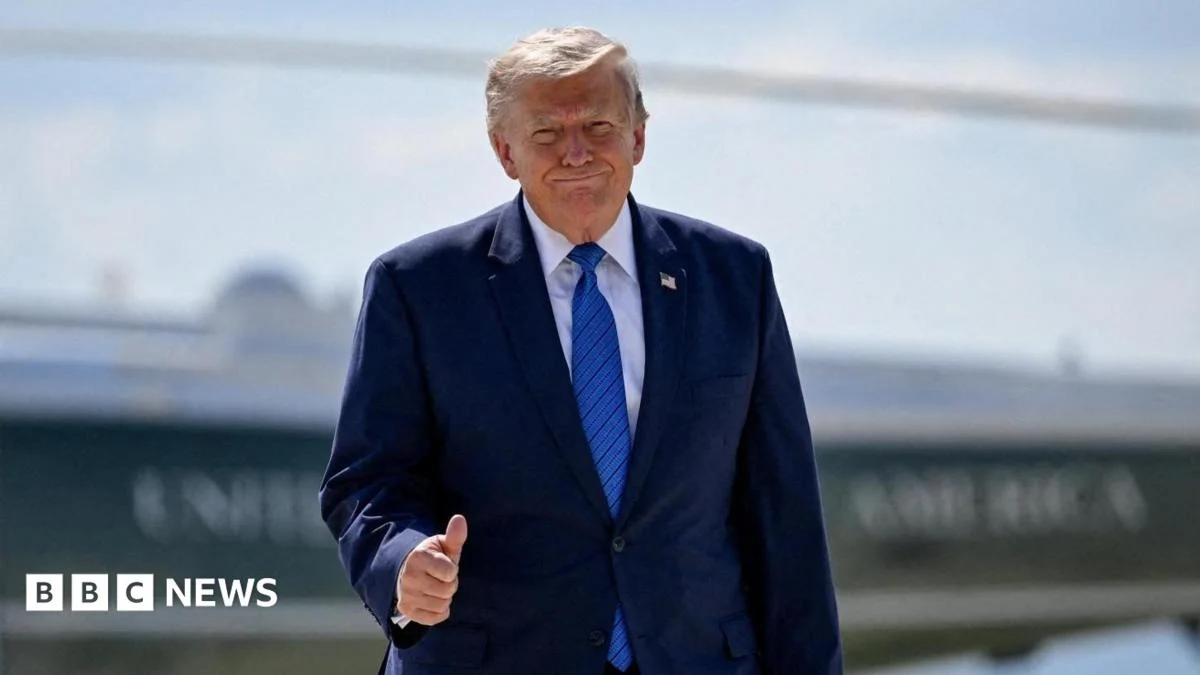
In a dramatic and swiftly unfolding geopolitical development, U.S. President Donald Trump announced on Truth Social that he had ordered the cancellation of planned strikes against Iran, contingent upon the "rapid" establishment of a comprehensive deal. This proposed agreement, as outlined by the President, would necessitate the immediate and complete opening of the Strait of Hormuz and a definitive end to Iran’s nuclear ambitions. The decision, reportedly made in coordination with Israel, emerged amidst heightened tensions and U.S. media reports suggesting Washington was preparing for a significant escalation of military action against Iran over the weekend.
The announcement came as Tehran, through official channels, accused the United States of deliberately exacerbating regional instability, warning that any nation in the Middle East collaborating with Washington would inevitably be "engulfed by the flames of war." President Trump, in his characteristic unvarnished style, described the U.S. as being "locked and loaded and ready to go against the Islamic Republic of Iran, at levels of Military Terror, Strength, and Power not seen since World War II." However, he revealed that the strikes were called off after receiving appeals from Iran itself, as well as from other Middle Eastern countries, requesting a temporary pause to allow for diplomatic efforts to secure a deal.
Further suggesting a potential breakthrough, Trump indicated that the "perimeters of a deal have been agreed to," emphasizing that this would encompass the "Immediate, Complete, and Total OPENING OF THE HORMUZ STRAIT, and an end to Iran’s nuclear threat." As of this report, Iran had not yet issued a formal response to President Trump’s pronouncements.
The U.S. government had previously issued a stark security alert, urging American citizens throughout the Middle East to remain vigilant and prepared for potential evacuation in the event of further escalation. The alert advised those in the region to "exercise caution and heightened vigilance and should be prepared for flight cancellations, periodic airspace closures, and potential travel disruptions." This cautionary advice underscored the palpable tension and uncertainty that had gripped the region in the preceding days.
Multiple sources, speaking to CBS News, the BBC’s media partner in America, revealed that the U.S. and Israel had been in the process of planning what was described as one of the most severe bombing campaigns to date, specifically targeting energy infrastructure within Iran. These aggressive plans reportedly emerged during a cabinet meeting attended by President Trump on Friday. During this meeting, with reporters present, President Trump was overheard stating, "We’ll be hitting them [Iranians] very hard. At some point, they’re going to say, ‘We just can’t take it anymore.’"
Adding another layer of international diplomatic activity, Axios reported that Saudi Crown Prince Mohammed bin Salman had engaged in a phone call with President Trump on Saturday, during which he "expressed concern" regarding the potential U.S. strikes. Reuters also corroborated the report of this significant phone conversation.
The escalating exchange of hostilities between Washington and Tehran has been a defining characteristic of the region’s volatile security landscape since a ceasefire, brokered in April with the aim of halting the ongoing war, collapsed in June. Earlier in the week, the U.S. confirmed the completion of a "heavy wave" of retaliatory strikes against Iran, a response to what the U.S. characterized as an attempted ballistic missile attack targeting American forces stationed in the region.
The U.S. has implemented a strategy of blockading Iranian ports and conducting airstrikes on Iranian sites. In turn, Iran has responded by firing missiles and launching drones at U.S. assets situated across various Middle Eastern countries. Furthermore, Iran has targeted maritime traffic transiting through the Strait of Hormuz, a critically important chokepoint for global oil shipments. The initiation of U.S. and Israeli strikes against Iran on February 28th marked a significant turning point, contributing to considerable volatility in global oil prices. The subsequent actions and reactions from both nations have painted a grim picture of a conflict that, while not a full-scale declared war, has involved sustained and dangerous military engagements with potentially far-reaching consequences for regional and global stability. The possibility of a diplomatic resolution, however precarious, now hinges on the swift and decisive actions of both the United States and Iran in the coming days.


 Nakalama John
 Ramos Leo
 Nana Banana