George Anjay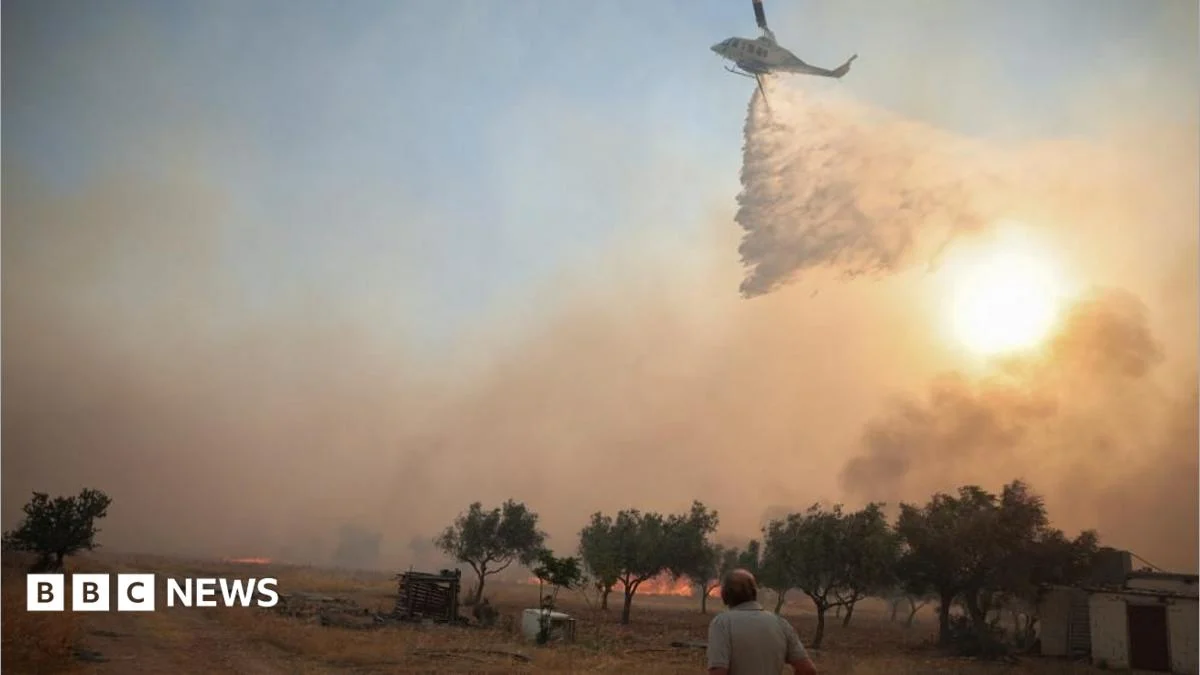
In a harrowing incident that underscores the extreme dangers faced by first responders battling relentless wildfires, two helicopters tragically collided mid-air on Tuesday while engaged in firefighting operations in Greece. The devastating accident, which occurred approximately 65 kilometers (42 miles) west of the capital, Athens, sent shockwaves through the nation already grappling with a severe fire crisis. Footage captured by observers vividly depicts the horrifying moment one of the aircraft’s propellers made contact with the other, leading to an immediate and catastrophic explosion into flames. Both helicopters subsequently plummeted into a steep ravine, leaving a trail of smoke and destruction. Early reports from Greek media indicated that two of the four crew members on board were found unconscious, while the remaining two sustained minor injuries, a testament to the sheer force of the impact.
The collision took place in the Psatha area, a region heavily affected by the ongoing infernos, as confirmed by the Fire Department. The crew members, identified by Greek media as two Greek nationals and two Romanians, were swiftly transported to the 251st Air Force General Hospital for urgent medical attention. Their bravery in the face of such a perilous task is now overshadowed by this tragic event, highlighting the immense risks inherent in aerial firefighting.
This collision is the latest in a series of deeply concerning incidents occurring against a backdrop of widespread and intensifying wildfires across Greece this week. These infernos have forced the evacuation of numerous communities, with residents fleeing their homes in terror as the flames encroached. The challenging terrain and, crucially, the persistent strong winds have severely hampered the efforts of firefighters, turning what is already a formidable task into an even more desperate struggle.
Greece is not alone in its battle against these destructive forces. Across Europe, a succession of intense heatwaves has created a tinderbox environment, leading to devastating wildfires in several nations. France and Spain, in particular, have recently contended with enormous blazes. In Spain, two major fires raged near Madrid, while Bordeaux in France was also a focal point of intense firefighting efforts. While these specific fires have now been brought under control, the embers still glow, and the aftermath is being felt acutely. The scale of displacement has been immense, with approximately 300,000 people forced to evacuate their homes, though many have now begun the arduous process of returning.
Within Greece, the media has painted a grim picture of a "titanic battle" being waged across a vast swathe of territory. This struggle encompasses critical areas such as Porto Germeno, Psatha, Fokida, Megara, and the island of Kefalonia. For over 72 hours, more than 500 firefighters have been locked in a relentless fight, battling to contain the raging infernos that threaten to consume everything in their path. The sheer exhaustion and dedication of these individuals are evident in their unwavering commitment to protecting lives and property, even as they face overwhelming odds.
The root causes of the current wildfire crisis are multifaceted, with human activity playing a significant role, whether intentional or accidental. However, the increasing frequency and intensity of these events are inextricably linked to the escalating threat of climate change. The past winter, characterized by mild and wet conditions, fostered a period of abundant vegetation growth. This lush growth, subsequently dried out by successive scorching hot spells, has created an unprecedented volume of highly combustible fuel, setting the stage for the devastating wildfires currently plaguing the region. This unfortunate confluence of factors has created a perfect storm for widespread destruction.
The mid-air collision is a stark and tragic reminder of the inherent dangers involved in aerial firefighting. These brave crews operate in extremely challenging conditions, often at low altitudes and in close proximity to intense heat and smoke. The maneuverability required to drop water or fire retardant on specific hotspots, combined with the unpredictable nature of wind currents and the sheer scale of the fires, creates an environment where accidents, however rare, can have catastrophic consequences. The loss or injury of any crew member is a profound tragedy, and the collision of two aircraft magnifies the devastation.
The strategic deployment of helicopters in wildfire suppression is a critical component of modern firefighting efforts. Their ability to reach remote and inaccessible areas, deliver water precisely onto hotspots, and provide aerial reconnaissance is invaluable. However, the operation of multiple aircraft in close proximity, especially in the chaotic and turbulent environment of a wildfire, demands the highest levels of skill, coordination, and situational awareness. The incident in Greece raises important questions about air traffic management and safety protocols during large-scale firefighting operations. Investigations will undoubtedly focus on the precise sequence of events leading up to the collision, including factors such as visibility, communication between aircraft, and the specific tactical maneuvers being employed at the time.
The broader context of the European wildfire season amplifies the significance of this tragic event. The interconnectedness of climate change and extreme weather events means that nations are increasingly facing similar challenges. The devastating fires witnessed in Greece, France, and Spain are not isolated incidents but rather symptomatic of a global phenomenon. The need for enhanced international cooperation in disaster response, resource sharing, and the development of more effective fire prevention and suppression strategies has never been more apparent.
The human cost of these wildfires extends beyond the immediate danger to firefighters. The displacement of communities, the destruction of homes and livelihoods, and the long-term environmental impact are all profound consequences. The loss of biodiversity, the damage to agricultural land, and the contribution of wildfires to air pollution create a ripple effect that impacts entire regions for years to come. The psychological toll on those who have lost everything is immeasurable.
In the aftermath of the collision, the focus will undoubtedly shift to supporting the injured crew members and their families, as well as investigating the circumstances of the accident to prevent future tragedies. However, it is also crucial to acknowledge the ongoing and immense bravery of all those on the front lines of the wildfire battle. The incident serves as a somber reminder of the sacrifices made by firefighters and the extreme risks they undertake to protect communities and the environment. The international community must redouble its efforts to address the underlying causes of climate change and provide robust support for nations grappling with the devastating consequences of increasingly frequent and severe wildfires. The pursuit of sustainable practices and a commitment to mitigating climate change are not merely environmental imperatives but also essential for the safety and well-being of global populations. The courage displayed by the firefighting crews, even in the face of such adversity, serves as an inspiration, but it also underscores the urgent need for greater resources, improved technologies, and a collective global commitment to tackling this escalating crisis. The ongoing battle against the flames is a battle for the future of our planet, and every loss, whether human or environmental, is a significant setback.



 Nakalama John
 Ramos Leo
 Nana Banana