George Anjay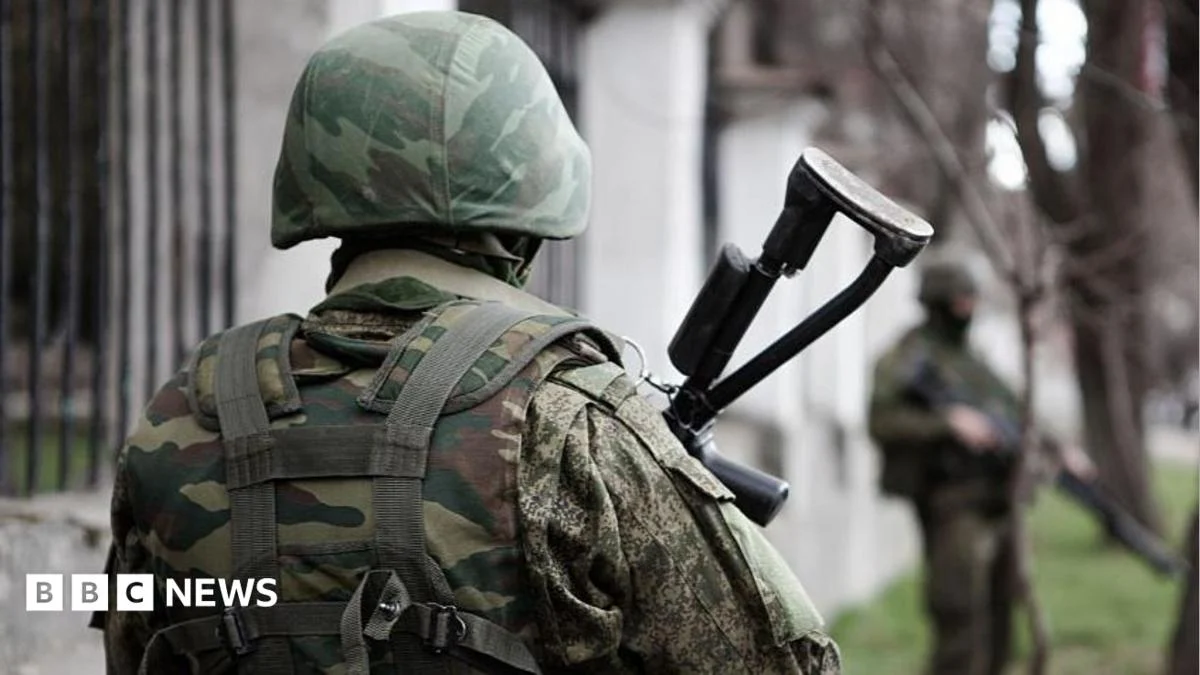
In a shocking and seemingly indiscriminate act of violence that has sent ripples of fear through the Russian-occupied Crimean peninsula, a soldier has unleashed a deadly gun rampage, claiming the lives of four individuals and injuring several others. The incident, which unfolded in the village of Khmelnytske, has ignited a flurry of official pronouncements and intense speculation, underscoring the volatile security landscape in a region that has been under Russian control since 2014. The Moscow-installed regional governor, Mikhail Razvozhayev, was the first to confirm the grim details, stating that the perpetrator, identified only as a soldier, initially opened fire on his fellow servicemen. This initial burst of violence resulted in the death of one soldier and left another wounded, hinting at a potential internal conflict or breakdown within military ranks before the rampage escalated to target civilians.
The devastating spree then tragically extended to the civilian population of Khmelnytske. Three innocent individuals – two men, aged 71 and 59, and a 64-year-old woman – were fatally shot in what appears to have been a random and brutal assault. The sheer randomness of the civilian casualties adds a chilling layer of horror to the incident, leaving communities grappling with the terrifying reality of an unpredictable threat emerging from within the very forces ostensibly tasked with their protection. In addition to the fatalities, three other people sustained injuries, their fates now resting in the hands of medical professionals who are reportedly "doing everything possible to save" them, according to Governor Razvozhayev. The full extent of the casualties, however, remains uncertain, with the governor’s cautious phrasing suggesting the possibility of the death toll rising as the condition of the injured is assessed.
The alleged perpetrator has since been detained by authorities, bringing a temporary halt to the bloodshed. However, the investigation into the motive behind this horrific act has just begun, and the absence of immediate answers is fueling an atmosphere of anxiety and conjecture. Governor Razvozhayev has emphasized the importance of relying on official channels for information, urging the public to refrain from spreading "unverified rumors" regarding the attacker’s identity or the motivations driving his violent actions. This plea for caution highlights the sensitivity of the situation, particularly given the ongoing geopolitical tensions surrounding Crimea. The identity of the soldier has not been publicly disclosed, and official sources have remained tight-lipped about which specific branch of the Russian armed forces he was serving with, a detail that could potentially offer crucial context to the investigation.
The annexation of Crimea by Russia in 2014 remains a highly contentious issue on the international stage. The vast majority of the global community unequivocally rejects Russia’s claim over the Ukrainian peninsula, viewing it instead as an illegal occupation of sovereign Ukrainian territory. This ongoing dispute creates a complex and volatile environment, where security concerns are amplified by the underlying political conflict. Russia maintains a significant military presence in Crimea, a strategic peninsula that has become a focal point for military operations and counter-operations. Ukraine, in its efforts to reclaim its territory and assert its sovereignty, has frequently targeted Russian military assets in Crimea with drone and missile strikes. This backdrop of simmering conflict and heightened military activity makes any internal security incident, especially one involving a soldier, particularly sensitive and prone to broader geopolitical interpretations.
The presence of a large Russian military contingent in Crimea, while intended to secure the region and project Russian power, also introduces inherent risks. Military bases and personnel are not immune to internal issues, and the potential for incidents such as this, however rare, cannot be entirely discounted. The fact that the initial shooting involved fellow soldiers suggests that internal tensions, stress, or psychological distress within the military ranks could be contributing factors, a possibility that investigators will undoubtedly be exploring. The transition from targeting military personnel to indiscriminately attacking civilians is a particularly alarming escalation, suggesting a complete breakdown of control or a deliberate intent to inflict widespread terror.
The village of Khmelnytske, now the epicenter of this tragedy, is likely to be reeling from the shock and trauma of the event. The loss of life, the injuries sustained, and the lingering fear of further violence will undoubtedly cast a long shadow over the community. The incident serves as a stark reminder of the human cost of conflict and the unpredictable consequences that can arise from prolonged military occupations and geopolitical disputes. The psychological impact on the surviving victims, their families, and the wider community will be profound, requiring significant support and attention in the aftermath.
As the investigation progresses, authorities will be meticulously examining every aspect of the soldier’s background, his military service record, any reported disciplinary issues, and his psychological state leading up to the incident. The motive behind such a brutal act can be multifaceted, ranging from personal grievances and mental health crises to potentially more complex factors influenced by the demanding and often stressful environment of military service in a contested territory. The absence of immediate clarity on these points is understandable, as authorities will be prioritizing thoroughness and accuracy to ensure a just and comprehensive understanding of the events.
Governor Razvozhayev’s strong emphasis on official information underscores the potential for misinformation to spread rapidly in such a charged environment. In a region where narratives are often contested and propaganda can be a potent weapon, controlling the flow of information is crucial for maintaining stability and preventing further panic or exploitation of the situation. The international community will be watching closely for developments, with the incident likely to be viewed through the lens of the broader Russia-Ukraine conflict. Any information that emerges regarding the soldier’s motivations or background could be interpreted as a reflection of broader issues within the Russian military or the dynamics of the occupation.
The economic and social fabric of Khmelnytske and the surrounding areas will also be impacted. The loss of life, particularly among older residents, can have significant demographic and economic consequences for smaller communities. The injured will require long-term care, placing a strain on local healthcare resources. The psychological scars of such an event can endure for generations, affecting community cohesion and well-being.
Ultimately, this tragic incident in Russian-occupied Crimea is a grim testament to the devastating consequences of violence and the complex realities of life in regions affected by ongoing geopolitical conflict. The lives lost are irreplaceable, and the injured face a long road to recovery. As the investigation unfolds, the world will be looking for answers, not only to understand the immediate causes of this rampage but also to glean insights into the broader challenges of security and stability in a region that remains a flashpoint on the global stage. The echoes of gunshots in Khmelnytske serve as a somber reminder of the fragility of peace and the ever-present threat of violence in a world still grappling with unresolved territorial disputes and the enduring human cost of conflict. The detained soldier, once apprehended, becomes a focal point, but the underlying issues that may have contributed to his actions, and the broader context of the occupation, will remain subjects of intense scrutiny and concern. The official narrative, while crucial for maintaining order, will be scrutinized for its completeness and transparency, as the desire for truth and understanding in the wake of such a profound tragedy is a universal human imperative.

 Nakalama John
 Ramos Leo
 Nana Banana