
 Ramos Leo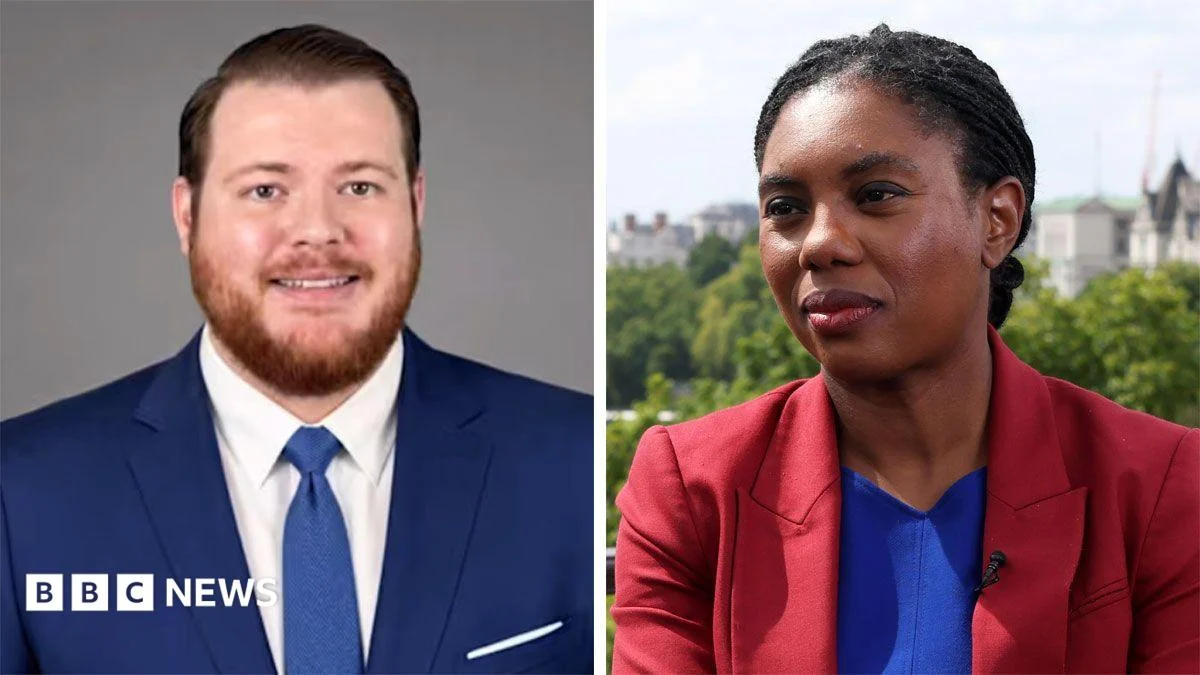
Bonehill-Paine’s selection as a candidate for the new Somerset Council seat of Crewkerne South had ignited a firestorm of criticism, placing significant pressure on the Conservative Party and its leadership. Kemi Badenoch, the Secretary of State for Business and Trade and a prominent figure within the party, had publicly defended his candidacy, asserting that Bonehill-Paine had undergone a process of rehabilitation and that the Conservative Party "believes in second chances." This defence, however, did little to quell the outrage, particularly from Jewish community groups and opposition parties who deemed his past actions unforgivable and his suitability for public office unacceptable.
In a statement posted on social media, Bonehill-Paine confirmed his withdrawal, explaining that the focus on his past was overshadowing the work he claimed to be doing in the present. He further revealed that, despite withdrawing his candidacy, he had been offered a position as an anti-extremism adviser to the Conservative Party. This advisory role, he elaborated, would be part of the party’s Culture and Integration Commission, where he would specifically focus on developing strategies to prevent the radicalisation of young men. The BBC subsequently reported that this advisory position would be unpaid.
The revelation of the advisory role immediately drew fresh condemnation, with Baroness Berger, who now sits in the House of Lords, describing the appointment as an "insult." She vehemently argued that making him a party adviser was "no better than allowing him to stand as a council candidate," highlighting the deep-seated concerns that his involvement, in any capacity, would legitimise his past actions or undermine efforts to combat antisemitism. Her powerful statement underscored the continuing pain and anger felt by those directly targeted by Bonehill-Paine’s previous hate campaigns.
Bonehill-Paine’s criminal history is extensive and deeply disturbing. He spent three years in prison, having been initially jailed in 2015 for posting antisemitic material in the run-up to a planned neo-Nazi rally. The following year, while already serving that sentence, he was convicted of racially harassing Luciana Berger, who was then a Labour MP. The harassment involved a campaign of vile online abuse and threats, causing immense distress and fear. Since his release from prison in 2018, Bonehill-Paine has publicly disavowed his past views, describing them as "indefensible." He has claimed to have spent years actively opposing antisemitism and radicalisation, even detailing his anti-extremism work in a blog post for ConservativeHome. In this post, he stated that his work included delivering training sessions and seminars for various institutions, including universities, schools, colleges, and probation services, aiming to demonstrate his commitment to reform.
Despite his claims of rehabilitation and subsequent anti-extremism work, the Conservative Party’s initial decision to select him for the Somerset seat triggered a substantial political and social backlash. Jewish groups, including the Board of Deputies of British Jews and the Campaign Against Antisemitism, expressed profound dismay and outright rejection of his candidacy. They consistently declined offers from Bonehill-Paine for a meeting, indicating the depth of their concerns and their belief that his past actions rendered him unsuitable for any public or quasi-public role. This unified and vocal criticism from Jewish organisations undoubtedly contributed significantly to the growing pressure that made Bonehill-Paine’s eventual decision to step down feel increasingly inevitable.
The entire episode has inevitably raised serious questions about Kemi Badenoch’s judgment, particularly after her decision to so publicly defend Bonehill-Paine. Her stance sparked considerable debate and "raised eyebrows" across Westminster, with many political observers and commentators questioning the wisdom of associating the party, and indeed her own reputation, with such a controversial figure. This controversy unfolded amidst a broader national conversation about political vetting processes and the acceptable boundaries of rehabilitation in public life.
Opposition parties wasted no time in seizing upon the scandal. Ed Miliband, the UK Foreign Secretary and a prominent Labour MP, stated unequivocally that Bonehill-Paine "should never have been a candidate…given the harassment that he visited on Luciana Berger, a colleague and a friend of mine." Miliband further challenged the Conservative Party to "answer for why he was a candidate in the first place and also for any future activities he might be undertaking on behalf of the Conservative Party," implicitly criticising the proposed advisory role.
Baroness Berger, whose courage in attending court at the Old Bailey in London to give evidence in Bonehill-Paine’s trial was widely commended, reiterated her conviction that his past behaviour fell "very, very short" of the standard required to stand for public office. Her personal experience of his harassment lent particular weight to her condemnation, making it difficult for the Conservative Party to dismiss the concerns as mere political point-scoring.
In his social media post explaining his withdrawal, Bonehill-Paine asserted that his local election candidacy would have allowed opposition parties to "spend all their time focusing on my past rather than the work I’m doing today." He strategically reframed his withdrawal, suggesting that his experience would be "better used supporting Kemi Badenoch in her ongoing mission to combat the antisemitism and extremism that is dividing our nation." This statement sought to present his departure as a selfless act for the greater good of combating extremism, rather than a forced retreat due to public pressure.
Kemi Badenoch, in turn, responded on social media, expressing sadness that Bonehill-Paine felt he would not be "given the space to explain his position and represent his community." Crucially, she affirmed her support for his new advisory role, stating, "I am glad he is going to work with me and the party on tackling radicalisation." She further articulated her controversial philosophy on the matter, arguing, "If we are going to stop extremism and antisemitism we are going to need help from those people who were part of the problem, but have now changed and are being part of the solution." Badenoch concluded by differentiating her party’s approach: "Piling on them and trying to get them cancelled may be sport for other parties, but this is a different Conservative Party." This declaration underscored a broader ideological debate within the Conservative Party regarding approaches to rehabilitation and counter-extremism, but it was widely criticised for appearing to downplay the severity of Bonehill-Paine’s past actions.
The response from other political parties to Badenoch’s defence of the advisory role was swift and scathing. Reform UK, a right-wing populist party, described Badenoch’s decision to offer him the adviser role as something that "beggars belief" and "alarming news for the Jewish community in Britain." Adam Dance, the Liberal Democrat MP for Yeovil, welcomed Bonehill-Paine’s withdrawal as "the right outcome, but it should never have got to this point." He specifically criticised Badenoch’s reaction, stating, "What’s most concerning now is Kemi Badenoch’s response — she has not accepted her party got this wrong, and instead frames legitimate concern about antisemitism as ‘piling on’. That is a troubling message to send."
The Board of Deputies of British Jews, a leading voice for the Jewish community in the UK, welcomed Bonehill-Paine’s withdrawal as a council candidate. However, they also used the opportunity to reiterate a broader call to action, adding, "We continue to urge all parties to use their vetting to ensure a robust stance on racism and discrimination, including antisemitism." This statement highlighted that while the immediate crisis of Bonehill-Paine’s candidacy had been resolved, the underlying issues concerning party vetting and a consistent approach to combating hate speech remained pressing concerns across the political spectrum. The entire episode serves as a stark reminder of the complexities inherent in addressing past extremism and the challenges of integrating former offenders into public life, particularly when their past actions have caused profound harm.


 George Anjay
 Nakalama John
 atisusanti
 Roy Suryo
 Nana Banana