
 Ramos Leo
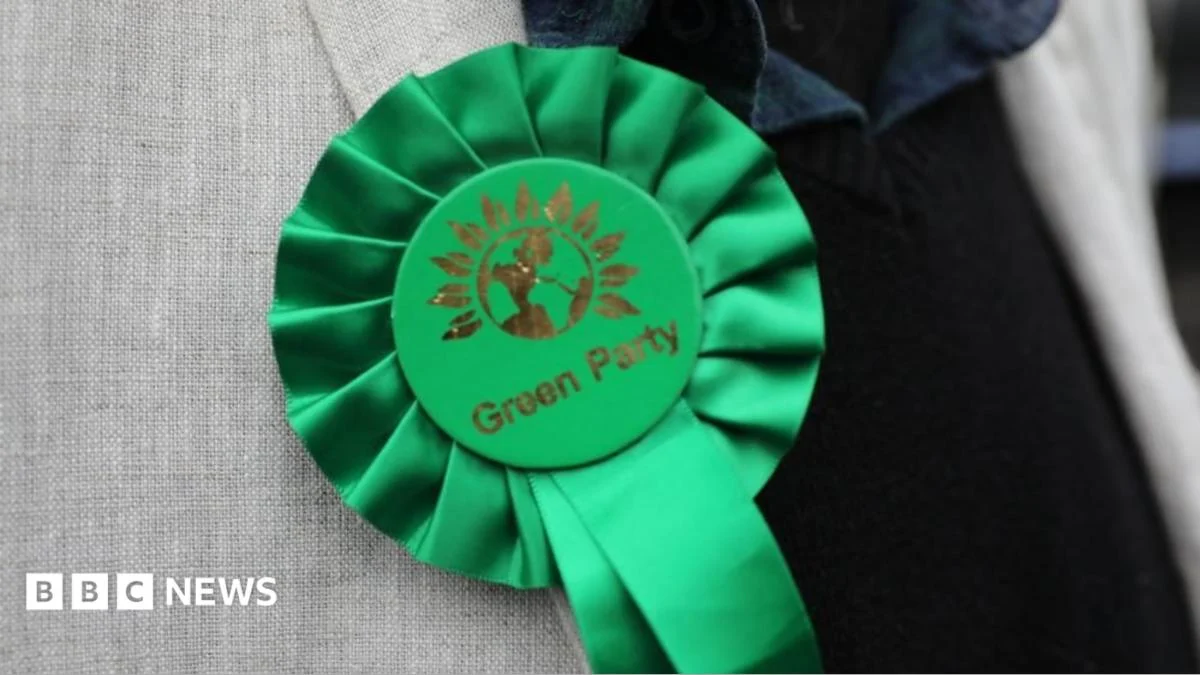
The Green Party of England and Wales has been formally declared a racist organisation by the Board of Deputies of British Jews, the UK’s largest and most representative Jewish communal body. This unprecedented and stark declaration came in direct response to a contentious policy motion, "Zionism is Racism," that was passed at the Green Party’s annual conference earlier this month. The Board of Deputies, acting as the democratic voice of British Jewry, underscored the gravity of its decision, stating that the Green Party had, "by adopting an antisemitic platform, become a racist party."
During a critical vote, which saw an overwhelming majority of 118 votes to one in favour, Board of Deputies president Phil Rosenberg articulated the profound distress and condemnation felt across the Jewish community. He emphasized that the Green Party’s newly adopted stance on Zionism, which many Jews consider a fundamental aspect of their identity and connection to their ancestral homeland, crosses a line into outright racism. "No political party has the right to tell Jews that a central part of our identity, rooted in thousands of years of history, faith and peoplehood, is racist," Rosenberg asserted, highlighting the deep historical and spiritual significance of Zionism for Jewish people worldwide. He further warned that this policy effectively "brands much of our community, including our synagogues and communal organisations, with that slur," thereby granting "prejudice against Jews a political licence." The Board’s leadership issued a clear demand for the Green Party’s leadership to take immediate responsibility for reversing this policy and actively confronting the antisemitism it has, in their view, legitimized.
In the wake of this severe indictment, a spokesman for the Green Party of England and Wales swiftly issued a rebuttal. They firmly insisted that the party does not discriminate against individuals who hold Zionist views, seeking to differentiate between the ideology and its adherents. The spokesman reiterated the party’s rejection of the Board of Deputies’ "characterisation of this motion and our party," arguing that the Board’s interpretation misrepresented their intentions and the substance of the policy. Crucially, the Greens declared that this decision by the Board of Deputies "will not stop us from speaking out against the genocide in Gaza and pushing for stronger sanctions against the Israeli government and its leaders." This statement underscores the party’s unwavering commitment to its position on the Israeli-Palestinian conflict, despite the severe backlash. It is important to note that Israel has consistently and vehemently denied that its military actions in Gaza amount to genocide, describing them as self-defence against Hamas.
The "Zionism is Racism" motion, which sparked this controversy, was adopted by Green members at their party conference after a spirited debate. The motion defined Zionism as an ideology supporting "an ethnonationalist Jewish state in historic Palestine to the exclusion and/ or domination of the non-Jewish population." This definition lies at the heart of the dispute. For many Jewish organizations and individuals, this characterization of Zionism is inherently antisemitic, as it denies the Jewish people’s right to self-determination in their ancestral homeland and casts their historical connection to Israel in a pejorative light. Critics argue that equating Zionism with racism is a tactic historically used to delegitimize the State of Israel and, by extension, Jewish identity. The language of the motion echoes a notorious 1975 United Nations General Assembly resolution that equated Zionism with racism, a resolution that was later revoked in 1991, following widespread international condemnation and a recognition of its divisive and antisemitic nature.
The Green Party’s motion drew widespread criticism not only from Jewish groups but also from within its own ranks and across the political spectrum. Four serving Green MPs and two former leaders publicly voiced their disapproval, signaling significant internal dissent. Opposition political parties also joined the chorus of condemnation, reflecting a broad consensus against the motion’s content. Responding jointly when the Green motion was initially passed, the Board of Deputies and the Jewish Leadership Council issued a powerful statement asserting that "Zionism is anti-racism, creating a refuge for Jews in their ancient homeland after millennia of persecution outside it." This counter-narrative emphasizes Zionism as a liberation movement for a persecuted people, offering a haven after centuries of antisemitism and pogroms.
Beyond the moral and ethical implications, the Board of Deputies’ declaration carries significant political weight. The motion passed by the Board urged other political parties across the UK not to engage in coalition deals or any form of electoral cooperation with the Greens unless the controversial policy is unequivocally rejected. It warned that forming coalition deals with the Greens at local or national level would constitute "failing to take antisemitism with the requisite seriousness," thereby making any such alliance politically untenable. The Board stipulated that the only acceptable condition for cooperation would be if the Green Party’s local leadership explicitly rejected the "Zionism is Racism" policy and committed to working towards its reversal within the party.
The impact of this stance is already being felt. The Labour Party, which currently holds several local government coalition agreements with the Greens, has already issued a stern ultimatum to these local Green groups. They have been told to disown the motion or face the loss of Labour’s support, effectively threatening the stability of these joint administrations. This development highlights the immediate and tangible political consequences for the Green Party, potentially isolating them in local government and hindering their ability to form alliances crucial for electoral success.
The position of Green Party leader Zack Polanski, who is Jewish, adds another layer of complexity to the controversy. Polanski did not participate in the vote on the "Zionism is Racism" motion at the party conference, having left early to campaign in the Holborn and St Pancras by-election, which took place just days later. While his absence meant he did not directly endorse the motion, his subsequent comments have not satisfied critics. Speaking to the BBC’s Sunday with Laura Kuenssberg, Polanski indicated that while he would personally like to see amendments made to the policy, he would not move to overturn the motion. This decision is significant, as it means the "Zionism is Racism" policy will remain official party policy until at least 2028, underscoring the deep ideological divisions within the party and the challenge facing its leadership in reconciling internal views with external pressures. Polanski’s position, as a Jewish leader unwilling to overturn a policy deemed antisemitic by the majority of the Jewish community, has been particularly scrutinized, raising questions about his ability to bridge the gap between his party and Jewish representative bodies.
The declaration by the Board of Deputies marks a significant escalation in the ongoing debate surrounding antisemitism, anti-Zionism, and freedom of speech within British political discourse. It forces a critical examination of how political parties define and address issues of identity, nationhood, and international conflict, particularly when these intersect with the lived experiences and historical narratives of minority communities. The Green Party now faces the formidable challenge of navigating this crisis, balancing its commitment to its adopted policies with the severe condemnation from the Jewish community and the potential for political isolation. The repercussions of this declaration are likely to resonate for some time, shaping public perception of the Green Party and influencing the broader conversation about antisemitism in contemporary British politics.



 George Anjay
 Nakalama John

 atisusanti
 Roy Suryo

 Nana Banana
