
 atisusanti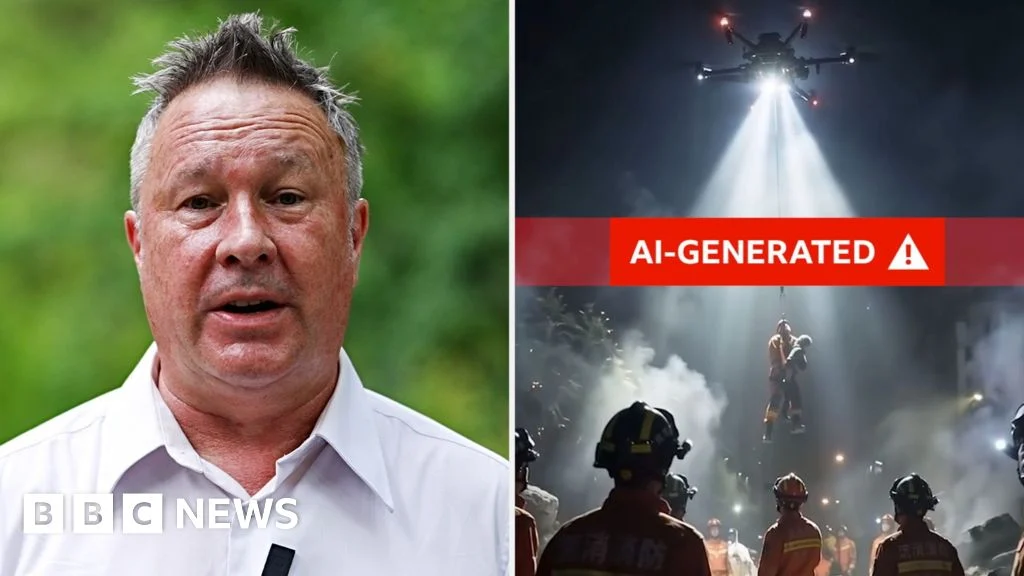
The recent surge in extreme weather events across China – from devastating floods that have displaced millions to unprecedented heatwaves and droughts that threaten agricultural output – has created a fertile ground for the spread of misinformation. In the chaotic aftermath of these natural calamities, when official information can be slow to emerge or is perceived as incomplete, people often turn to social media for real-time updates and visual evidence. This demand for immediate information, coupled with the inherent emotional impact of disaster footage, makes viral videos particularly potent. Unfortunately, this also makes them prime targets for malicious actors seeking to sow discord, exploit fear, or manipulate public opinion.
The BBC’s analysis, spearheaded by McDonell’s on-the-ground reporting and technical insights, delves into the sophisticated methods employed by those creating these fake videos. It’s no longer a matter of simple Photoshopped images or crudely edited clips. We are now witnessing the widespread deployment of advanced AI technologies, specifically deepfake algorithms and generative AI models, capable of producing hyper-realistic video content that is virtually indistinguishable from authentic recordings to the untrained eye. These tools can generate entirely new scenes, place individuals in fabricated scenarios, alter existing footage to depict events that never occurred, or even create entirely synthetic individuals speaking and acting in ways that never happened.
McDonell’s reports highlight specific instances where AI-generated videos have circulated widely, often appearing alongside genuine footage of real disasters. These fabricated clips can range from exaggerated depictions of destruction to entirely invented scenarios designed to elicit specific emotional responses – be it panic, anger, or sympathy. For example, a video might show a building collapsing in a manner far more catastrophic than reality, or depict crowds fleeing in a frenzy that never actually took place. The intent behind these fakes can vary: some aim to amplify the perceived severity of a disaster to garner more attention or aid, while others may be intended to discredit official responses, blame specific groups, or simply to create viral sensation for financial or ideological gain.
The difficulty in distinguishing between real and AI-generated content stems from the rapid advancements in AI technology. Generative Adversarial Networks (GANs) and other sophisticated AI models are now capable of producing visual and auditory outputs that exhibit a remarkable degree of fidelity. They can learn the nuances of human movement, facial expressions, and environmental interactions, making it increasingly difficult for even expert analysts to identify subtle digital artifacts or inconsistencies that were once tell-tale signs of manipulation. The speed at which these videos can be created and disseminated on platforms like Weibo, Douyin (China’s TikTok), and WeChat further exacerbates the problem.
The implications of this trend are profound and far-reaching. In the context of disaster response, the spread of misinformation can lead to a misallocation of resources, hinder rescue efforts, and create unnecessary panic among affected populations. When people are uncertain about the authenticity of information, they may hesitate to follow official instructions, making them more vulnerable. Furthermore, the erosion of trust in media and official channels can have long-term societal consequences, making it harder for authorities to communicate effectively during future crises.
The Chinese government’s commitment to combating misinformation is a critical step, but the technical challenges are immense. Their approach likely involves a multi-pronged strategy. Firstly, there will be an intensified effort to monitor online platforms and identify suspicious content. This will require sophisticated AI-powered detection tools that can analyze vast amounts of data for anomalies. Secondly, there will be a focus on rapid debunking and fact-checking, with official agencies and state-affiliated media working to counter false narratives with accurate information. This requires not only speed but also clarity and accessibility in communication.
However, the BBC’s analysis underscores a fundamental dilemma: the very AI technologies that are used to create these fakes can also be employed to detect them. This creates an ongoing arms race between those who seek to deceive and those who seek to expose deception. As AI detection tools become more sophisticated, so too will the AI generation tools used by malicious actors, requiring constant innovation and adaptation.
McDonell’s reporting also touches upon the human element of this crisis. Beyond the technological arms race, there’s a critical need for public education and media literacy. As AI-generated content becomes more pervasive, individuals need to develop a more critical approach to the information they consume online. This involves questioning the source, looking for corroborating evidence from reputable outlets, and being wary of content that seems overly sensational or designed to provoke an extreme emotional reaction.
The BBC’s deep dive into this issue serves as a stark reminder of the evolving landscape of information dissemination and the profound impact of artificial intelligence on our society. The viral China disaster videos are not merely an abstract technological concern; they represent a tangible threat to public safety, social stability, and the very concept of shared reality. As the world grapples with the increasing frequency and intensity of climate-related disasters, the ability to discern truth from fiction in the digital realm will become an ever more crucial skill, and the battle against AI-generated misinformation will undoubtedly continue to be a defining challenge of our time. The efforts to identify and counter these deceptive videos in China are indicative of a global struggle that requires a coordinated response involving technological innovation, robust regulation, and a well-informed, critically thinking populace. The future of how we understand and react to crises, both natural and digital, hinges on our collective ability to navigate this increasingly complex information ecosystem.


 Nana Banana
 George Anjay
 Nakalama John
 Ramos Leo