
 Ramos Leo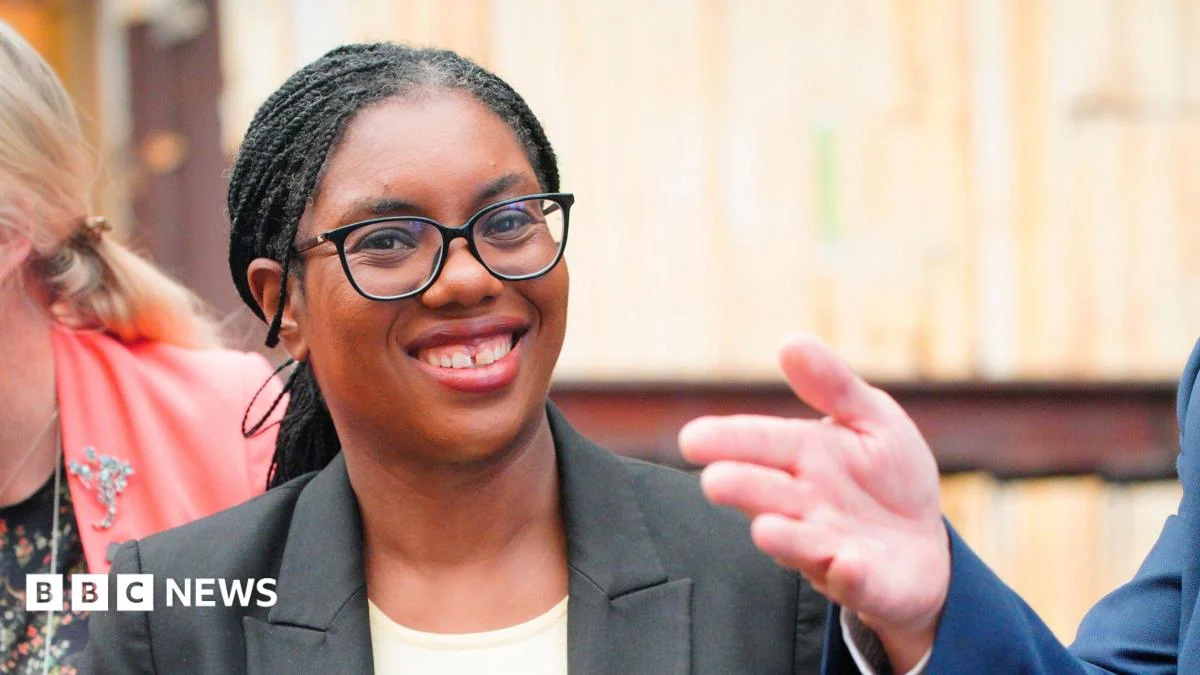
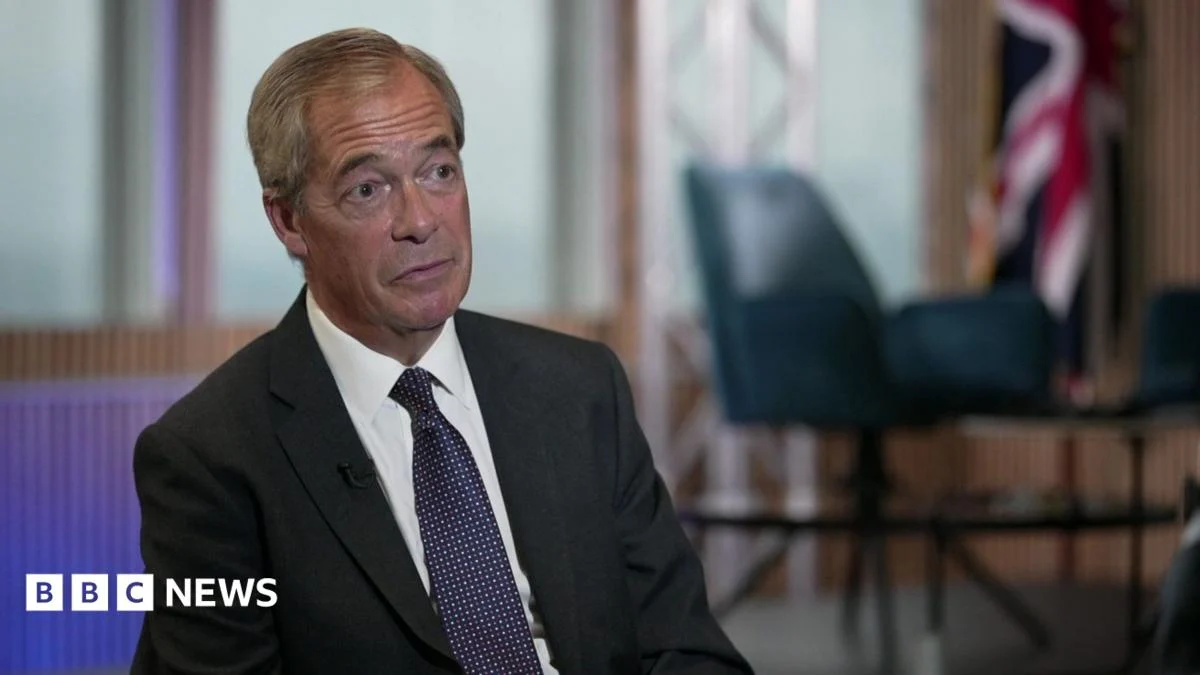
Voters in the coastal Essex constituency of Clacton are scheduled to cast their ballots on Thursday in a by-election that has drawn national attention. This snap election was necessitated by the resignation of Nigel Farage, the leader of Reform UK, who has chosen to stand as a candidate himself. Farage’s decision has been widely interpreted as a calculated political manoeuvre, aimed at leveraging an ongoing parliamentary standards inquiry into his personal finances. He will be one of a remarkable 34 candidates featured on the lengthy ballot paper, a testament to the unconventional nature of this particular electoral contest.
In an unprecedented move, the UK’s four largest political parties – Labour, the Conservatives, the Liberal Democrats, and the Green Party – have opted not to field candidates in this by-election. Their collective reasoning is that Farage’s resignation is a self-serving "stunt" designed to circumvent or influence the standards investigation, rather than a genuine act of accountability or public service. This absence of mainstream competition has left the field open for Farage and a diverse array of independent and minor party candidates, transforming the by-election into a unique political spectacle.
Badenoch’s letter, addressed "to the people of Clacton," pulled no punches in its assessment of Farage’s motives. "Nigel Farage has called this by-election not to help you, but to help himself," she asserted. This statement encapsulates the Conservative Party’s official stance, portraying Farage’s actions as a cynical exploitation of the democratic process for personal benefit. The crux of Badenoch’s argument revolves around the parliamentary standards investigation into a substantial £5 million gift Farage received from cryptocurrency tycoon Christopher Harborne. This gift, accepted by Farage before he took his seat in the House of Commons, is central to the ongoing controversy.
The investigation, initiated by the parliamentary standards commissioner Daniel Greenberg, was scrutinising whether Farage should have formally declared the money upon his entry into Parliament, as required by the rules governing members’ financial interests. Parliamentary rules mandate that MPs declare gifts, donations, and other financial interests to ensure transparency and prevent conflicts of interest. The inquiry sought to determine if Farage had adhered to these stringent regulations. However, the investigation was automatically suspended following Farage’s resignation from Parliament. Crucially, the commissioner’s probe is poised to resume if Farage successfully wins the by-election and re-enters the House of Commons. Farage himself has framed this by-election as a de facto public referendum on his integrity, billing it as a "public vote on the issue of his honesty."
The stakes for Farage are considerable. If he is found to have breached parliamentary rules and a suspension of more than 10 days is imposed as a penalty, it could trigger a recall petition. A successful recall petition, requiring the signatures of at least 10% of eligible voters in his constituency, would lead to Farage losing his seat and forcing yet another public vote. This potential chain of events underpins Badenoch’s strategic message to the Clacton electorate.
Badenoch reiterated her conviction that Farage’s actions were driven by self-interest. "Mr Farage wants the people of Clacton to settle his problems for him," she wrote, aiming to expose what she perceives as a manipulative tactic. She further elaborated, suggesting Farage’s ultimate goal: "He wants to point to you and say, ‘even after the £5m scandal, Clacton still chose me’." This framing suggests Farage is attempting to use the by-election result as a shield against the standards investigation, implying that a victory would somehow vindicate him in the eyes of the public, regardless of the parliamentary findings. Badenoch also challenged the origin and purpose of the substantial donation, posing the rhetorical question: "The people of Clacton are entitled to ask why someone would donate Nigel Farage that kind of money."
In response to inquiries about the gift, the Reform leader has consistently maintained that the £5 million was an "unconditional gift." He has previously stated that the money was intended for his security, given to him "with the knowledge that the state in this country has never, ever wanted to help" with his personal protection. This explanation has been met with skepticism in some quarters, particularly concerning the magnitude of the sum and the timing of its receipt relative to his parliamentary aspirations.
Badenoch, whose constituency of North West Essex borders Clacton, concluded her letter by outlining the Conservative Party’s future commitment to the area. "When the proper process has run its course and there is a genuine contest, we will be there," she affirmed. This indicates the Conservatives are biding their time, prepared to engage in a conventional electoral battle once the current controversy surrounding Farage has been resolved, or if a subsequent by-election is triggered. She articulated her vision for effective representation, promising: "I will put forward a serious candidate who understands that representing Clacton is a job – someone who turns up, listens, holds meetings and works for the people who live here." This description implicitly critiques Farage’s perceived approach to parliamentary duties, suggesting he is more focused on national media appearances and political campaigning than on diligent constituency work. "When the real choice comes, the Conservatives will be there and I hope we can earn your support," Badenoch concluded, signalling a long-term commitment to the Clacton constituency.
The political landscape of Clacton is indeed colourful for this particular election. Farage’s opponents include a range of distinctive figures, adding to the by-election’s unique character. Among them are the satirical candidate Count Binface, actor-turned-politician Laurence Fox, and no fewer than three candidates representing the Official Monster Raving Loony Party: Nick The Incredible Flying Brick, the party’s leader Alan "Howling Laud" Hope, and Baron Von Thunderclap. This eclectic mix of candidates further underscores the by-election’s departure from traditional political contests, transforming it into a platform for protest votes and novelty campaigns.
A spokesperson for Reform UK swiftly responded to Badenoch’s criticisms, turning the tables on the Conservative Party. "If Kemi Badenoch and the Conservatives truly had any respect for democracy they would have stood a candidate in this by-election," the spokesperson asserted. This statement challenged the Conservatives’ justification for abstaining from the contest, framing their decision as an abdication of democratic responsibility. Reform UK contended that the Tories had "turned their backs on the people of Clacton by refusing to put up a candidate," labelling it "the latest in a long list of betrayals." The party urged voters to seize the opportunity presented by the by-election: "Voters here have the chance to send a resounding message to the Tories and the rest of the failing political establishment by voting for Nigel Farage and Reform next Thursday." This appeal positions the by-election as a critical moment for Clacton residents to express their discontent with mainstream politics and to endorse Farage’s anti-establishment agenda.
The Clacton constituency itself is geographically diverse, encompassing the well-known seaside towns of Clacton-on-Sea, Frinton-on-Sea, and Walton-on-the-Naze. Its boundaries also stretch inland, incorporating a number of villages such as Frating, Tendring, Wix, and Little Oakley. Historically, Clacton has been a bellwether for Eurosceptic sentiment, notably becoming the first constituency to elect a UK Independence Party (UKIP) MP in 2014, when Douglas Carswell defected from the Conservatives. This strong local history of supporting anti-establishment and Eurosceptic figures makes it fertile ground for Nigel Farage, who has deep roots in such movements. The constituency’s demographic profile, including a significant proportion of retirees and a strong sense of coastal identity, often aligns with the populist messages championed by Farage and Reform UK. The by-election’s outcome, therefore, is not merely about Farage’s personal political future but also serves as a barometer for the broader political mood, particularly concerning the rise of Reform UK and its potential threat to the Conservative Party’s electoral base. The full list of the 34 candidates vying for the Clacton seat is available for public review.

 George Anjay
 Nakalama John
 atisusanti
 Roy Suryo
 Nana Banana