Nakalama John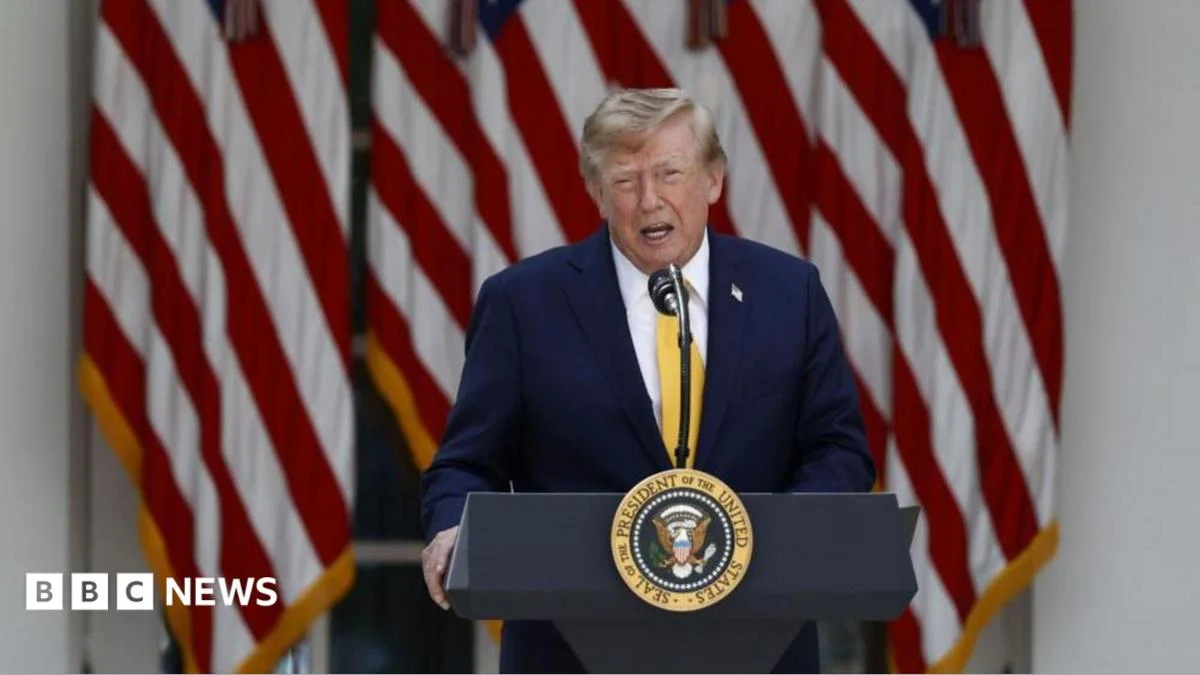
President Donald Trump has dramatically escalated trade tensions with Canada, threatening a substantial increase in US tariffs on automobiles and auto parts originating from its northern neighbor. The declaration, made on Monday, indicated a punitive hike from the current 25% to a staggering 50% on Canadian cars, trucks, and their components, effective January 1. This aggressive move follows the contentious collapse of critical US-Canada trade talks late last week, a breakdown that saw both nations publicly accusing the other of presenting unreasonable, last-minute demands at the negotiating table.
The proposed tariff hike marks a significant intensification of the trade dispute, casting a long shadow over the future of North American economic relations. The bilateral discussions, which had initially shown signs of progress, unraveled dramatically on Friday night, mere moments before a US-imposed deadline was set to expire. Had the deadline passed without an agreement, the US was poised to implement a 50% levy on an estimated $20 billion (C$28 billion; £14 billion) worth of Canadian imports. The failure to reach a consensus not only solidified existing differences but ignited a fresh wave of public acrimony.
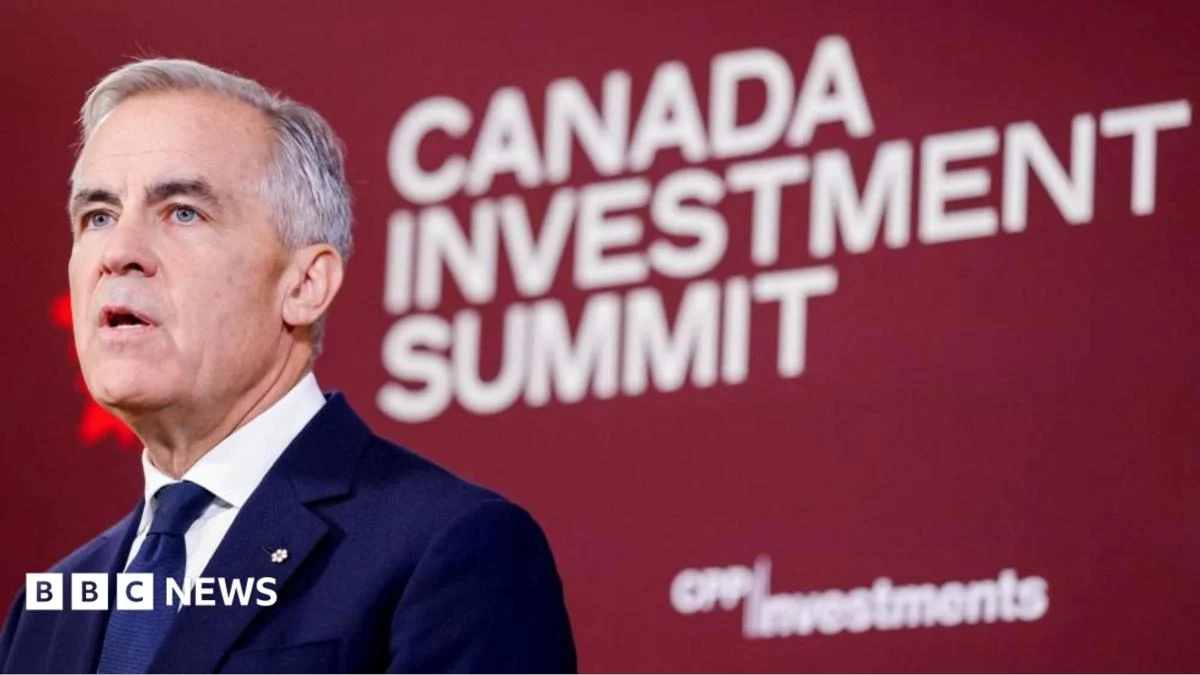
Canadian Prime Minister Mark Carney reacted to Trump’s latest tariff threat with a mix of defiance and resignation, labeling it "unsurprising" given the historical trajectory of US trade policy under the current administration. He vehemently accused President Trump of harboring intentions to "destroy Canada’s auto industry," a sector that forms a critical backbone of the Canadian economy and provides hundreds of thousands of jobs. Despite the heightened rhetoric, Carney maintained that Canada remains prepared to re-engage in negotiations, provided the United States approaches the discussions with what he termed the "right attitude" – a clear call for more constructive and less confrontational engagement. This war of words followed earlier statements from both US and Canadian officials confirming the suspension of talks, with no immediate date set for their resumption, underscoring the depth of the impasse.
The specific points of contention that led to the breakdown of talks remain highly debated. Canadian officials asserted that the US introduced "unacceptable" last-minute demands. Chief among these was reportedly a contentious clause that sought to limit the number and type of countries with which Canada could sign future trade agreements, effectively attempting to dictate Canadian foreign trade policy. This demand was viewed by Ottawa as an infringement on its sovereignty and an impediment to its efforts to diversify trade beyond its heavily US-reliant model. Conversely, US officials presented a different narrative. Jamieson Greer, the US trade representative, stated in an interview with CNBC on Monday that it was, in fact, Canada that introduced last-minute changes to the proposed deal, remarking pointedly, "They wanted more." This divergence in accounts highlights the deep-seated mistrust and differing objectives that ultimately scuttled the negotiations.
The breakdown in talks swiftly led to growing tensions, with both sides publicly entrenching their positions. Following Trump’s auto tariff threats, Prime Minister Carney declared that Canada would unequivocally counter any new US levies with reciprocal tariffs on US goods, matching them "dollar for dollar." This commitment signals a robust and unyielding defensive posture from Ottawa, prepared to absorb the initial economic blow and retaliate symmetrically. Beyond immediate trade countermeasures, Carney also outlined a broader strategic vision focused on bolstering Canadian businesses affected by the new 50% US tariffs and, crucially, on accelerating efforts to diversify Canada’s trade partnerships. Historically, Canada’s economic prosperity has been deeply intertwined with, and heavily reliant on, trade with the United States. The current crisis, however, serves as a powerful impetus for Ottawa to reduce this dependency.
As part of this diversification strategy and a broader commitment to national infrastructure, Carney announced significant funding amounting to C$11 billion ($7.95 billion; £5.83 billion). This substantial investment is earmarked for the construction of six new icebreakers at a shipyard in Quebec. These state-of-the-art vessels are intended for the Canadian Coast Guard and will replace its aging medium and heavy fleet, which is increasingly ill-equipped to meet the demands of Canada’s vast maritime territories. The strategic importance of these icebreakers extends far beyond mere fleet replacement; they are vital for opening and maintaining winter shipping routes through Canada’s northern and Atlantic waters, facilitating trade with new partners, asserting Arctic sovereignty, and supporting resource extraction in remote regions. This initiative underscores Canada’s long-term commitment to enhancing its maritime capabilities and exploring new avenues for economic growth and geopolitical influence.
The trade dispute also ignited fierce reactions at the provincial level, particularly from Ontario’s outspoken premier, Doug Ford. Given that Ontario is the heartland of Canada’s auto manufacturing industry, Ford’s response carried significant weight. He did not mince words, directly challenging the US president by famously telling him to "kiss my ass." Ford’s bluntness underscored the profound anxiety and anger within Canada’s industrial heartland over the potential devastation of its automotive sector. Beyond his defiant rhetoric, Ford also suggested concrete retaliatory measures, proposing that Canada should consider charging the United States extra for its vital energy resources, including oil and natural gas, as well as electricity and critical minerals. He indicated his intention to consult with Prime Minister Carney on the most effective strategies to "fight back" against US protectionism.
Ford’s comments did not go unnoticed by President Trump, who swiftly responded via a post on his social media platform, Truth Social. Trump accused Ford of "bluster" and, in a characteristically confrontational tone, wrote: "Someone should get these clowns to ‘fall in line’ or, the consequences for Canada will be far WORSE!" This presidential warning highlights the high-stakes nature of the dispute and Trump’s willingness to exert maximum pressure. Ford’s suggestion regarding energy resources is particularly poignant, given Canada’s critical role as a supplier to the US. According to Canadian government data, Canada accounts for a substantial 60% of total US crude oil imports and provides close to 100% of US natural gas exports. Leveraging these vital resources would undoubtedly represent a significant escalation, potentially inflicting considerable economic pain on the US. Furthermore, Canada’s rich deposits of critical minerals, essential for modern technologies and defense industries, add another layer of strategic importance to any potential resource-based retaliation.
The intensifying trade war has sent ripples of concern through businesses on both sides of the border. Companies, deeply integrated into complex cross-border supply chains, are bracing for the impact of the new wave of US tariffs on Canadian goods, as well as the "dollar-for-dollar" retaliatory tariffs that Canada plans to impose, slated for September 8. These tariffs threaten to disrupt established supply chains, increase manufacturing costs, reduce consumer choice, and ultimately lead to higher prices for goods. The uncertainty generated by the trade dispute also dampens investor confidence, potentially leading to delayed investments and job losses in sectors directly and indirectly affected.
Beyond the immediate tariff threats, the trade war has also cast a shadow over the future of the existing North American trade pact, known as the United States-Mexico-Canada Agreement (USMCA). This landmark agreement, signed by President Trump in his first term, replaced the decades-old North American Free Trade Agreement (NAFTA) and underpins a staggering $1.6 trillion in annual North American trade, creating one of the world’s largest free trade zones. A mandatory review of the USMCA was scheduled for this summer, during which both Canada and Mexico expressed their desire for the pact to be extended for another 16 years, signaling their commitment to regional economic integration. However, the United States has indicated that it will "not renew [the USMCA] in its current form," suggesting that Washington may seek to renegotiate key aspects of the agreement, potentially demanding concessions that could further destabilize North American trade relations. The prospect of the USMCA unraveling represents a significant threat, as its dissolution would create immense economic uncertainty and disrupt deeply entrenched cross-border industries.
Experts from Oxford Economics issued a stark warning on Monday, emphasizing the severe economic consequences for Canada should the USMCA collapse. Tony Stillo, Head of Canada Economics, and Senior Economist Michael Davenport stated, "While unlikely, escalating trade tensions means the risk of the USMCA unravelling has increased, which would plunge Canada into recession and leave it on a permanently lower growth path." This dire prediction underscores Canada’s unique vulnerability due to its profound economic integration with the US. A dismantling of the USMCA would not only lead to increased tariffs but also dismantle the regulatory frameworks that facilitate seamless trade, investment, and supply chain management across the continent. Such an outcome would severely hamper Canada’s export-driven economy, erode investor confidence, and lead to widespread job losses, particularly in sectors like automotive manufacturing, agriculture, and energy.
The current escalation evokes memories of President Trump’s earlier "America First" trade policies and his administration’s willingness to challenge established trade norms. His previous renegotiation of NAFTA, which ultimately led to the USMCA, demonstrated a pattern of aggressive tactics and demands for significant concessions. The current standoff over auto tariffs and the future of the USMCA suggest that this pattern continues, posing an existential challenge to the long-standing economic partnership between the two nations. With both sides publicly dug in, and no immediate path to resolution, the trade war between the US and Canada appears poised for further intensification, with profound implications for their respective economies and the broader global trading system.



 Roy Suryo
 George Anjay
 Ramos Leo