Nakalama John
The yield on a 30-year gilt – a crucial indicator of the long-term cost for the British government to borrow money – surged to 5.89%, a level not witnessed since 1998. This specific benchmark reflects investor confidence over a multi-decade horizon, and its ascent suggests a significant premium is now demanded for lending to the UK government for extended periods. A gilt is essentially a bond issued by the UK Treasury, promising to pay interest (the coupon) to the holder and repay the principal at maturity. The yield is the effective annual return an investor receives, taking into account the bond’s market price. When yields rise, it means the bond’s price has fallen, indicating a decrease in investor demand or an increase in perceived risk, compelling the government to offer a higher return to attract lenders.
Across the globe, the effective cost of borrowing for governments has continued its upward trajectory this morning, with new multi-decade highs being recorded in market interest rates. This synchronized global movement underscores a systemic shift in investor sentiment and economic conditions, rather than being solely a UK-specific phenomenon. The immediate impact on the UK market, which had been closed for a bank holiday yesterday, was particularly acute as it caught up with global movements.
Several interconnected factors are driving these elevated borrowing costs. Foremost among them are persistent concerns about inflation, exacerbated by the ongoing Iran war. This geopolitical conflict has sent ripples through global energy markets, driving up oil and gas prices and threatening to further disrupt already fragile supply chains. Higher energy costs feed directly into producer and consumer prices, eroding purchasing power and necessitating tighter monetary policy to bring inflation under control. Investors, anticipating higher inflation, demand greater yields to compensate for the erosion of their future returns.
Adding another layer of complexity is the burgeoning competition from major technology firms for long-term borrowing. These multi-national tech giants, often with strong balance sheets and ambitious growth plans, are increasingly tapping into capital markets for long-term financing. Their demand for capital, coupled with attractive returns they can sometimes offer, diverts investor appetite and capital away from government bonds, forcing governments to offer more competitive yields to attract the necessary funding. This creates a crowded field for long-term capital, pushing up costs for all borrowers.
Furthermore, mounting concerns about state borrowing levels, both in the UK and internationally, are weighing heavily on investor confidence. The UK’s national debt has swelled significantly in recent years, propelled by massive spending during the COVID-19 pandemic, energy price support schemes, and ongoing investment in public services. High debt levels raise questions about a government’s ability to service its obligations without resorting to measures like inflation-inducing money printing or future tax hikes, which can deter bond investors.
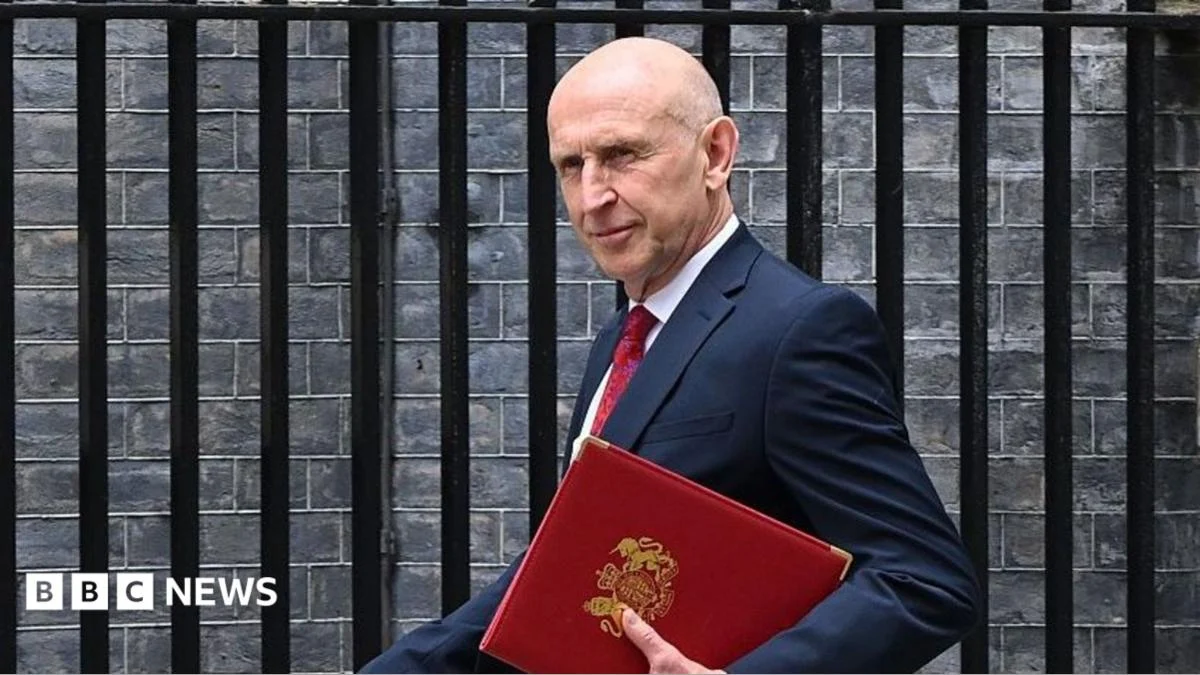
These formidable financial pressures will undoubtedly complicate the Budget process for Prime Minister Burnham, who is slated to face MPs for the first time as prime minister on Tuesday, and his Chancellor, John Healey. A successful first Budget is crucial for a new government to establish its economic credibility and set the tone for its legislative agenda. However, the current fiscal environment presents a significant hurdle. Higher borrowing costs directly reduce the amount of "headroom" the government possesses against its self-imposed fiscal rules. These rules, often designed to ensure long-term fiscal sustainability (e.g., debt falling as a share of GDP, borrowing only for investment), become harder to adhere to when a larger proportion of tax revenue is siphoned off to service debt interest payments.
This reduction in fiscal headroom will severely limit Chancellor Healey’s capacity to introduce popular, consumer-friendly measures aimed at easing the ongoing cost of living crisis. The public, already grappling with high inflation and stagnant wages, will be looking to the Budget for relief, be it through tax cuts, increased welfare benefits, or targeted support schemes. However, with the government’s financial flexibility constrained, Healey may find himself having to make difficult choices, potentially sacrificing popular spending initiatives to maintain fiscal discipline and reassure markets. This balancing act carries significant political risk for the nascent Burnham administration.
The yield on the benchmark 10-year gilt, often considered the most liquid and widely traded UK government bond, also saw a dramatic increase, hitting its highest rate since June 2008. This specific timeframe evokes memories of the global financial crisis, highlighting the severity of the current market turbulence. The 2008 crisis was characterized by a freezing of credit markets and a widespread loss of confidence, and while the current situation differs in its root causes, the comparable borrowing costs underscore the profound economic challenges faced today. As previously noted, gilt yields move inversely to the value of the bonds; as yields rise, bond prices fall, indicating that investors are less willing to pay a premium for these government securities.
The global nature of this phenomenon is evident, with borrowing costs in the US, Japan, and Europe hitting similar multi-decade highs in recent days. Global markets reacted with particular intensity following suggestions from the US that its central bank, the Federal Reserve, could raise interest rates further to combat inflation. Such moves by the world’s largest economy and its central bank have a powerful ripple effect, influencing capital flows and investor expectations worldwide. Japan, too, is facing increasing pressure to reconsider its long-standing ultra-loose monetary policy, further contributing to the global shift towards higher interest rates.
Amidst these turbulent global financial conditions, Chancellor John Healey is currently in the USA, attending a critical meeting of global finance ministers and central bankers, including the G20 summit. In his address to the G20, Healey sought to project an image of economic resilience and prudent management for the UK. He highlighted that the UK had achieved the fastest growth in the G7 in 2026 so far, that productivity was improving, and that the UK was cutting its borrowing at the fastest rate among major economies. These statements, while aimed at reassuring international markets and fostering confidence, contrast starkly with the immediate reality of soaring borrowing costs. The challenge for the Chancellor will be to demonstrate that these positive trends can be sustained and that the government has a credible plan to navigate the current fiscal pressures.
Kathleen Brooks, research director at investment company XTB, provided a stark assessment to the BBC News Channel, stating unequivocally: "Of course, this is red lights flashing." She elaborated, acknowledging that while "we are used to pockets of volatility, it has been a volatile few months," the current situation transcends typical market fluctuations. Brooks underscored the gravity of the situation, noting that record levels of government debt, coupled with a record tax take from citizens, mean "these are not comfortable times for the new government and the new chancellor." Her analysis points to a deeply entrenched fiscal challenge, where even high tax revenues are insufficient to comfortably manage the escalating cost of debt.
Brooks further emphasized the direct and compounding impact of rising yields: "Every time bond yields rise, the UK has to pay more on the debt interest." This means that the government’s annual budget for servicing its debt obligations grows, diverting funds that could otherwise be allocated to essential public services, investment in infrastructure, or measures to alleviate the cost of living crisis. The increasing debt servicing costs represent a structural drain on public finances, making it exponentially harder for the government to achieve its policy objectives without either increasing taxes further, cutting public spending, or breaching its own fiscal rules. The immediate outlook presents a formidable test for Prime Minister Burnham and Chancellor Healey as they prepare to deliver a Budget under unprecedented financial strain.



 George Anjay
 Ramos Leo
 atisusanti
 Roy Suryo