Nakalama John
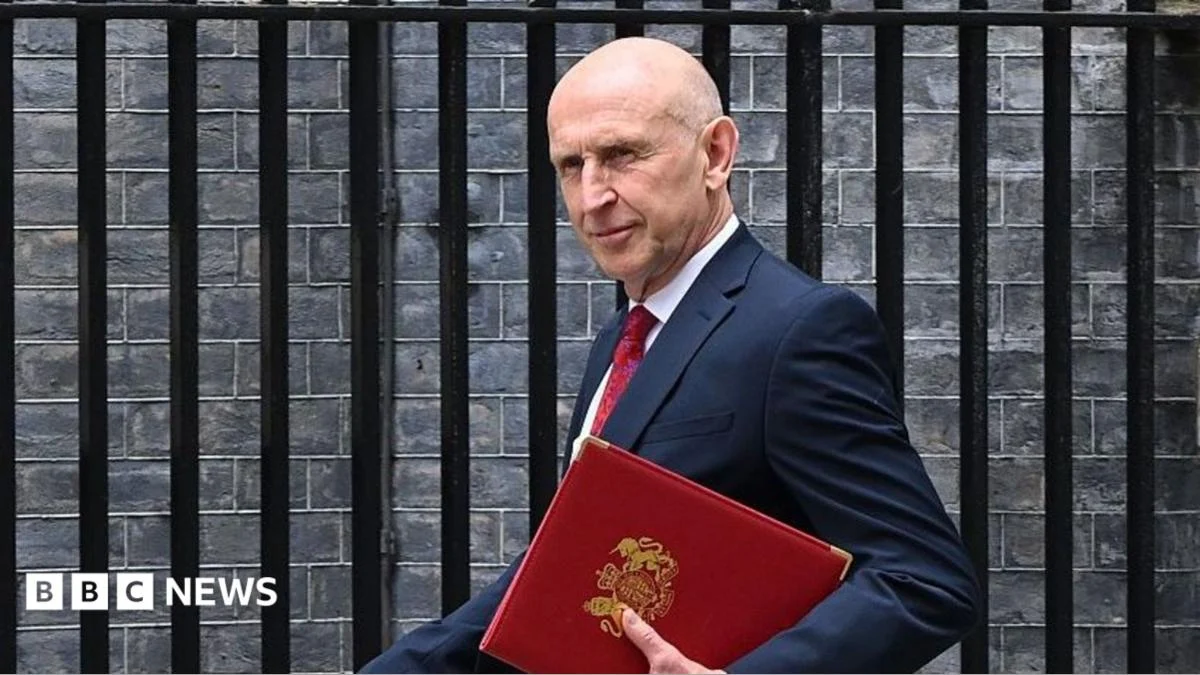
Business Secretary Jonathan Reynolds is scheduled to hold crucial talks early next week with the leadership of luxury car manufacturer Jaguar Land Rover (JLR) and the Unite trade union, as the company faces the prospect of thousands of job reductions. The highly anticipated meeting underscores the gravity of the situation for one of the UK’s most iconic automotive brands and a significant employer in the West Midlands. The primary focus of these discussions, according to Reynolds, will be to explore strategies to "mitigate any job losses" and ensure the long-term viability of JLR in the UK, although he has explicitly ruled out a direct government bailout.
JLR has confirmed to the BBC that it is initiating a voluntary redundancy programme, marking a significant development just a year after a debilitating cyber attack severely disrupted its production capabilities. While the company has refrained from publicly stating the precise number of roles at risk, The Times newspaper has reported that as many as 4,000 jobs could be shed. These cuts are reportedly a response to a confluence of challenging factors, including the persistent impact of tariffs and a notable downturn in sales across key markets. The voluntary redundancy scheme is primarily aimed at salaried and management team members, suggesting a focus on streamlining the company’s white-collar workforce. However, JLR has not ruled out the possibility of compulsory redundancies should the voluntary program not achieve the desired efficiency improvements.
Speaking on the BBC’s Sunday with Laura Kuenssberg, Business Secretary Reynolds acknowledged the cyclical nature of employment within large corporations like JLR. He stated, "A company the size of JLR, which is a huge British success story, at various times in its business cycle, the number of, directly, people it employs will change." He further elaborated that if the impending adjustments are aimed at "making sure over time that the workforce is right to make the business as competitive as possible," then such a conversation is necessary. While ruling out a direct financial rescue package, Reynolds did leave the door open for potential government support in the form of "long-term investment in the future" of the company, hinting at assistance for strategic initiatives such as research and development, retooling for electric vehicle production, or infrastructure upgrades.
The news of potential job losses at JLR arrives at a sensitive time, coinciding with Chancellor John Healey’s preparations to deliver a significant speech in the Midlands on Monday. Healey’s address is expected to outline government plans to boost economic growth by fundamentally re-evaluating how investment in critical infrastructure, including transport and housing, is valued. Given JLR’s strategic base in Coventry, within the West Midlands, the timing of these announcements creates a stark backdrop for the Chancellor’s economic vision. The Liberal Democrats were swift to react, branding the news as "devastating" for JLR employees and urging Chancellor Healey to use his forthcoming speech to offer tangible "support for those jobs at risk." Sarah Olney, the Liberal Democrats’ business spokesperson, criticised the government’s broader economic strategy, stating, "This development lays bare that the government’s growth mission is falling far short."
JLR’s decision to pursue job reductions is framed by the company as a move to "simplify" its business structure, "improve efficiency," and "build greater resilience" in the face of ongoing economic headwinds and competitive pressures. A company spokesperson confirmed the initiation of the voluntary redundancy programme for salaried and management personnel, stating, "We will share further information with our colleagues first." This internal communication strategy aims to keep employees informed directly before broader public announcements.
Unite general secretary Sharon Graham voiced strong concerns, asserting that the union has consistently warned about a "perfect storm" brewing over the automotive industry for an extended period. Graham criticised what she termed "death by a thousand cuts," suggesting a long-standing pattern of underinvestment and a lack of a coherent industrial strategy from successive governments that has incrementally eroded the sector’s strength. She revealed that "intensive" discussions had taken place over the weekend between the union and JLR management, focused on mitigating the impact of the job losses on the workforce.
A significant factor contributing to the automotive industry’s current pressures, and one discussed by Reynolds, is the UK’s ambitious electric vehicle (EV) sales target. This regulatory framework mandates that a rising percentage of cars sold by manufacturers each year must be zero-emissions vehicles, with the target escalating to 80% by 2030. Reynolds acknowledged the challenges this poses for manufacturers, noting that one of his initial actions as Business Secretary was to offer the industry more flexibility in working towards these targets. He also highlighted an ongoing consultation on the matter, indicating a willingness to adapt regulations to better align with consumer demand and industry capabilities. "It’s not where it needs to be and that’s why we’re willing to change the regulation to work with where consumer demand is and the industry," he added, underscoring the government’s recognition of the significant transition costs and market complexities involved in the shift to EVs. Reynolds also confirmed discussions with West Midlands Mayor Richard Parker regarding collaborative efforts to support JLR and its employees through this challenging period.
The current round of redundancies follows an earlier, smaller-scale cost-saving initiative announced by JLR in July, which saw fewer than 300 individuals leave the firm. JLR is a colossal employer in the UK, with approximately 30,000 individuals on its payroll in domestic operations, supplemented by an additional 10,000 employees at its plants overseas. The most significant recent shock to the company was the severe cyber attack in September 2025. This sophisticated breach led to a complete shutdown of all manufacturing activities at JLR for several weeks, bringing vehicle production to a standstill. The aftermath saw a dramatic 27% decline in the company’s overall production, inflicting substantial financial damage on one of the West Midlands’ largest employers. The total economic cost attributed to the cyber-attack and the subsequent production stoppage was estimated to be a staggering £1.9 billion. In response to this immense financial hit, JLR had announced plans in June to implement approximately £1.7 billion in cost savings over the coming years as part of its recovery strategy. At the time, the company indicated that these savings would be achieved through efficiencies in areas such as materials procurement, warranty management, and fixed operational costs, setting the stage for the current workforce adjustments. Simon Jack contributed additional reporting to this article.



 George Anjay
 Ramos Leo
 atisusanti
 Roy Suryo