Nakalama John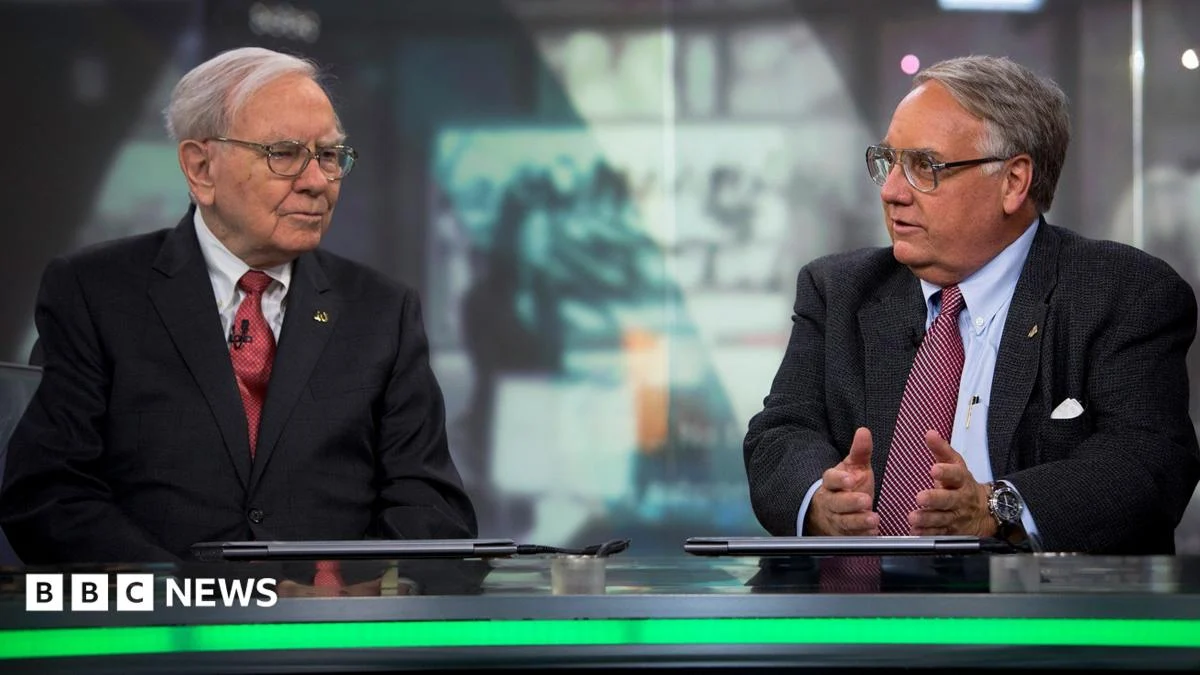
At the remarkable age of 96, Buffett will not entirely sever ties with the company he built from a struggling textile mill into a global powerhouse. Instead, he will assume the title of chairman emeritus, maintaining a seat on the company board. In this advisory capacity, he is expected to continue offering his invaluable "judgement and perspective," a resource that shareholders have come to rely on for decades. His continued presence, albeit in a less direct operational role, signals a commitment to stability and a gentle hand-off, reassuring investors that the foundational principles of Berkshire Hathaway will endure.
This latest move comes nine months after Buffett initiated another crucial phase of his succession plan, passing the chief executive officer role to Greg Abel. Abel, a long-time Berkshire executive previously overseeing its extensive energy operations, was publicly designated as Buffett’s successor for the CEO position in 2021, though the formal transition of operational duties began earlier. Howard Buffett, who has served as a director on Berkshire Hathaway’s board since 1993, now assumes the crucial responsibility of guarding the firm’s distinctive culture and values, a non-executive role designed to preserve the company’s long-term ethos.
Known globally as the "Oracle of Omaha," Buffett has cultivated one of the most successful and widely admired investment track records in modern financial history. His journey with Berkshire Hathaway began in 1965 when he gained control of what was then a flagging New England textile manufacturer. Through a series of shrewd acquisitions, strategic investments, and an unwavering commitment to his core investment philosophy, he transformed the company into a colossal $1.1 trillion (approximately £822 billion) global conglomerate, a testament to his visionary leadership and patient capital.
Buffett’s investment philosophy, famously dubbed "value investing," is characterized by a disciplined approach focused on acquiring shares of fundamentally strong businesses at reasonable prices and holding them for extended periods – often decades. Unlike speculators who chase short-term gains or high-growth ventures with unproven profitability, Buffett sought out companies with durable competitive advantages, competent management, and predictable earnings. He famously advised investors to "be fearful when others are greedy, and greedy when others are fearful," embodying a counter-cyclical mindset that often yielded spectacular results.
This methodology led him to acquire entire companies, such as GEICO car insurance, Dairy Queen, and the BNSF railway system, integrating them into Berkshire’s diverse portfolio of wholly-owned subsidiaries. Beyond these, Berkshire Hathaway also maintains substantial equity stakes in publicly traded giants like Apple and Coca-Cola. The latter holds a special place in Buffett’s heart, not just as a highly profitable long-term investment that has paid consistent dividends for decades, but also as a personal favorite, with the investor famously consuming several cans of the beverage daily.
The influence of Warren Buffett extends far beyond the financial returns of Berkshire Hathaway. His annual letters to shareholders are eagerly anticipated global events, revered for their candid insights, folksy humor, and profound lessons on business, investing, and life. These letters, along with Berkshire’s annual shareholder meetings – often dubbed "Woodstock for Capitalists" – transformed him into a leading mentor and thought leader across the financial world. Investors, from seasoned professionals to nascent enthusiasts, flocked to Omaha to hear his wisdom, drawn by his transparency and an uncanny ability to demystify complex financial concepts.
Despite his official retirement from the top board post, the transition is widely viewed not as a sudden upheaval but as an orderly and well-orchestrated passing of the baton. The stability of Berkshire Hathaway, a hallmark of Buffett’s management style, is expected to continue unimpeded. "The timing is right to complete the transition," Buffett wrote in his letter to shareholders, humorously acknowledging his 96th birthday and noting that even a great-grandchild, celebrating their first birthday, was "moving a bit faster" than he was, a poignant nod to the inevitable march of time.
The company has meticulously assured investors that day-to-day operations will remain steady under the new structure. Greg Abel, as CEO, will continue to manage the corporate strategy, oversee the diverse array of operating businesses, and make key capital allocation decisions, areas where he has already demonstrated significant capability and alignment with Berkshire’s long-term vision. His extensive background in leading Berkshire Hathaway Energy provided him with invaluable experience in managing large, complex enterprises, preparing him for the immense scope of the CEO role.
Howard Buffett’s role as non-executive chairman is distinct yet equally crucial. His primary duty will be to safeguard the firm’s unique "culture and values" – a decentralized management approach, a strong emphasis on integrity, and a steadfast commitment to long-term shareholder value. A former farmer, a dedicated philanthropist, and even a one-time sheriff, the younger Buffett brings a diverse skill set and more than three decades of board experience to this custodial role. His deep understanding of the family’s principles and the company’s ethos makes him a natural choice to preserve the legacy built by his father.
Buffett concluded his heartfelt letter by expressing that it had been the "privilege of a lifetime" to serve as chairman of Berkshire Hathaway. Yet, with characteristic humility and pragmatism, he acknowledged a universal truth: that in the end, "Father Time always wins." While an era of direct leadership from one of the greatest business minds in history draws to a close, the foundations he laid – a robust conglomerate, a distinctive culture, and a profound philosophy of investing – are poised to continue shaping the financial landscape for generations to come under the stewardship of his carefully chosen successors. His departure marks not an ending, but a new phase in the enduring story of Berkshire Hathaway.



 George Anjay
 atisusanti
 Nana Banana