Nakalama John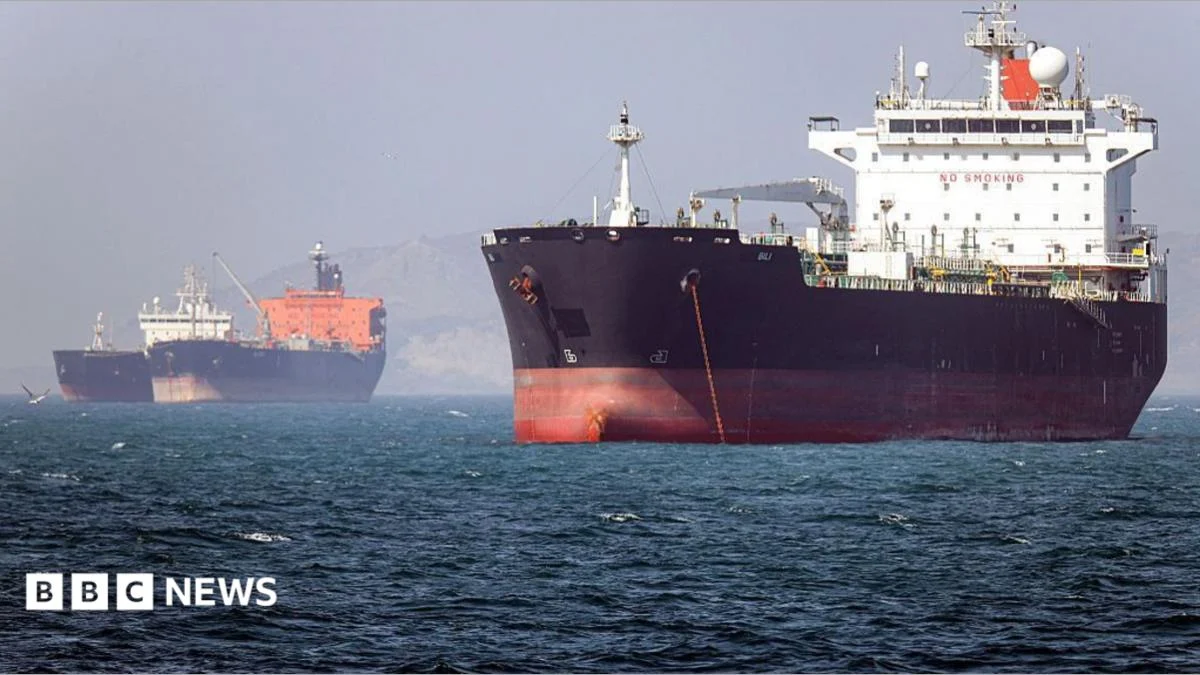
At the onset of the conflict, JP Morgan’s commodities research team had operated under a set of clear assumptions, believing there existed distinct "economic red lines" that the then-Trump administration would be unwilling to cross. These thresholds, they reasoned, would serve as de-escalation triggers, compelling a diplomatic resolution before severe economic damage could materialize. The bank had specifically posited that a deal to re-open the crucial Strait of Hormuz shipping lane, a vital chokepoint for global oil transit, would have been struck as early as June, preventing a protracted crisis. This initial framework was built on the premise that the political imperative to maintain economic stability would ultimately override the impulse for sustained confrontation.
The specific "red lines" outlined by JP Morgan were meticulously chosen to reflect key indicators of economic health and public sentiment in the United States. These included oil prices surging above $100 a barrel, a level historically associated with significant inflationary pressures and economic downturns; headline inflation reaching 4%, which would trigger concerns about consumer purchasing power and central bank intervention; gasoline prices topping $5 a gallon, a psychologically charged threshold for American consumers that often fuels public discontent; and rates on 10-year government borrowing hitting 5%, a benchmark that signifies higher borrowing costs for the US government and can ripple through global interest rates, impacting everything from mortgages to corporate investments. These metrics collectively represented a critical barometer for the economic tolerance of the US administration and the broader global economy.
"The market is on edge," JP Morgan analysts noted, a sentiment that accurately captures the pervasive anxiety among investors grappling with the confluence of geopolitical tensions and economic uncertainties. The admission from a behemoth like JP Morgan that its experts are struggling to grapple with the economic impact of the US-Iran conflict is particularly significant. It highlights not only the inherent difficulty in forecasting the actions of a highly unpredictable political leadership, such as that of former President Donald Trump, but also the broader challenges in modeling a conflict that defies conventional historical precedents and diplomatic norms.
An oil and gas industry source, speaking anonymously to the BBC, described JP Morgan’s note as "unusual" for such a high-profile investment firm. This sentiment is widely shared across financial circles, where investment banks typically project an image of unwavering analytical confidence, even in the face of uncertainty. The source added that the note was "a reflection on the state of play," indicating the profound and widespread uncertainties surrounding the US-Iran conflict. Such public admissions of analytical impotence are rare and serve as a powerful testament to the truly unprecedented nature of the current geopolitical environment.
Investors, by their very nature, make investment decisions heavily influenced by expectations regarding inflation and the price of oil. Given oil’s widespread use as a foundational commodity in transportation, manufacturing, and energy production, and humanity’s enduring dependence on it, its price is a major factor driving inflationary pressures across the globe. A surge in oil prices can quickly translate into higher costs for businesses and consumers, impacting everything from food prices to airline tickets. Therefore, the inability of a leading bank to forecast this critical variable creates a vacuum of reliable information, forcing investors to navigate an increasingly opaque landscape with heightened risk.
Six months after the conflict’s initial escalation, the grim reality has defied JP Morgan’s initial assumptions. Many of the presumed "economic red lines" have not only been approached but decisively crossed, yet the anticipated clarity regarding an "exit strategy" or de-escalation path remains elusive. On the contrary, the situation appears less clear, not more. Oil prices, after an initial period of fluctuation, have surged back above $100 a barrel in recent weeks, validating one of the bank’s critical thresholds. Simultaneously, the interest rate, or yield, on 10-year government bonds – a key mechanism through which the US government borrows money from financial markets – has ticked over 5%. This indicates higher borrowing costs and reflects increased investor concern about inflation and economic stability.
The crossing of these red lines without a corresponding de-escalation signal has fundamentally altered JP Morgan’s analytical posture. "For the first time since the start of the Iran conflict, we don’t have a baseline view," stated the commodities research team in their candid note. "We simply don’t know how to model the endgame." This statement is a profound acknowledgment of the limitations of traditional financial modeling when confronted with truly unprecedented geopolitical dynamics. Investment banks typically rely on historical data, economic theories, and geopolitical frameworks to construct their baseline views and scenario analyses. However, the unique blend of a highly volatile regional conflict, the global impact of an unpredictable superpower, and a lack of clear diplomatic off-ramps has rendered these conventional tools ineffective.
The US-Iran conflict, which has its roots in decades of mistrust and heightened dramatically following the Trump administration’s withdrawal from the 2015 Iran nuclear deal (JCPOA) and subsequent imposition of "maximum pressure" sanctions, has been marked by a series of escalations. These include drone attacks, seizures of oil tankers, and missile strikes on Saudi Arabian oil facilities, all contributing to a sustained period of tension in the critical Middle East region. Each incident has sent jitters through global oil markets, highlighting the fragility of supply chains dependent on safe passage through the Strait of Hormuz, a narrow waterway through which roughly one-fifth of the world’s total oil supply passes daily. Any significant disruption in this strait could trigger an immediate and catastrophic global oil shock, far exceeding the $100 per barrel mark and potentially plunging the world economy into a severe recession.
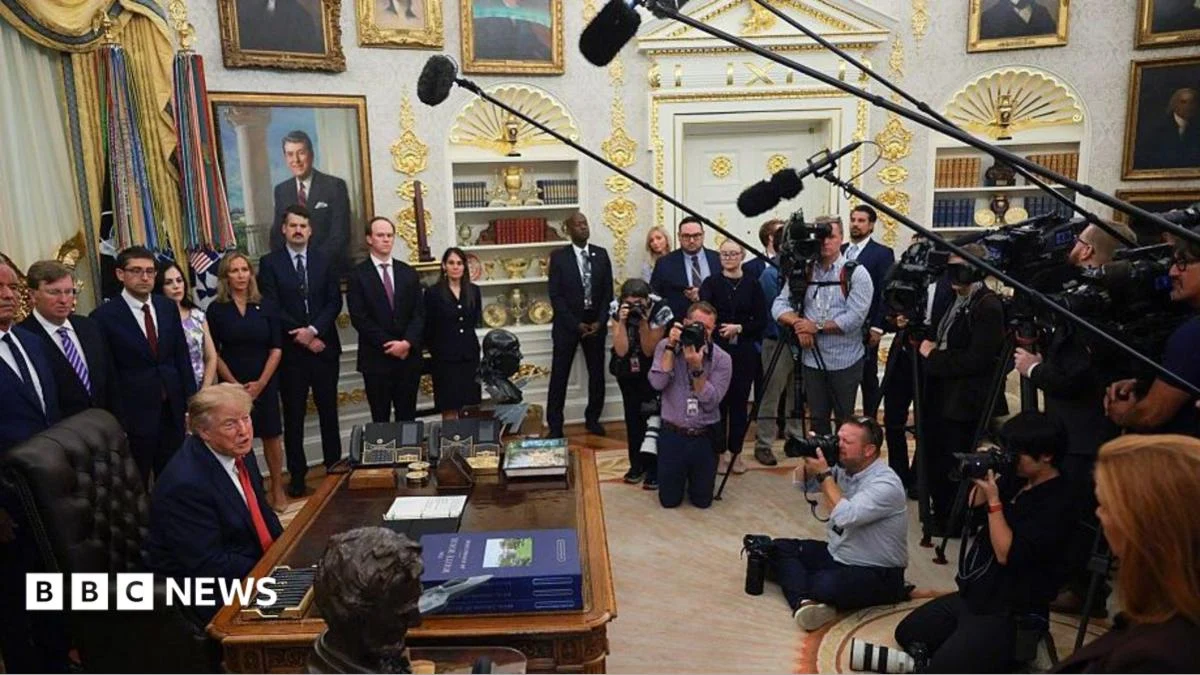
The "Trump factor" further complicated any attempts at traditional forecasting. The former administration’s foreign policy was often characterized by abrupt shifts, unconventional diplomacy conducted via social media, and a willingness to challenge long-standing international norms. This made predicting responses to provocations or identifying potential diplomatic resolutions exceedingly difficult for analysts accustomed to more predictable statecraft. The absence of clear communication channels or a discernible long-term strategy, beyond the "maximum pressure" campaign, left market participants and analysts alike scrambling to interpret signals that often seemed contradictory or deliberately ambiguous.
For investment banks, forecasting involves intricate quantitative models that assess supply and demand dynamics, geopolitical risk matrices, and scenario planning based on various outcomes. However, when the variables become too numerous, too interconnected, and too unpredictable – particularly concerning the actions of key state actors – even the most sophisticated models can break down. The current situation demands a level of qualitative geopolitical analysis that often falls outside the purview of traditional financial modeling, relying instead on insights into political psychology, military capabilities, and regional power dynamics, which are inherently more subjective and less amenable to precise quantification.
The broader economic implications of sustained high oil prices and rising interest rates are severe. Industries heavily reliant on fuel, such as aviation, shipping, and logistics, face escalating operational costs that can erode profit margins and lead to higher consumer prices. Manufacturing sectors, which use petroleum derivatives as raw materials, also experience increased expenses. For the average consumer, higher gasoline prices act as a regressive tax, reducing discretionary spending and potentially dampening overall economic growth. Central banks, particularly the US Federal Reserve, would face immense pressure to address inflation, potentially through interest rate hikes, which could further slow economic activity and increase the risk of a global recession.
The lack of a "baseline view" signifies that JP Morgan cannot even establish a most-likely scenario, let alone model the myriad potential "endgames." These could range from a sudden de-escalation through unexpected diplomacy, a prolonged period of low-intensity conflict, or a catastrophic escalation into full-blown military confrontation. Each of these paths carries dramatically different implications for oil prices, global trade, and economic stability. The current environment is characterized by "unknown unknowns" – risks that are not only unpredictable but whose very nature is unforeseen. This creates a paralysis for investors who thrive on information and predictable patterns, leading to increased market volatility, a flight to safe-haven assets, and a general reluctance to commit capital.
Ultimately, JP Morgan’s rare admission serves as a powerful testament to the profound challenges facing financial institutions and the global economy in an era defined by geopolitical turbulence and unprecedented uncertainty. The inability of even the most sophisticated financial minds to chart a clear course through the US-Iran conflict’s economic fallout highlights a critical vulnerability in the global system. Until a clearer path emerges, or a new framework for understanding such complex geopolitical dynamics is established, the market will remain on edge, and the world will grapple with the significant economic risks posed by a conflict whose endgame remains, for now, utterly un-modelable.



 George Anjay
 atisusanti
 Nana Banana