atisusanti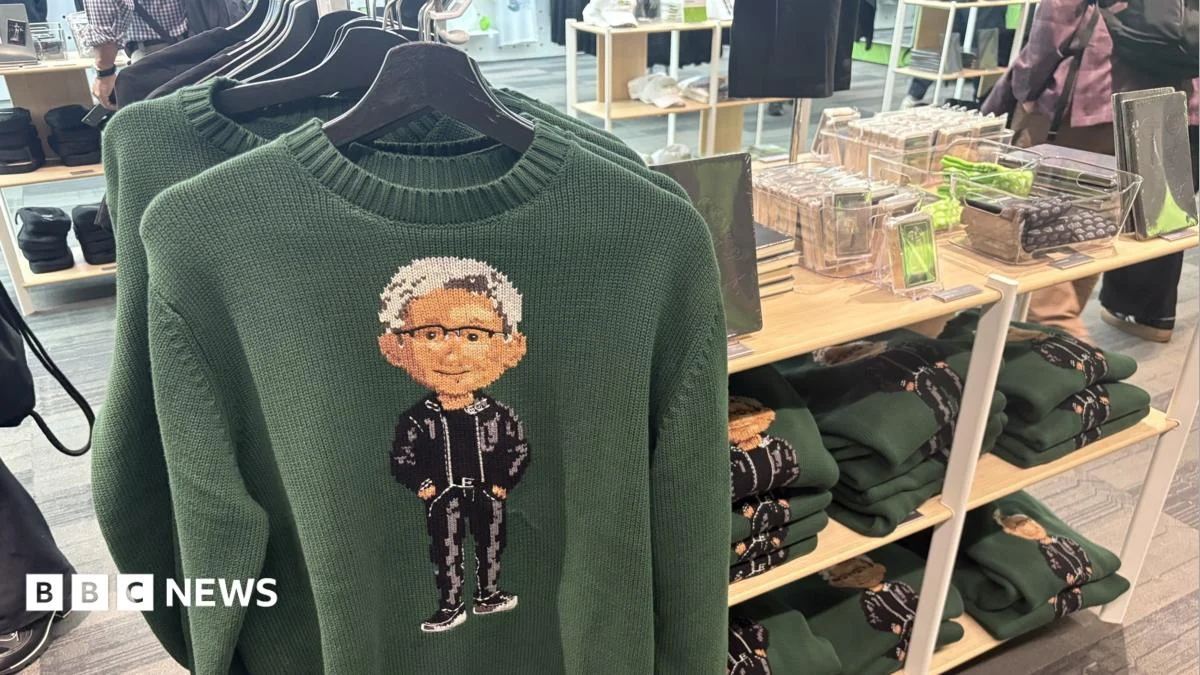
For Natalie Fratto, donning her dark green jumper, emblazoned with the logo of US microchip titan Nvidia, evokes the same sense of allegiance as wearing the kit of a beloved sports team. This $178 (£132) woollen garment features a whimsical illustration of the tech company’s charismatic leader, Jensen Huang, on its front. Fratto, who runs a tech start-up in New York, doesn’t work for Nvidia; instead, she identifies as a devoted fan. "I have a New Zealand All Blacks rugby jersey, and I think of my Jensen sweater in kind of the same way," she explains, likening it to a representation of a team and an ethos that she admires and actively supports. She proudly showcases this distinctive jumper in videos she shares on social media platforms, becoming a visual ambassador for the brand she champions.
Nvidia undeniably operates at the pinnacle of the global technology sector. Under Huang’s visionary leadership, the company has masterfully leveraged the artificial intelligence boom, catapulting itself to become one of the most valuable corporations worldwide. While Nvidia manufactures and sells tens of millions of its sophisticated chips annually, its branded apparel is a far more exclusive offering. These limited-edition collections, which encompass items such as t-shirts, hoodies, and hats, are typically only accessible through pop-up stalls at its industry conferences. They are also released for very brief periods, often referred to as "drops," via an online store, and consequently sell out with remarkable speed.
While it might strike some as unconventional for a technology firm to venture into the realm of fashion, other prominent tech companies are also embracing this trend, with a similar emphasis on exclusivity. OpenAI, the pioneering organization behind the highly influential ChatGPT, generally reserves its branded fashion for its employees. However, on rare occasions, these items become available for general purchase on their website for a limited number of days. Concurrently, Anthropic, the developer of the Claude chatbot, established a temporary pop-up coffee shop in Manhattan’s trendy West Village last year. For a single week, this establishment offered complimentary baseball hats, each proudly embroidered with the word "thinking" on the front.
Professor Hazel Clark, an esteemed fashion educator at the Parsons School of Design in New York, observes that by strategically limiting availability, tech firms are drawing inspiration from established fashion industry practices. "It’s a very common strategy for brands to use," she notes. "It elevates the desirability." This deliberate scarcity transforms desirable items into coveted possessions, amplifying their perceived value and the allure for consumers. But the fundamental question remains: why are these technology-centric companies engaging in the sale of clothing in the first place? It is not as if their core business operations necessitate supplementary income streams from apparel.
Nvidia, OpenAI, and Anthropic all declined to provide official comments on this phenomenon. However, the prevailing interpretation suggests that this strategic move is deeply rooted in brand promotion and sophisticated reputation management. Consider the case of US software firm Palantir Technologies, a company that has encountered significant criticism due to its involvement in sensitive work for military and law enforcement agencies, both domestically and internationally. Since launching its own clothing line last year, Palantir has strategically rebranded itself as a "lifestyle brand." Eliano Younes, Palantir’s head of strategic engagement, articulates this shift, stating, "A lifestyle brand isn’t defined by what you sell, it’s defined by what you stand for and whether people want to affiliate with it. I believe that the store’s success and the enthusiasm from our community proves this." Younes further elaborates that Palantir’s merchandise, which includes a distinctive cotton jacket, has garnered purchases from "investors, customers, employees, and everyday people" across more than 60 countries, indicating a broad appeal beyond its immediate stakeholder groups.
One discerning US buyer of Palantir clothing, who preferred to remain anonymous, revealed that their attraction to the brand’s apparel was fueled by the surrounding controversy and the "amount of people talking about it." They further posited, "It’s the purest form of anti-fashion…and that is what makes it so interesting and unique." Critics, however, suggest that companies like Palantir are employing stylish merchandise as a tactic to "get their name into more positive conversations," as Professor Clark aptly puts it. Younes counters this by asserting, "Our clothing, like our software, is not political. It’s designed for all people who support Palantir and what it stands for." This statement aims to position the brand as neutral and universally appealing, irrespective of its controversial work.
Some other companies are adopting a more overtly political stance with their apparel. A notable example is US defence firm Anduril, a manufacturer of advanced military drones. Anduril sells a hoodie prominently featuring the slogan "Rebuild the Arsenal," a direct reflection of its advocacy for increased US defence spending and domestic manufacturing capabilities within the sector. Jonathan Sargent, a legal assistant based in Albuquerque, New Mexico, has personally purchased clothing from both Palantir and Anduril. He observes, "A lot of apparel today, whether it’s Nike or other large brands, can feel disconnected from anything tangible." He contrasts this with the appeal of brands like Palantir and Anduril, stating, "But Palantir and Anduril are companies that people associate with building things that have a visible impact, whether that’s defence, AI, infrastructure, or decision-making systems." This sentiment highlights a desire among consumers to align themselves with companies perceived to be actively shaping the future through tangible technological advancements and societal contributions.
Returning to Nvidia, the immense popularity of its founder, Jensen Huang, appears to be a significant driving force behind the sales of its branded clothing. Huang is renowned for attracting crowds of adoring fans, many of whom eagerly vie for autographs or selfies with the 63-year-old executive, instantly recognizable for his signature leather jacket. Meta CEO Mark Zuckerberg has even famously likened Huang’s cultural impact to that of "Taylor Swift, but for tech," underscoring his status as a genuine icon within the technology sphere.
Professor Gianpaolo Vignali of the Manchester Fashion Institute elaborates on this phenomenon, suggesting, "People look at them [such big tech bosses] as role models. They want to aspire to them." This aspiration translates into a desire to emulate their heroes, not just in their professional pursuits but also in their public personas. For Greg Epstein, author of the book "Tech Agnostic," who views the tech industry as akin to a cult or a nascent global religion, wearing tech merchandise serves as "a way of symbolising that you’re one of the prophetic elite." This holds particular appeal for individuals within the Silicon Valley ecosystem, who are often engaged in a perpetual "searching for a sense of identity, a sense of purpose, a sense of community." Epstein, who also holds the humanist chaplain positions at both Harvard University and the Massachusetts Institute of Technology, further contends, "When tech bros put themselves on sweaters, it’s more than just a cutesy phenomenon, it’s an attempt to sell a cult whose goal is to radically alter the human condition." This provocative statement suggests that the embrace of tech merchandise by some is not merely a fashion choice but a deeper affirmation of a belief system and its transformative ambitions.
Whether one chooses to purchase their next shirt or hat from a technology or defence firm, Professor Vignali argues that all clothing choices are inherently imbued with meaning. "The subtle colour of a tie or hair bobble…all of these are signals that allow the wearer to symbolically share their cultural and ideological positions." This perspective emphasizes the semiotic power of fashion, asserting that even seemingly minor sartorial decisions can communicate profound personal and group affiliations. While tech and defence-related fashion continues to attract both fervent supporters and vocal critics, not everyone interprets these trends with such gravitas. Natalie Fratto, reflecting on her Nvidia jumper, acknowledges, "It’s a unique moment in our collective zeitgeist for sure," but also humorously observes that Nvidia’s decision to feature Jensen Huang on its official merchandise is "kind of funny." This sentiment suggests that for some, the appeal lies in a blend of genuine admiration and a lighthearted appreciation for the cultural moment.



 George Anjay
 Nakalama John
 Nana Banana