George Anjay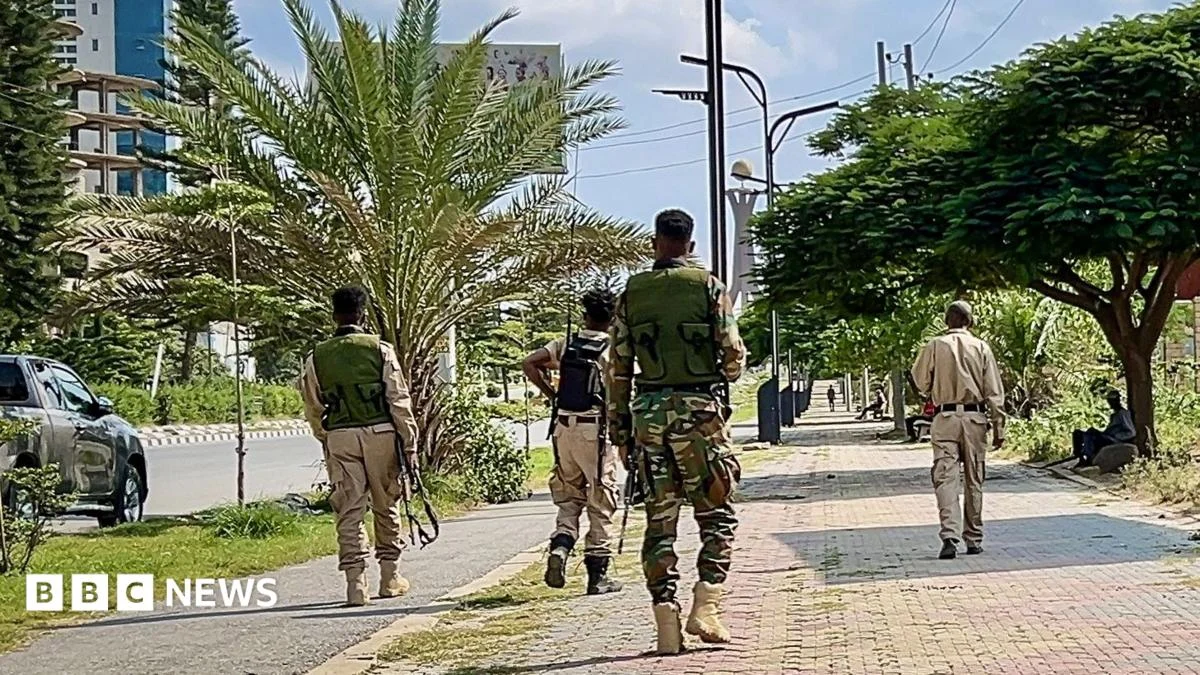
Ethiopia’s government and the party in control of the northern region of Tigray have accused each other of launching offensives, escalating fears of a return to full-scale conflict. The dramatic escalation follows a period of simmering tensions and mutual accusations of peace deal violations, raising the specter of a devastating war that only recently seemed to be a grim chapter of the past. The conflict, which raged for two years, was one of the deadliest of the 21st century, leaving an estimated 600,000 people dead and pushing the region to the brink of famine.
Getachew Reda, a cabinet minister and influential adviser to Ethiopia’s Prime Minister Abiy Ahmed, stated that Tigrayan fighters had seized control of federally administered airports within Tigray. He further alleged that these forces had launched offensives into the neighboring Afar and Amhara regions, territories that have historically been at the heart of ethnic and territorial disputes. Reda’s accusations paint a picture of a pre-emptive and aggressive move by the Tigray People’s Liberation Front (TPLF).
Earlier, the Tigrayan authorities had issued a statement asserting that their forces had been compelled to engage in a "defensive war." This declaration came in the wake of reports of drone strikes targeting the Tigray region, suggesting that the TPLF viewed the recent actions as an unprovoked assault that necessitated a response. The cyclical nature of these accusations highlights the deep distrust and animosity that persist between the federal government and the TPLF.
The two-year war in Tigray officially concluded with a peace agreement brokered by the African Union in November 2022. However, in the months since, both sides have consistently accused each other of violating the terms of this fragile accord. These violations have ranged from the continued presence of Eritrean forces in disputed areas to the alleged disarmament of Tigrayan fighters and the obstruction of humanitarian aid. The current accusations represent a significant deterioration of an already precarious peace.
Speaking at the United Nations General Assembly, Ethiopian President Taye Astike Selassie adopted a strong stance, asserting that his country had demonstrated "immense restraint" despite what he termed "interference in our internal affairs by adversarial elements." While he did not explicitly name these elements, the context strongly suggests a reference to the TPLF and its allies, and potentially external actors perceived as supporting them. President Selassie delivered a stark warning: "Our message to forces of destruction and mayhem is loud and clear. We urge them to respect the sacred right of the people of the Horn of Africa to live in peace and prosperity." This rhetoric underscores the federal government’s readiness to defend its sovereignty and territorial integrity.
Adding a new dimension to the unfolding crisis, the Tigray People’s Liberation Front (TPLF) announced on Sunday the formation of an alliance with six other armed groups operating across Ethiopia. This coalition explicitly aims to "remove the government in Addis Ababa," signaling a broader political and military challenge to Prime Minister Abiy Ahmed’s administration. The TPLF’s move to consolidate opposition forces suggests a strategic attempt to leverage existing grievances and armed capabilities to achieve its objectives.
Getachew Reda, in a statement shared on social media, expressed his dismay at the perceived breakdown of peace efforts. "It is rather heartbreaking to learn that, despite efforts by many, including the international community, to avoid yet another round of war in Tigray, the TPLF leadership early this morning launched an all-out offensive against government positions in Afar and Amhara," he stated. Reda’s personal history adds weight to his pronouncements; he previously served as the head of Tigray’s interim administration before falling out with the TPLF in 2025 and joining the federal government. His insider perspective on the TPLF’s leadership and motivations lends credibility to his claims.
The immediate practical consequence of the TPLF’s alleged seizure of airports has been the cancellation of all flights to Tigray by Ethiopian Airlines. This move effectively isolates the region further and disrupts essential travel and commerce. Residents in Mekelle, Tigray’s main city, have corroborated reports of local forces taking control of the airport from the national police early on Wednesday. This assertion directly contradicts the federal government’s narrative of an offensive launched by Tigrayan fighters.
The recent reports of drone strikes in Tigray in the days leading up to the current accusations are a significant point of contention. The chairperson of the African Union Commission, Mahmoud Ali Youssouf, has urgently called for an "immediate de-escalation" and has implored both sides to return to the negotiating table. His plea reflects the international community’s deep concern and the desire to prevent a relapse into widespread violence.
The United States ambassador to Ethiopia has also weighed in, condemning the TPLF for what she described as the "poor decision to launch a large-scale offensive," labeling it an "unwinnable fight." This strong condemnation from a key international player suggests that the US views the TPLF’s actions as a destabilizing force and a departure from the path of peace.
On Tuesday, a drone strike in the southern town of Alamata reportedly resulted in the deaths of at least 14 people and injured 22 others, according to Tigrayan authorities. The town’s mayor, Mogos Shiferaw, provided a harrowing account of the attack, stating that more than five drones and one fighter jet carried out over 21 strikes starting around 03:30. He described the event as causing "a lot of psychological trauma in our city and our people were in a state of panic." Mayor Shiferaw asserted that all casualties were civilians and accused federal forces of targeting two secondary schools. He suggested the strikes were based on suspicion that the schools were being used by Tigrayan forces, despite the fact that they had served as federal military bases during the civil war and were unoccupied as the academic year had not yet commenced. The Ethiopian government has not yet commented on these specific allegations, and the BBC has not independently verified them.
Adding to the escalating accusations, on Wednesday, Tigrayan authorities accused Addis Ababa of launching an "open invasion" of the region. They urged their populace to support regional forces and maintain unity, framing the current situation as a direct threat to their existence. The Tigrayan government further alleged that the federal government was violating international humanitarian and human rights laws by disrupting public services and critical infrastructure.
Meanwhile, the U.S. State Department’s Bureau of African Affairs has condemned a separate drone strike that reportedly occurred on Monday, targeting a convoy of Catholic vehicles carrying food aid. This incident, distinct from the alleged strikes in Alamata, highlights the continued risks to humanitarian operations in the region. The State Department called for an investigation and urged all parties to resolve their differences through dialogue and to take steps to prevent similar incidents.
The international community’s frustration with the lack of progress in implementing the Pretoria Agreement is palpable. Both Addis Ababa and TPLF leaders have faced criticism for delays in fulfilling key provisions of the AU-brokered deal that formally ended the conflict. In July, Prime Minister Abiy Ahmed himself accused the TPLF of preparing for renewed conflict during an address to parliament, further fueling tensions.
The political landscape in Tigray has also been a source of friction. Just before the general election in May, which was not held in Tigray due to the ongoing security concerns, the TPLF reinstated its pre-war administration, effectively disbanding the interim administration that had been appointed by Prime Minister Abiy. This move was seen by the federal government as a challenge to its authority and a sign of the TPLF’s unwillingness to fully integrate into the federal system.
Furthermore, there have been persistent reports of the TPLF forcibly recruiting young men to bolster its ranks. While such recruitment tactics can be employed in times of perceived threat, they also raise concerns about human rights and the potential for increased civilian involvement in the conflict. These allegations, if true, would further complicate efforts to achieve a lasting peace and could contribute to a cycle of violence. The current accusations of offensives, coupled with the historical animosities and the unresolved issues from the peace agreement, paint a grim picture for the people of Ethiopia and Tigray, as the specter of a new, devastating war looms large.




 Roy Suryo
 Nakalama John