George Anjay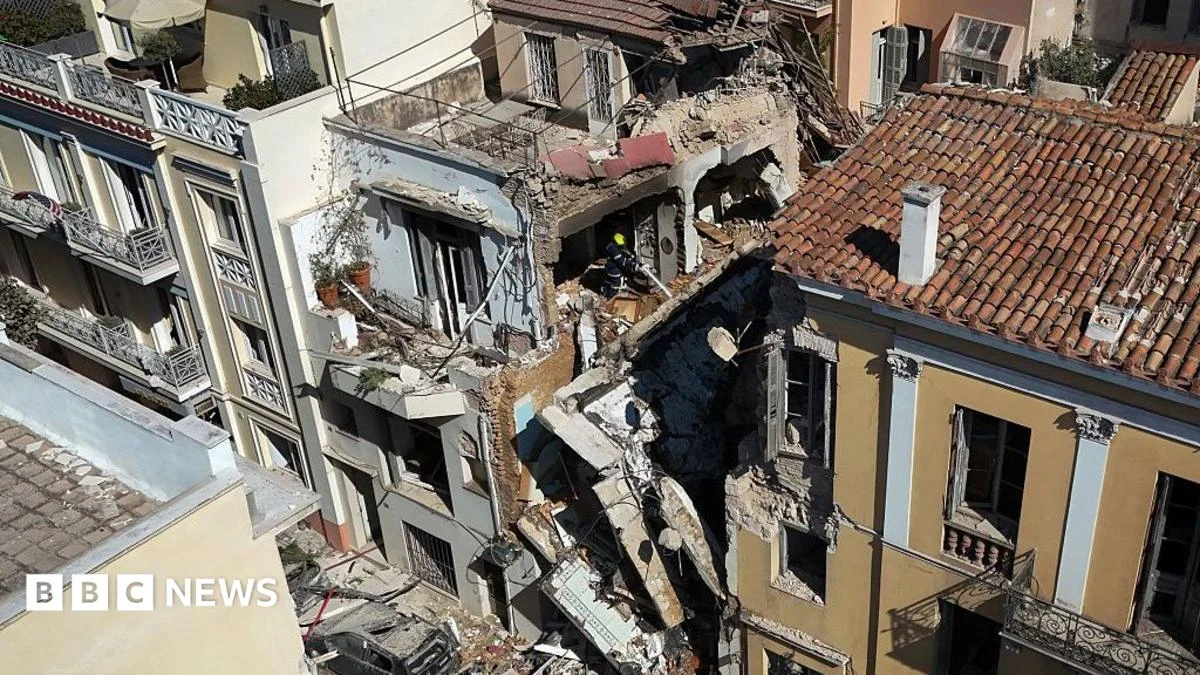
A catastrophic explosion ripped through the heart of Athens’ historic Plaka district on Saturday, claiming at least two lives and leaving four others missing, feared dead, in the devastating aftermath. The blast, which authorities suspect was caused by a gas leak, obliterated a three-story building that reportedly served as a holiday rental property, sending shockwaves through the ancient neighborhood renowned for its proximity to iconic tourist attractions like the Acropolis and the Temple of Olympian Zeus. The sheer force of the explosion reduced the structure to rubble, scattering debris across nearby streets and causing significant damage to adjacent buildings, necessitating the evacuation of some residents.
Among the confirmed fatalities are an American man and woman, with two additional US tourists currently unaccounted for, according to reports citing local officials and the AFP news agency. The tragic loss extends to a Greek national and a British citizen who resided in the ill-fated building, both of whom are also missing and feared to be among the victims. The harrowing discovery of the bodies began on Saturday morning, with a Greek fire official confirming the recovery of a woman’s body, followed later by the grim announcement of a man’s remains being found. The alarm was raised for the missing tourists when they failed to appear for their scheduled flight at Athens International Airport, prompting local police to initiate a search.
The scale of the disaster was underscored by Athens Mayor Haris Doukas, who described the event as an "incredible disaster." The once-standing three-story edifice has been reduced to a mangled heap of concrete and twisted metal, a stark testament to the explosive power that tore through it. Neighboring structures bore the brunt of the blast’s fury, with windows shattered, facades scarred, and structural integrity compromised. The streets surrounding the epicenter of the explosion were littered with debris, posing a significant hazard to anyone in the vicinity. Local media outlets reported instances of individuals sustaining injuries from the projectiles that rained down upon the surrounding areas, and the urgent need for evacuations from damaged buildings highlighted the immediate danger posed by the incident.
Emergency response teams have been working tirelessly at the scene, deploying excavators and advanced thermal imaging cameras in a desperate race against time to locate any potential survivors amidst the ruins. The strategic location of the blast, situated on a narrow road nestled between two of Athens’ most frequented historical landmarks, amplifies the tragedy, disrupting the daily lives of residents and the routines of countless tourists who flock to these ancient sites. The BBC has confirmed contact with the UK Foreign Office regarding the welfare of their national and any potential British citizens affected by the incident.
Investigators are meticulously sifting through the wreckage, endeavoring to pinpoint the exact cause of the explosion. While a gas leak has been widely cited as the probable culprit, a comprehensive investigation is underway to confirm this and to understand any contributing factors that may have led to such a catastrophic event. The building, described as a holiday rental, suggests a transient population, making the identification and notification of next of kin a complex and sensitive undertaking. The sheer force of the blast suggests a significant accumulation of flammable gas, which, when ignited, unleashed a devastating chain reaction.
The immediate aftermath saw a flurry of activity from emergency services. Firefighters, police, and medical personnel descended upon Plaka, working in unison to secure the area, tend to the injured, and commence the arduous search for the missing. The visual evidence from the scene was stark: rescue workers in helmets and high-visibility vests carefully navigating treacherous piles of rubble, their faces etched with grim determination. The air was thick with the acrid smell of dust and destruction, a stark contrast to the usually vibrant and bustling atmosphere of Plaka, a district beloved for its charming labyrinthine streets, neoclassical architecture, and open-air tavernas.
The impact of the explosion rippled beyond the immediate vicinity. Businesses in the surrounding areas reported shattered windows and damaged interiors. Residents of nearby apartments described a deafening roar followed by a violent tremor that shook their homes. Many were forced to evacuate their properties as a precautionary measure, fearing further structural instability or the possibility of secondary explosions. The psychological toll on the community is also significant, with the sudden and violent nature of the event leaving many residents and business owners shaken and traumatized.
The presence of tourists at the time of the explosion added another layer of complexity to the emergency response. While the American tourists are confirmed to be among the missing and deceased, the exact number of foreign nationals in the building or in the immediate vicinity at the time of the blast remains under investigation. The fact that the building was a holiday rental means that guests could have arrived or departed at various times, making a precise casualty count challenging in the initial stages. The swift notification by the police regarding the missed flight was crucial in establishing the presence of the American tourists and initiating their search.
The Greek authorities have pledged a thorough and transparent investigation into the incident. The focus is not only on determining the cause but also on reviewing safety protocols for buildings, particularly those used for short-term rentals in densely populated historic areas. The potential for gas leaks in older buildings, especially those that have undergone renovations or modifications for commercial use, is a concern that will undoubtedly be addressed. The tragic loss of life and the extensive damage serve as a grim reminder of the inherent risks associated with such infrastructure.
The recovery efforts are expected to be lengthy and painstaking. The sheer volume of debris, coupled with the structural integrity of the remaining parts of the building and surrounding structures, presents a significant challenge for rescue teams. The use of heavy machinery like excavators is essential for clearing the rubble, while thermal imaging cameras play a vital role in detecting any signs of life, even in the most inaccessible areas. The process also involves meticulous forensic examination to gather evidence related to the cause of the explosion and to aid in the identification of victims.
As the search and recovery operations continue, the focus of the Greek authorities will also turn to supporting the affected families and the wider community. The Mayor’s office has likely initiated efforts to provide temporary housing for displaced residents and to offer psychological support to those who have been traumatized by the event. The economic impact on the businesses in Plaka, a vital hub for tourism, will also need to be addressed in the coming weeks and months.
The incident in Plaka is a stark reminder of the fragility of urban environments, particularly in historic centers where age and density can present unique challenges. While Athens is accustomed to seismic activity, a man-made disaster of this magnitude is a chilling reminder of the potential dangers that lurk within our built environments. The investigation will hopefully provide answers and lead to measures that can prevent such a tragedy from ever occurring again in this beloved and historic corner of the Greek capital. The world watches with a heavy heart as Athens grapples with the devastating consequences of this explosion, mourning the lives lost and hoping for a swift resolution to the ongoing search for the missing. The resilience of the Athenian spirit will undoubtedly be tested, but the community’s ability to come together in times of crisis will be crucial in the long road to recovery.


 atisusanti
 Roy Suryo
 Nakalama John