atisusanti
For over a decade, critical security vulnerabilities remained hidden within the foundational technology that powers a significant portion of the internet. It took the advanced capabilities of artificial intelligence to bring these latent threats to light, triggering a widespread global cyber security alert. Researchers who were instrumental in uncovering these vulnerabilities in PHP – a ubiquitous server-side scripting language that has been a cornerstone of web development for decades – issued stark warnings: platforms heavily reliant on PHP were now exposed to potential malicious exploitation. In response, governments and cybersecurity agencies worldwide launched an urgent effort to contain the escalating fallout. They implored website owners to meticulously check if their sites were affected by these flaws and, if compromised, to immediately apply available updates to patch the issues or, as a drastic measure, consider taking their sites offline. Fortunately, as of the latest reports, there have been no confirmed instances of successful exploits targeting the newly identified vulnerability, which has been dubbed "php2shell." Nevertheless, in the days following the public disclosure of these critical weaknesses, the ripple effects of disruption have continued to cascade across websites and online services globally.
What is PHP?

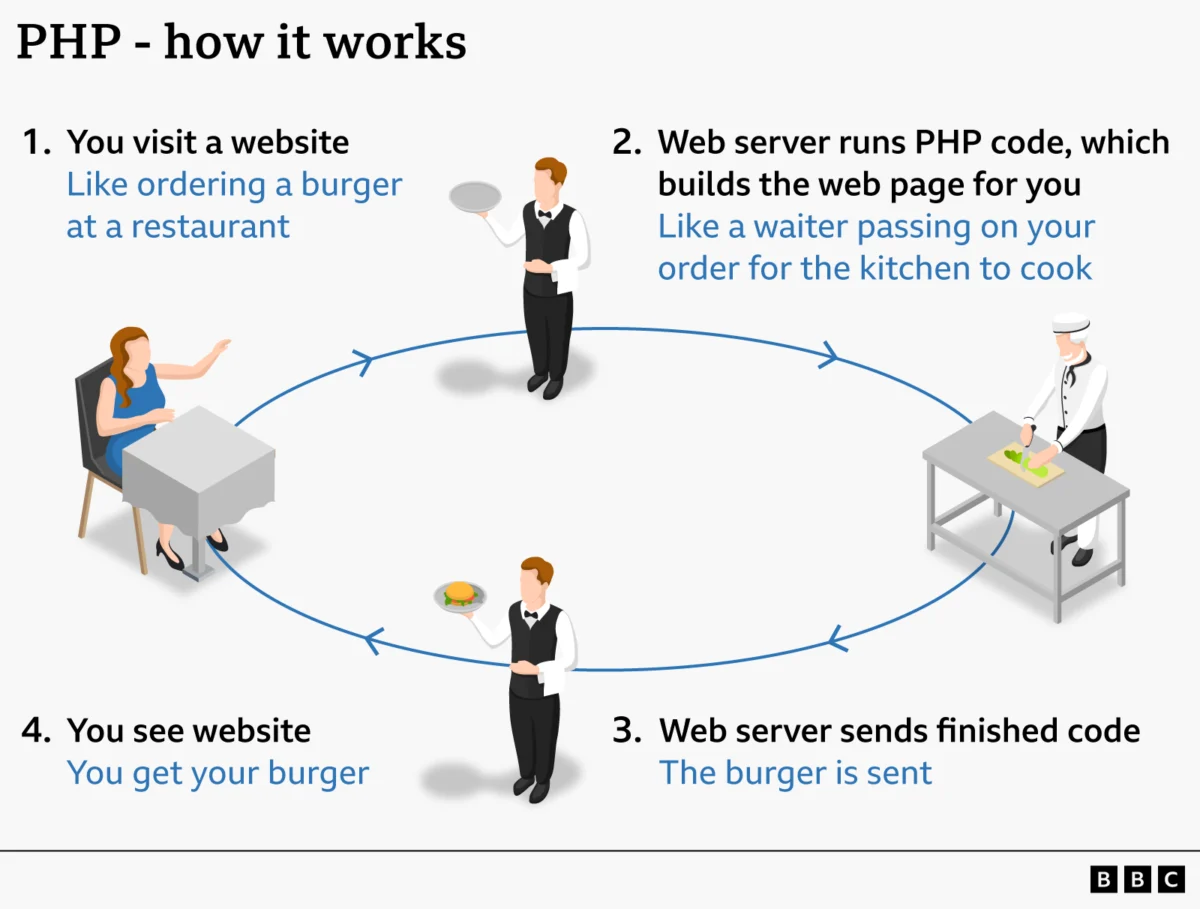
While the average internet user may not have encountered the term "PHP" before, it is highly probable that they interact with websites powered by it on a daily basis. PHP, an acronym for PHP: Hypertext Preprocessor, is an open-source, server-side scripting language meticulously designed to run on web servers. Its origins trace back to the early 1990s, when it was developed to facilitate the creation of dynamic web pages and sophisticated web applications. To this day, PHP remains the engine behind a vast array of popular platforms, including the vast knowledge repository of Wikipedia, numerous online retail platforms, and WordPress – the content management system that forms the backbone of countless websites. Essentially, when a user navigates to a website, PHP is the underlying code that collects and processes data, dynamically generating the readable web page that is then presented to the user. Beyond its core functionality, PHP has also been instrumental in the development of a multitude of tools that aid in building and accelerating the creation of web applications. Prominent among these are widely adopted PHP frameworks such as Laravel, Symfony, and Drupal. According to Wiz, a prominent cybersecurity firm that played a crucial role in uncovering these critical PHP vulnerabilities, the language is estimated to power a staggering 70% of the world’s websites. The ongoing maintenance and development of PHP are overseen by the PHP Foundation, a non-profit organization comprised of individuals and companies deeply invested in the language’s continued success and committed to ensuring its "long-term prosperity."
What is the Vulnerability?
This week, a coalition of cybersecurity researchers and organizations revealed the discovery of two significant vulnerabilities embedded within the PHP language itself, raising alarms about the potential for widespread disruption across the internet. Cybersecurity firms Wiz and Calif disclosed that these flaws were inherent to the language’s core architecture, affecting versions of PHP released over the past decade. The technical details of these critical bugs, identified by the Common Vulnerabilities and Exposures (CVE) identifiers CVE-2026-109618 and CVE-2026-109619, were assigned a severity rating of 9.2 out of 10 by the researchers, indicating their extreme danger. Ryan Austin, a researcher at Calif who was involved in the discovery, described it to the BBC as "the most serious vulnerability I’ve ever found." In a detailed blog post, Wiz elaborated on its findings, explaining that under specific conditions, malicious actors could exploit these bugs to gain complete control over affected web servers, enabling them to steal sensitive data. The firm emphasized that this effectively left "everything built on PHP exposed." Paul Spain, the chief executive of Gorilla Cyber Security, further noted that the increasing capabilities of AI could potentially exacerbate these attacks, making them easier and faster to execute. He estimated that the flaw could impact "millions and millions" of websites. Jill Slay, a cybersecurity researcher at the University of Adelaide, characterized the potential consequences as "disastrous" if hackers or nation-states were to weaponize this vulnerability and seize private data from websites.

What Websites Have Been Affected?
The widespread alert issued on October 21st led to the disruption of services across a broad spectrum of online platforms, ranging from gaming networks and government portals to community forums. Notable among those affected was Wikimedia, the organization behind the globally recognized online encyclopedia, Wikipedia. As a precautionary measure, Wikimedia took down a number of its internal systems to prevent potential compromise. Other entities that temporarily suspended operations included the Finnish government, Edinburgh council, and even certain pages within the BBC’s online presence. The Netherlands’ national cybersecurity agency also took its website offline on Wednesday as a safeguard. While many of these services were restored by Thursday, a continuous stream of websites and online services elsewhere continued to be temporarily taken offline as organizations scrambled to assess their exposure and implement necessary security patches. The UK Government confirmed on Thursday that a limited number of its services may have been temporarily offline, stating that 32 sites were taken down as a precaution, none of which were considered major public-facing services. In France, the telecommunications giant Orange announced it had suspended access to certain global services while deploying security fixes. On Friday, local media in Japan reported that telecom operator SoftBank Corp had temporarily suspended its emergency alert system for earthquakes, tsunamis, and other natural disasters. According to the Mainichi newspaper, SoftBank customers were advised to ensure they had alternative methods for receiving disaster alerts, as its mobile phone alerts would not be activated even in the event of a strong earthquake. The restoration of this critical service was reportedly scheduled for Monday. Experts are increasingly warning that websites with less rigorous maintenance schedules, particularly those belonging to smaller organizations with limited cybersecurity resources, may be at a heightened risk due to this vulnerability. Cyber-security researcher Salil Kanhere from UNSW Sydney cautioned that the number of attempts to exploit these flaws is likely to increase in the coming weeks, especially since the technical details of the vulnerabilities have now been publicly disseminated.
What Happened After the Flaws Were Exposed?

In response to the discovered vulnerabilities, the PHP Foundation swiftly rolled out patches on Wednesday to address the security flaws that had lain dormant within their software for years. The foundation issued a strong recommendation: "All PHP users are strongly encouraged to update immediately." This directive was echoed by cybersecurity authorities and organizations worldwide, who urged website operators to secure their platforms without delay. The U.S. National Security Agency (NSA) issued a critical advisory to all organizations utilizing PHP, recommending that they take their systems offline if immediate patching was not feasible. The NSA emphasized that the flaw could provide a "direct path" to exploit a system’s underlying database, stating, "These risks are serious enough to require immediate patching across United States Government departments and agencies." Similar alerts were issued by their counterparts in the European Union, Singapore, and Australia. In Japan, Prime Minister Sanae Takaichi took to social media platform X to urge citizens to verify if their publicly accessible websites were running on PHP. Tech companies also moved rapidly to secure their own systems. E-commerce giant Amazon reported that it had faced multiple attempted exploits days before the public disclosure of the PHP issue but confirmed its websites remained operational. Matthew Prince, the CEO of internet infrastructure firm Cloudflare, revealed that his company had observed "thousands" of attempts to exploit the PHP vulnerabilities across its network in the ten hours preceding the public announcement. He noted a dramatic escalation, with attempts jumping to "tens of thousands in the 45 minutes post announcement, hundreds of thousands within two hours, and millions now." As of Friday morning, no successful attacks had been officially reported. However, cybersecurity experts cautioned that the full impact of these vulnerabilities might take time to become fully apparent. Operators of various services that might utilize PHP, extending beyond just web development, are still being strongly advised to meticulously inspect their systems and implement necessary updates. Daniel Stewart, head of threat intelligence at global risk manager LRQA, highlighted that "PHP is not limited to web applications," and is commonly found in the management interfaces of network appliances, load balancers, and embedded devices, which are often overlooked during such security incidents. Initial scans by some cybersecurity researchers indicate that while the rate of organizations implementing patches has increased, it has not yet reached the globally desired pace.
How Was AI Involved?
The breakthrough in identifying these critical vulnerabilities was facilitated by the use of advanced artificial intelligence tools, developed by OpenAI, the creators of ChatGPT. Researchers at Calif and Wiz leveraged these AI capabilities, which are designed to analyze code with remarkable speed and efficiency, allowing them to uncover flaws far more rapidly than traditional human analysis or older automated systems. "Modern software is incredibly complex, and some vulnerabilities can remain undetected for years," noted Kanhere. He further explained that "the underlying bugs weren’t new; what changed was our ability to find them." The details of this discovery subsequently leaked online, compelling the PHP platform’s developers to expedite their announcement of the security flaw and its extensive scope. In a blog post, OpenAI acknowledged that this incident "highlights how AI can uncover security flaws" but also pointed out its potential to "help attackers rapidly develop offensive tools and exploits." The company also announced the release of a program designed to assess the security of the PHP platform. Ryan Ko from the University of Queensland’s Cyber Research Centre commented that "Many of these flaws stem from the way software were built in the past, which were built for functionality and not with security in mind."

What Does It Mean for You?
The immediate impact of this PHP vulnerability is largely confined to the back-end processes of website and web development, meaning it will be largely invisible to most end-users. Consequently, the majority of internet users will not need to take any direct action. However, for small businesses that operate websites, particularly those built using platforms like WordPress, questions about self-protection may arise. Website owners and infrastructure managers running PHP are strongly urged to secure their websites by updating to the latest available version. Ken Munro, an ethical hacker with extensive experience in identifying security flaws, likens the process of applying these fixes, known as patching, to "running a Windows update." If a hosting company or web developer manages a website, it is crucial to contact them and inquire about the application of the PHP security fixes. It is important to note that these patches must be applied directly to the PHP software itself and cannot be resolved by simply updating WordPress or its plugins. For individuals who manage their own websites, Munro emphasizes, "it is your own responsibility to make sure fixes are applied." The UK’s National Cyber Security Centre recommends considering the temporary offline status of websites if updates or temporary protective measures cannot be implemented swiftly enough. The U.S. National Security Agency has also advised a period of "heightened awareness" in the coming weeks, urging individuals to closely monitor updates from software vendors. "Vigilance in applying patches related to those systems is paramount," the agency stated. While the primary responsibility for implementing these fixes lies with website operators, users are advised to remain vigilant and heed any security advice issued by affected services, such as requests to change passwords, as recommended by Kanhere. He further cautioned users to be alert for any phishing attempts that might attempt to exploit the publicity surrounding this incident.




 George Anjay

 Nakalama John

 Ramos Leo