atisusanti
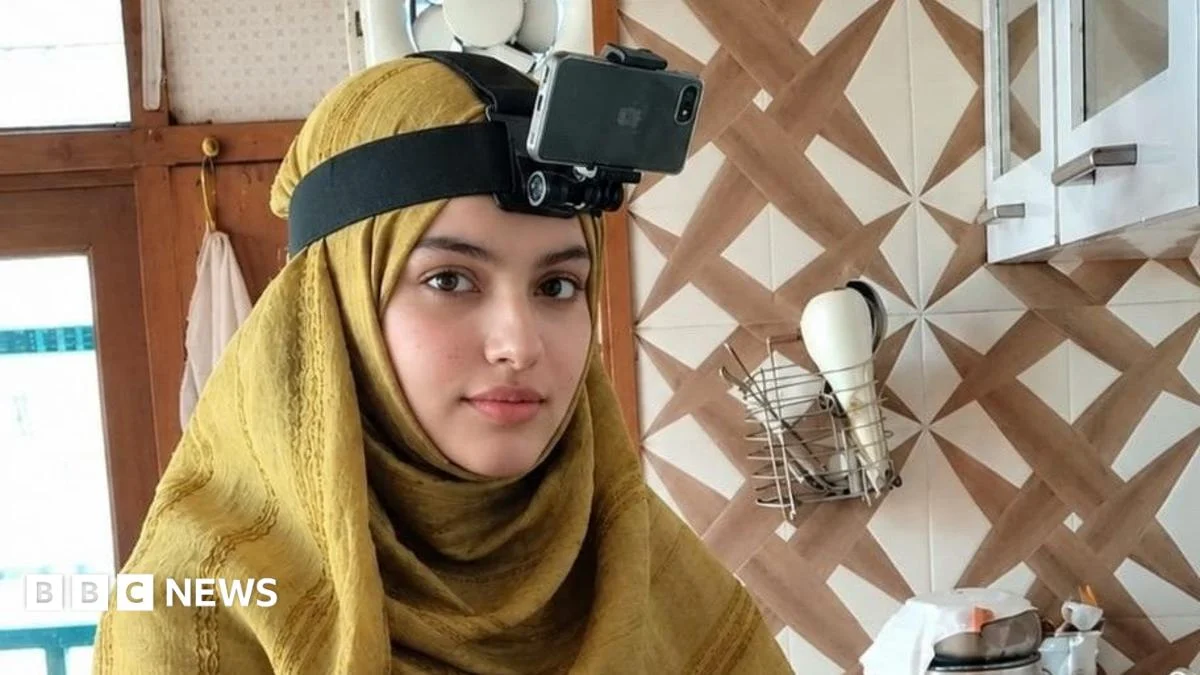
Mohammed Ashim, a 22-year-old barber in Bengaluru with four years of experience, now straps a camera to his head, meticulously recording his hand movements as he cuts hair and trims beards. The footage, intentionally blurring out clients’ faces, adheres to strict operational guidelines: hands must remain within the frame, lighting must be sharp, and head tilts must be gradual. Ashim dedicates five to six hours daily to this task, not only for the "good money" but also for the thrill of participating in something "futuristic," never imagining his razor techniques would benefit a global tech company. He is one of hundreds of thousands worldwide engaged in activity recording, providing raw material for artificial intelligence training, particularly "physical AI" designed to control real-world robots.
Rashdan Technologies, a company that collects and processes such human-generated data, actively seeks diverse tasks. Co-founder and CEO Shahil Baig explains their reach extends to industrial work, agriculture, domestic chores, and small businesses like pottery, garment-making, embroidery, and candle-making. For eight to ten hours of recorded work, Rashdan Technologies pays between $5 and $10, a sum Baig acknowledges is "meaningful" for many participants. Ensuring informed consent and worker comfort is paramount; while hands are recorded, faces are blurred in multi-camera setups, and no personally identifiable information is shared. However, client demands are escalating, with requests for multi-camera rigs capturing broader scenes, necessitating higher pay for the increased burden on workers. The data collection industry is also rapidly expanding, with Agarwal predicting dozens of new competitors to emerge in India this year.
The critical importance of this data lies in its ability to train robots for real-world navigation. Manish Agarwal, founder of Humyn Labs, emphasizes that simulations alone are insufficient. Physical tasks demand high-fidelity signals capturing intricate limb movements, finger dexterity, wrist and elbow articulation, shoulder dynamics, and precise force application – differentiating, for instance, the grip needed for a fragile plastic bottle versus a robust steel glass. Until recently, such embodied human activity data was largely absent from public archives. Agarwal notes the lack of datasets for common activities like cleaning a kitchen or assembling a car with appropriate force application, necessitating its capture from scratch in diverse real-world environments. Humyn Labs currently employs 96,000 data collectors across Latin America and Southeast Asia, filtering and labeling thousands of hours of video to create usable datasets for clients. Agarwal stresses the need for data diversity across various factories, tasks, and geographies to ensure robots are trained in environments that proxy intended deployment locations, as Indian residential settings might not accurately reflect US domestic contexts.
A pressing question arises: are these workers inadvertently contributing to the automation that could displace them? Bino Paul, a senior professor at the Tata Institute of Social Sciences, suggests it’s too early to definitively say. While AI might serve as a tool for some, it could automate others’ jobs, leaving them with limited recourse. Paul warns that by the time workers grasp the full implications of their participation, it might be too late. He advocates for government regulation of AI, framing it not merely as a technical system but as a socio-technical one where ethics are upheld through human agency to ensure beneficence.
Despite these concerns, substantial investment continues to fuel AI development, with some of this capital reaching Indian workers willing to record their tasks for modest daily compensation. Mohammed Arman, a textile worker in Bangalore with a decade of experience in garment stitching and cutting, now wears a head-mounted camera. For Arman, this is a matter of survival; he supports his family back in Bihar, and every rupee counts. He sees the camera as an opportunity to earn extra income by performing the same work he has mastered, where his hands instinctively know what to do.
The demand for such footage ensures its collection will continue, with India currently serving as a primary supplier of raw data. Agarwal argues that India must move beyond being a mere "footage supplier" and ascend the value chain by owning the pipeline from raw video to usable AI training data, encompassing cleaning, structuring, validation, and standard-setting.
For some, like science teacher Jolly Arifur, data collection offers attractive part-time work that fits around her family commitments. For the past seven months, Arifur has been recording herself performing domestic chores such as scrubbing, cooking, sweeping, and laundry folding. Based in Guntakal, Anantapur, she complements her teaching income with $2-$3 per hour, recording three to five hours daily, a system she describes as "fantastic."


 Nakalama John

 George Anjay

 Ramos Leo

 Roy Suryo