
 George Anjay
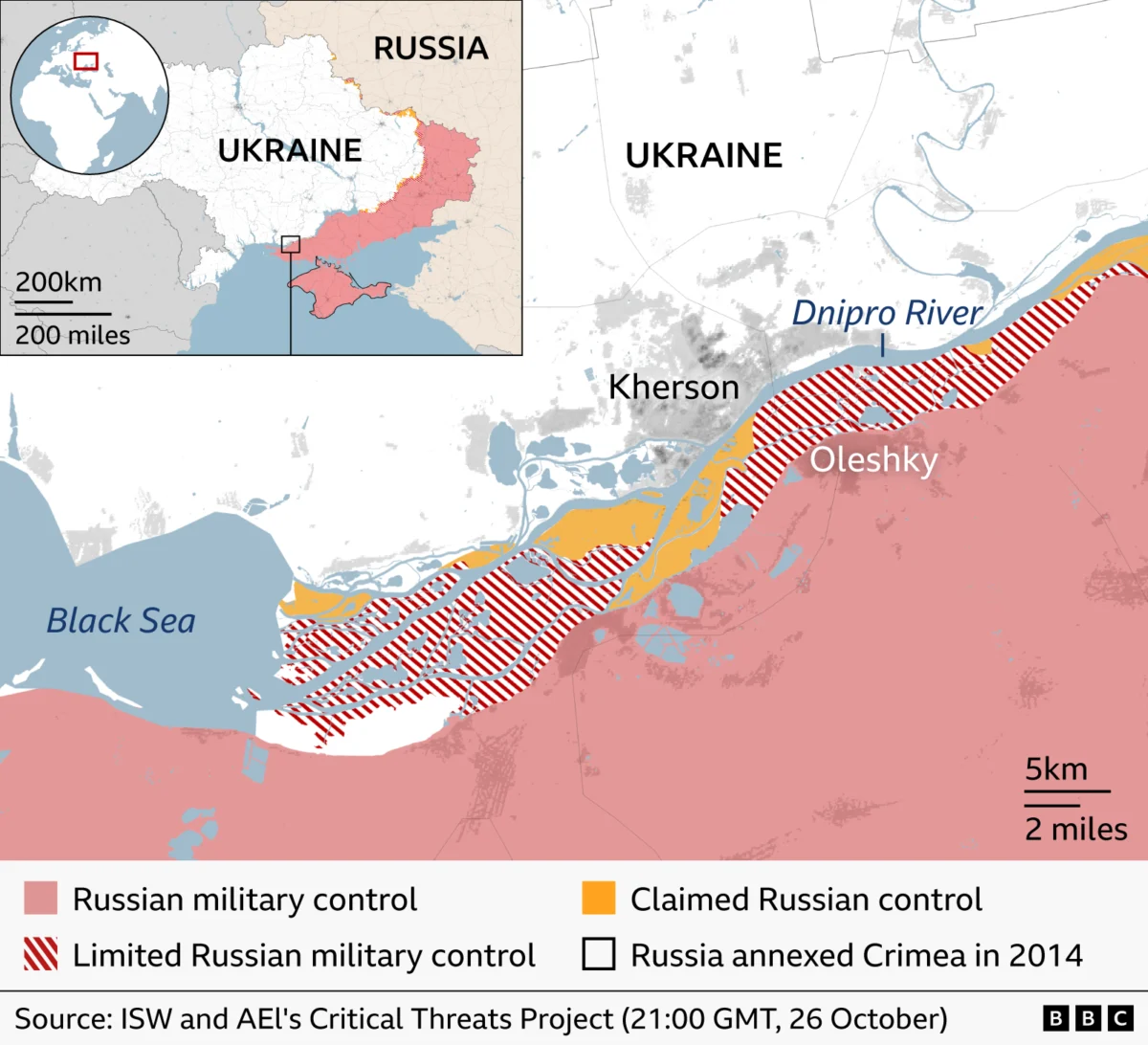
A fragile ceasefire aimed at facilitating the delivery of essential humanitarian aid to the Russian-occupied Ukrainian city of Oleshky has been extended to encompass the broader southern Kherson region, according to official sources. The initial truce, implemented to address the dire humanitarian crisis in Oleshky, where thousands of residents remain trapped without access to food, water, or electricity, has reportedly held without significant breaches. The city is effectively isolated, bordered by the Dnipro River on one side and Russian forces on the other, with all escape routes deemed too perilous.
The extended ceasefire, which began early Tuesday, has been hailed as a significant de-escalation, with reports indicating a cessation of Russian shelling in both Ukrainian-controlled Kherson city and the wider region. This development was corroborated by the press secretary to Ukraine’s public ombudsman and Oleksandr Tolokonnikov, deputy head of Kherson. The agreement outlines a phased approach: the ceasefire will pave the way for humanitarian aid deliveries to Oleshky, followed by planned evacuations for residents wishing to leave, scheduled for Friday.

An estimated 1,700 to 2,000 individuals are believed to remain within Oleshky itself, with several thousand more residing in the surrounding areas. The humanitarian situation is dire, with many residents resorting to foraging for survival due to extreme hunger and a desperate desire to leave. The BBC has received accounts from residents detailing their struggles, including one woman who sustained severe injuries from a landmine and is currently undergoing multiple surgeries, expressing deep concern about her ability to participate in the evacuation.
The ceasefire was reportedly brokered with the involvement of US First Lady Melania Trump and Pope Leo XIV. Mrs. Trump announced on Tuesday that the ceasefire zone had been expanded beyond Oleshky to ensure "safe passage" for humanitarian convoys. This initiative received praise from the Kremlin, with spokesman Dmitry Peskov stating that proceedings were "according to plan" and acknowledging the crucial role of US mediation.
Ukrainian Foreign Minister Andrii Sybiha expressed optimism, suggesting that the success of this ceasefire could "pave the way for other steps in the peace process." David Arakhamia, a key official in President Volodymyr Zelensky’s parliamentary party, indicated that the truce would remain in effect until Sunday, November 1st, at 22:59 Ukrainian time, characterizing it as the "largest de-escalation since 2022."

Oleshky, which was home to 24,000 people before the full-scale Russian invasion in February 2022, has been under Russian occupation since the initial days of the conflict. The city has been without basic utilities like electricity, gas, and water since the Kakhovka Dam was destroyed in 2023, an event that caused widespread flooding and significant loss of life in Oleshky. The ongoing conflict has rendered the city’s infrastructure inoperable, with no shops open and essential services non-existent.
The journey out of Oleshky is fraught with danger, as escape routes have been extensively mined and are subject to drone attacks. The difficulty of delivering supplies into the city is matched only by the risks associated with attempting to flee. Pope Leo had previously appealed to Russian President Vladimir Putin to permit the entry of food and medical aid into Oleshky and to ensure safe evacuations, while also urging Ukrainian President Volodymyr Zelensky to cooperate with Moscow on a ceasefire.
The White House had previously announced that Melania Trump had secured a ceasefire. On Tuesday, Mrs. Trump reiterated on X that the ceasefire area had been extended within the Kherson region to facilitate humanitarian convoys. This development is crucial for enabling the delivery of much-needed supplies, which are tentatively planned for Thursday, followed by the evacuation of residents on Friday.

Russia’s Ministry of Defence confirmed that units from the army’s Dnepr group have been engaged in "engineering reconnaissance" and the clearance of explosive devices and booby traps from the main access roads into Oleshky. While many details of the evacuation plans remain unclear, and residents are understandably hesitant to disclose personal information due to fear of reprisals, local volunteers have reported that approximately 500 people had already expressed interest in leaving by Tuesday afternoon.
Vladimir Saldo, the Russian-installed head of occupied areas of Kherson, stated that temporary accommodation has been prepared not only within the Kherson region but also in Russian-annexed Crimea and across the Russian border in the Rostov, Krasnodar, and Stavropol regions. Saldo also claimed in Russian media that most Oleshky residents wish to relocate to Russia, although this assertion has not been independently verified on the ground.
Communication with residents in Oleshky remains challenging due to patchy network coverage, and many are reluctant to speak about their situation for fear of Russian retaliation. Those who have managed to communicate with the BBC have voiced concerns that Russia may prevent their return to Ukraine or scrutinize their digital devices for any signs of Ukrainian support, which could lead to severe repercussions.

Ukraine’s military general staff has advised the public against trusting unverified reports or spreading rumors regarding the movement of people and humanitarian convoys. President Zelensky has expressed apprehension that demined routes by Russia could compel departing civilians to travel towards and remain in Russia. He stated that some residents would eventually reach Ukrainian-controlled territory, and ideally, all trapped individuals would be able to reach their intended destinations and evacuate to Ukraine.
One resident, Serhii, who successfully navigated minefields to escape Oleshky approximately three weeks prior, recounted his arduous journey back to Ukraine via Russia and Belarus. He emphasized the critical need for a safe crossing across the Dnipro River that bypasses Russian-occupied territory, stating, "you simply cannot trust the Russian Federation." However, bridges across the Dnipro have been destroyed, and the riverbanks are reportedly mined and dangerous, making a direct crossing into Ukrainian-controlled territory appear impossible at this time.
In contrast, in the Ukrainian-controlled Kherson city, across the river, no explosions or drone-related injuries have been reported since Tuesday morning. Local reports indicate that cars and pedestrians are moving freely. Galina Kyrychenko, a resident of Kherson city, told public broadcaster Suspilne that the increased presence of people on the streets suggests a perceived calming of the situation.


 Nakalama John

 atisusanti
 Ramos Leo

 Nana Banana
