
 Ramos Leo
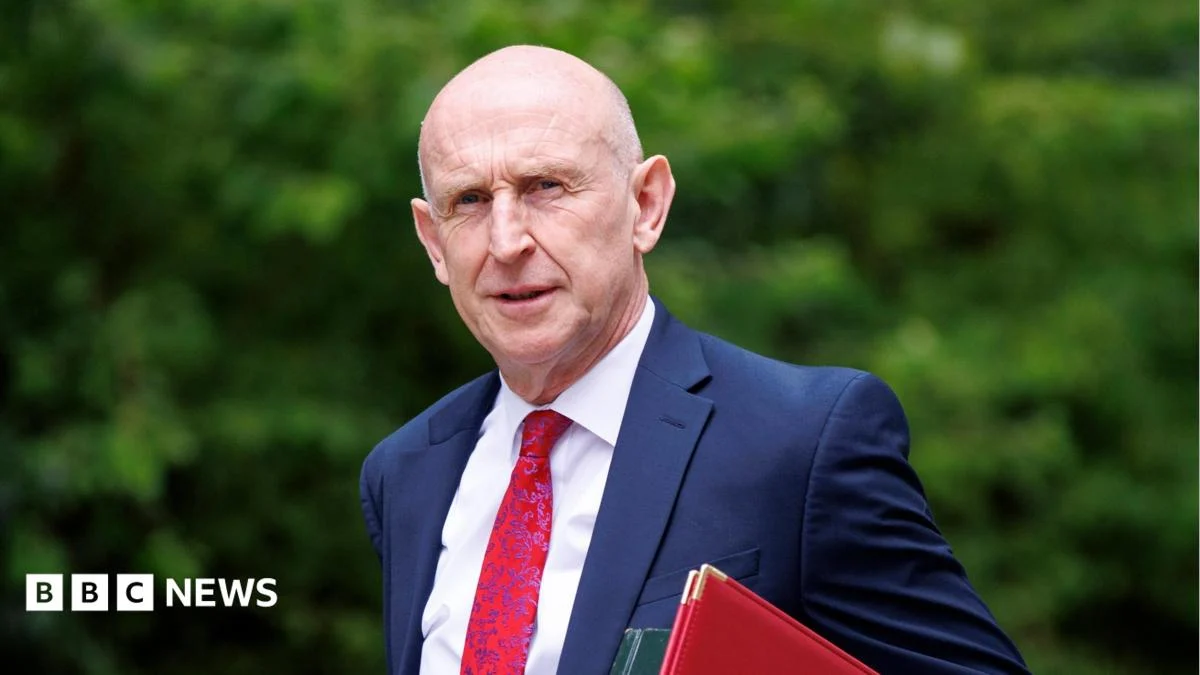
Helen Miller, the discerning director of the Institute for Fiscal Studies (IFS), articulates this challenge with precision: "We have a relatively new government with seemingly big ambitions but facing a long list of constraints." These constraints, she notes, are multifaceted. Some are "self-imposed," reflecting the government’s own policy choices and electoral pledges, while others are "being worsened by global events, most noticeably war in the Middle East." The economic context of the 1990s, often invoked by Healey, was indeed dramatically different. New Labour inherited a period of sustained growth, declining unemployment, and relatively low national debt, allowing for significant investment in public services. Today, the UK grapples with the aftermath of a global pandemic, escalating geopolitical instability, and a cost of living crisis, leaving far less fiscal headroom. Prime Minister Burnham’s "change moment," therefore, must navigate this significantly more challenging terrain, attempting to deliver transformative reform without the financial luxury of previous eras.
It is a common refrain within Westminster, across the political spectrum, that the sheer volume of money available is not the sole determinant of national progress. How effectively taxpayers’ money is allocated and spent, and where those investments are targeted, are equally, if not more, critical considerations. Indeed, a significant faction argues that reducing both government spending and the overall tax burden should be a paramount priority, fostering individual liberty and economic dynamism. Yet, deeply embedded within the Labour Party’s ethos is a profound conviction that the government, the state itself, has an indispensable role to play as a vital agent in catalysing change and improving the lives of its citizens. This worldview is rooted in a belief that governments should proudly intervene to address societal challenges, rather than retreating to allow market forces to dictate outcomes. It’s a philosophy that champions a proactive, interventionist state.
The fundamental conundrum then emerges: how can a proudly proactive state, committed to delivering tangible improvements for its people, genuinely manifest itself when the tax burden stands at a generationally high level, the national debt continues to soar, energy bills are relentlessly rising, and inflation persists above expected levels? In essence, the task is monumentally difficult. The current tax-to-GDP ratio is near a post-war high, straining household budgets and potentially stifling economic activity. The national debt, now exceeding 100% of GDP, imposes significant interest repayments, diverting funds that could otherwise be invested in public services or growth initiatives. The ripple effects of global energy price volatility, exacerbated by international conflicts, directly translate into higher household utility costs and inflationary pressures across the economy, eroding purchasing power. These combined factors severely limit the fiscal space for the ambitious interventions a government might typically desire.
Despite these formidable challenges, ministers adamantly maintain that the government is far from powerless. Many anticipate that the upcoming Budget will deliver targeted support to alleviate the cost of living crisis, with a particular focus on mitigating the impact of soaring energy bills for the most vulnerable segments of society. On the eve of the Budget announcement, Chancellor Healey underscored this commitment, stating his desire to "start the long-term action needed to get energy costs down for good." This signals not just immediate relief measures, but also potential strategic investments in domestic energy production, renewable sources, or energy efficiency schemes designed to create a more resilient and affordable energy landscape in the future. To help finance such initiatives, the banking sector is widely reported to be "braced for a levy or surcharge." This potential windfall tax or increased corporation tax on financial institutions would aim to capture a portion of their recent profits, redirecting it towards supporting struggling households, a politically popular move that aligns with the government’s interventionist philosophy.
Beyond domestic economic measures, the Budget is also expected to include an announcement regarding increased defence spending. This reflects a growing recognition of the deteriorating global security environment and the need to bolster the nation’s capabilities. However, while a commitment to further investment will be made, the detailed roadmap for achieving the ambitious target of spending 3% of national income on security by 2030 is not anticipated in this Budget. That comprehensive strategy will likely be unveiled in next year’s broader Spending Review, allowing for more detailed planning and allocation across defence procurement, personnel, and research.
A cornerstone of Prime Minister Burnham’s political agenda – the radical decentralisation of power from Westminster – will also feature prominently. The Chancellor revealed on BBC Newscast that the Budget would include a "really radical devolution of powers and resources to local leaders that are often better placed to get beyond the departmental systems." This initiative aims to empower regional and local authorities, including directly elected mayors, with greater autonomy over policy decisions and financial resources, allowing for more tailored solutions to local challenges in areas such as transport, housing, skills, and economic development. The rationale is that local leaders possess a more intimate understanding of their communities’ needs than distant central government departments. However, this push for greater local autonomy is not without its critics. Some within Westminster express concern that the increased financial allocations to mayors and other local government entities are not yet accompanied by sufficiently robust checks and balances, raising anxieties about potential misuse of funds or a lack of accountability in their expenditure.
The Chancellor is poised to present an optimistic narrative regarding the nation’s economic trajectory, arguing that the economy is demonstrating increasing resilience. Indeed, there are several economic indicators that offer a more positive outlook than previously forecast. Economic growth has surpassed expectations, productivity figures show improvement, and the unemployment rate has seen a welcome decline. These trends suggest a degree of underlying strength in the UK economy, offering a glimmer of hope amidst the broader challenges. Nevertheless, this nascent optimism is tempered by external factors. As the Resolution Foundation think tank starkly highlights in its analysis, "John Healey’s problem is that conflict in the Middle East has once again pushed up energy prices and interest rates." This renewed geopolitical instability directly translates into higher global oil and gas prices, which feed into domestic energy bills and inflationary pressures. Furthermore, central banks, including the Bank of England, are likely to respond to persistent inflation with higher interest rates, impacting mortgage payments for homeowners and increasing the cost of government borrowing. Thus, despite signs of increasing resilience, the Resolution Foundation concludes that "household and public finances are in for another shock," underscoring the precariousness of the current economic environment.
In essence, compared to some of the transformative Budgets of recent years, this particular fiscal event is expected to be more constrained in the scale of its tax and spending adjustments. The Chancellor has deliberately cultivated expectations of a more modest package, frequently speaking of his desire to offer "breathing space" and "hope" – a tacit acknowledgement of the inherent limitations facing the government given the confluence of internal and external constraints. Among these are the self-imposed electoral pledges not to raise income tax, national insurance, or VAT, as the IFS pointed out. These commitments, while politically expedient, significantly narrow the government’s options for revenue generation. Beyond these, the international factors – geopolitical conflict, global supply chain disruptions, and fluctuating commodity prices – remain largely beyond Westminster’s direct control.
The overarching question for many will be whether this Budget, despite its limitations, can genuinely rise to the occasion and address the pressing issues facing the country. Opposition parties are united in their skepticism, largely arguing that the proposed measures amount to mere "tinkering" at the edges of a much deeper crisis. Conservative shadow chancellor Andrew Griffith painted a grim picture, asserting that public finances are "on a cliff edge" and calling for Healey to use the Budget to "take tough decisions, instead of continuing to kick the can down the road." This implies a desire for more significant fiscal consolidation or radical supply-side reforms. For the Liberal Democrats, Daisy Cooper warned that a "steady as she goes" Budget is "not going to cut it," advocating for more decisive action on public services and the cost of living. Reform UK’s Robert Jenrick echoed this sentiment, accusing the chancellor of "fiddling while the economy burns," suggesting a need for more aggressive tax cuts and deregulation to stimulate growth. Green Party MP Ellie Chowns expressed a longing for a "bold" approach to tackle climate change and inequality but feared it would ultimately be "business as usual." The government, for its part, will vigorously attempt to convince the public that this Budget, far from being a standalone solution, is but one pivotal moment within a broader series of policy announcements and legislative actions over the coming weeks and months, all designed to collectively deliver the profound scale of change that the Prime Minister has so emphatically promised.


 Nana Banana

 George Anjay
 atisusanti


 Nakalama John
