
 Nakalama John
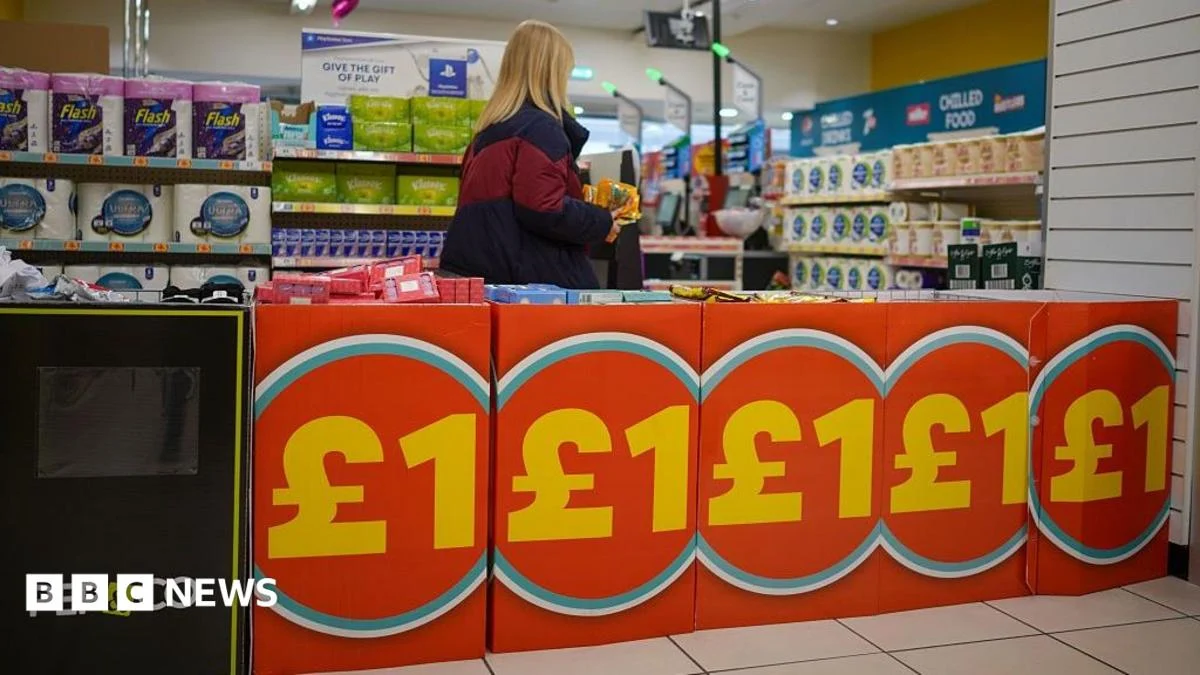
"This is a deeply worrying time for Poundland staff and their families, who are facing immense uncertainty through no fault of their own," Prime Minister Burnham told the BBC, articulating the government’s profound concern for the workforce. The crisis has escalated dramatically following the decision by Gordon Brothers, the US investment firm that acquired Poundland, to sever a vital funding lifeline to the retailer. This move, coupled with their rejection of a solvent takeover proposal from Irish firm Martin Property Group (MPG), has pushed Poundland to the very edge of administration.
Burnham underscored the government’s commitment to job protection, emphasizing, "We want to see jobs protected. If there was a potential owner ready to step in and prevent this outcome, and that offer hasn’t been accepted, then both the Business Secretary and I demand to know precisely why that is the case. We stand ready to support the workforce however we can, whether through facilitating new employment opportunities, providing retraining, or ensuring access to social security measures." The Prime Minister’s firm stance signals a potential willingness for government intervention should a viable rescue deal not materialise.
The retailer’s management has reluctantly filed a notice of intention to appoint administrators, a legal step that grants the business a critical 10-day window to secure a rescue deal before formal insolvency proceedings commence. This drastic measure was initiated after managing director Barry Williams informed the company’s extensive workforce that its US owner had abruptly cut off crucial working capital, despite Poundland’s demonstrably strong sales performance and nascent recovery trajectory.
It is widely understood that Gordon Brothers’ strategy appears to favour breaking up the business, a move that would see its extensive network of stores sold off piecemeal to rival retailers. Industry giants such as Poundstretcher, B&M, and Lidl have already expressed significant interest in acquiring various parts of Poundland’s valuable property estate.
Business Secretary Jonathan Reynolds had earlier voiced his "very much concerned" sentiment regarding the escalating uncertainty surrounding Poundland’s future, highlighting the broader economic implications of such a large-scale retail collapse. The government’s concern extends beyond the immediate job losses, encompassing the potential impact on local high streets and the wider retail ecosystem.
The convoluted saga of Poundland’s ownership began last year when Gordon Brothers acquired the then-struggling retailer from the Polish retail group Pepco for a nominal sum of just £1. A little over a year later, having ostensibly failed to turn the business around in a manner that met their investment objectives, Gordon Brothers put the company up for sale. Despite the presence of a fully funded and comprehensive offer from Martin Property Group, Poundland’s management and its owners have been unable to agree on a buyer, plunging the company into its current precarious state.
While a "pre-pack" deal – where the business is sold to a pre-arranged buyer immediately after entering administration – remains a possibility, the most likely and indeed most feared outcome is that Poundland will be broken up. This would entail its 600 stores across the UK and Ireland (where it trades as Dealz) being sold off individually or in smaller portfolios, leading to significant job losses and a fragmentation of the iconic brand.
Poundland, a cornerstone of British discount retail, was founded in 1990 with its inaugural store in Burton-upon-Trent. It has since grown into a formidable presence, serving approximately 20 million customers annually with its vast array of low-cost everyday products, general merchandise, and affordable fashion lines, playing a crucial role in local high streets across the nation.
A source close to Gordon Brothers, speaking anonymously, defended the investment firm’s approach, arguing that breaking up the company would ultimately allow creditors to recover more money. The insider suggested that this process, while disruptive, would offer the "best outcome for staff," on the premise that current employees may be able to secure employment with the new owners of individual stores. This type of insolvency proceeding, they argued, would also enable interested parties to firm up their offers for specific parts of the business.
Indeed, several major retailers have already shown keen interest. Fortress, the owner of Poundstretcher, is reportedly eyeing between 200 and 250 Poundland stores. Another large, unnamed retailer is understood to be interested in acquiring more than 100 other sites. In total, more than half a dozen prominent retailers, including Iceland, Lidl, and B&M, have expressed a desire to acquire parts of Poundland’s extensive store estate, indicating the underlying value of its physical assets.
However, this perspective is sharply contested by those on the ground. Bally Auluk, a national officer at the Usdaw shopworkers union, described the week as "incredibly distressing" for Poundland staff, who face an uncertain future. He vehemently criticised Gordon Brothers, claiming staff were being forced to "watch from the sidelines as a multi-billion pound company jeopardises their livelihoods as it tries to extract £30m from a business it bought for £1." Auluk’s statement highlights the perceived injustice and the significant financial motivations behind Gordon Brothers’ actions, suggesting a potential asset stripping exercise rather than a genuine attempt to save the business as a going concern. He added that Barry Williams had "reluctantly" initiated the administration process as a last resort to buy time for a rescue deal, urging Gordon Brothers to reconsider their stance and engage constructively with the Martin Property Group offer.
The situation is further complicated by a profound and public split between Poundland’s management and its owners. Barry Williams, the managing director, minced no words in a memo to staff, describing the situation as "unexpected, unwanted and wholly avoidable." He passionately argued, "As you all know, our sales are strong and our recovery is taking root. This business simply does not deserve to go into any kind of administration." Williams’s defiant tone underscores the management’s belief that the company is fundamentally sound and that its current predicament is a direct result of Gordon Brothers’ decisions.
In the internal memo, which has been seen by the BBC, Williams revealed the extent of Gordon Brothers’ control over Poundland’s finances. "I’m disappointed to have to tell you that Gordon Brothers have given instructions that restricts our access to funds that we would, in normal circumstances expect to access fully under our existing loan agreement," he wrote. This restriction on vital working capital effectively choked the company’s ability to operate day-to-day, pay suppliers, and manage its inventory, despite healthy sales.
Williams also confirmed the nature of the rejected offer from Martin Property Group, describing it as a "fully funded, ready to go bid that would have kept the business intact and able to continue the remarkable progress we’ve made." The strength and viability of this offer further deepen the mystery and frustration surrounding its rejection. Compounding the controversy, three independent directors, appointed earlier this month specifically to oversee a potential sale, resigned with immediate effect. Their resignation was a direct protest against Gordon Brothers’ decision not to accept MPG’s solvent offer, a move that speaks volumes about the perceived unreasonableness of the owner’s position and the potential lack of good faith in seeking a solvent resolution. The government, under Prime Minister Burnham, now faces the daunting task of navigating this complex corporate battle to protect the livelihoods of thousands of British workers and the future of a high street institution.


 atisusanti
 Ramos Leo
 George Anjay


 Roy Suryo
