
 George Anjay
While the immediate cessation of these tariffs is unlikely, the political recalibration in Washington has fostered anticipation for a more favourable environment. Ottawa now possesses renewed hope that the shifting power dynamics could pave the way for securing more advantageous terms in the ongoing, and often tumultuous, trade negotiations between the two nations. The midterms saw affordability emerge as a paramount concern for American voters, a sentiment echoed by a September survey conducted by the Cato Institute. This study revealed that a significant majority, approximately 75% of respondents, believed that the existing tariffs had contributed to price increases, underscoring the economic impact felt by ordinary Americans.
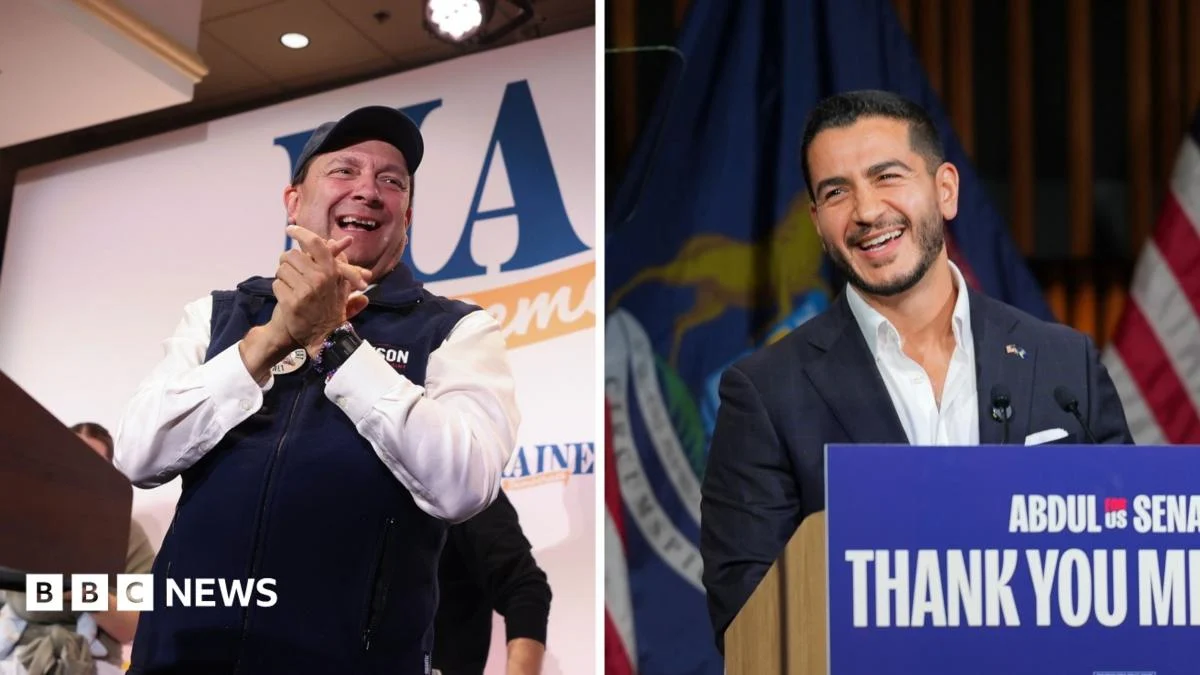
The repercussions of these tariffs were not merely abstract economic theories; they played a tangible and influential role in closely contested races across key states. In Maine, incumbent Republican Senator Susan Collins found herself at odds with the White House over the very issue of tariffs. Despite her successful lobbying efforts to secure the removal of duties that directly impacted her state’s economy—including those on essential commodities like road salt, refrigeration equipment, and seaweed—she ultimately lost her bid for re-election to Democrat Troy Jackson. This electoral outcome in Maine serves as a stark illustration of how trade policy can become a decisive factor in voter decision-making.
A parallel narrative unfolded in Michigan, a state whose automotive manufacturing sector is intrinsically linked to Canada’s. Here, Democratic candidate Abdul El-Sayed emerged victorious over Republican Mike Rogers, further indicating a potential shift in sentiment regarding trade relations. In Ohio, Senator-elect Sherrod Brown, who defeated Republican Jon Husted, has been a vocal critic of the tariffs. He has unequivocally labeled the levies as a "disaster" and pledged to alleviate the financial burden on voters by working towards their elimination. The vocal opposition from prominent Democrats like Hakeem Jeffries and Chuck Schumer, who now hold increased sway in Congress, signals a growing appetite within the party to rein in the tariffs imposed on Canada.
However, the path to tariff relief is not without its complexities. Despite the Democratic gains, the prospect of swift action may be tempered by the intricate nature of trade policy and the executive authority wielded by President Trump. A significant portion of Trump’s tariffs were enacted through executive orders, circumventing the need for congressional approval. This grants the President considerable latitude in maintaining or rescinding these measures. Furthermore, President Trump has unequivocally asserted his "ultimate power" of veto, a tool he has indicated he would readily employ to quash any legislation passed by Congress that does not align with his objectives. This strategic advantage means that even a Democratic-controlled Congress may find its ability to unilaterally dismantle these tariffs significantly constrained.
Adding another layer of complexity, some Democratic lawmakers have historically supported certain tariffs as a means of protecting American manufacturing jobs. This could translate into a willingness to maintain some existing tariffs, even under a Democratic administration, creating potential divisions within the party on this specific issue.
The current tariff landscape presents a multi-faceted challenge for Canada. Several layers of tariffs are in place, notably impacting crucial sectors such as automobiles, steel, aluminum, and forestry. The situation escalated significantly in August when, following the collapse of trade talks between Ottawa and Washington, the Trump administration imposed an additional 50% tariff on approximately $20 billion worth of various Canadian goods. This broad-reaching measure encompassed a wide array of products, from dairy and cosmetics to furniture, demonstrating the administration’s willingness to exert economic pressure. The US also enacted a total import ban on specific items, including motorcycles, whey protein, and alcohol, further intensifying the trade dispute.
Canada, in response, retaliated with its own "dollar-for-dollar" tariffs, mirroring the US imposition at a 50% rate. This tit-for-tat approach extended to provincial measures, with most Canadian provinces banning the sale of US alcohol as a retaliatory tactic. The trade war’s trajectory took a more alarming turn when President Trump previously threatened to escalate the conflict further by increasing tariffs on key sectors, including the vital auto manufacturing industry, as of January 1st. This looming threat underscored the precariousness of the trade relationship and the potential for further economic disruption.
In the lead-up to the midterm elections, there were discernible signs that the Trump administration was becoming more attuned to the public perception of its tariff policies concerning Canada. Just days before the vote, President Trump conveyed a more conciliatory tone, informing reporters that a trade deal was "very close" following a conversation with Prime Minister Mark Carney. Speaking to reporters on Tuesday evening, Prime Minister Carney echoed this sentiment, noting that US negotiators were exhibiting greater flexibility, stating, "they’re asking less and they’re offering more" in recent discussions. This subtle shift in rhetoric suggested a potential softening of the US stance, perhaps influenced by the approaching electoral reckoning.
On Wednesday, Canada’s Minister of Trade, Dominic LeBlanc, offered a more measured perspective, emphasizing that the midterm results would not precipitate any immediate changes in the short term. He dismissed speculation regarding the potential actions of the newly seated Congress in the new year as mere academic discussion. "Our approach will not change and we don’t intend to speculate on the approach being taken by the Americans," LeBlanc stated, underscoring Canada’s commitment to its established negotiating strategy.
Pierre Poilievre, the leader of Canada’s Conservative Party, acknowledged the unpredictable nature of President Trump’s actions, stating, "nobody controls Donald Trump." However, he asserted that the midterm results have provided Canada with "massive leverage," given the broad unpopularity of the tariffs among American voters. "We’ve got to use that goodwill to pressure for tariff-free trade," Poilievre urged, highlighting the opportune moment for Canada to advocate for a more favorable trade environment.
Colin Robertson, a former Canadian diplomat and a fellow at the Canadian Global Affairs Institute, posits that President Trump may indeed feel increased pressure to finalize a deal with Canada now that American voters have clearly articulated their dissatisfaction with his trade policies. "Will this change Trump’s mind? It might, because he suffered such a beating at the polls," Robertson observed, suggesting that the electoral setback could serve as a catalyst for a shift in the President’s approach. However, he cautioned that the ultimate impact of the bruising midterm loss on Trump’s decision-making remains to be seen.
Robertson further emphasized that Canada has an "ideal window" of opportunity between now and January, when the new Democratic lawmakers are officially sworn into office, to finalize a trade agreement. He reasoned that following this period, President Trump is likely to be preoccupied with investigations launched by Democrats into his family, finances, and various members of his administration. This anticipated shift in focus could create a less conducive environment for trade negotiations.
Earlier in the year, US Trade Representative Jamieson Greer had expressed ambitions to have interim agreements in place with both Canada and Mexico concerning the North American free trade agreement—known as the USMCA in the United States and CUSMA in Canada—before the end of the year. While Prime Minister Carney has adopted a more optimistic tone regarding the current state of Canada-US trade talks in recent days, he also indicated to Politico last month that Canada was prepared to wait for a new American president if necessary to achieve a satisfactory deal with the US, highlighting the long-term strategic considerations underpinning Canada’s negotiating position.



 Nakalama John
 atisusanti
 Ramos Leo
 Roy Suryo
