
 George Anjay
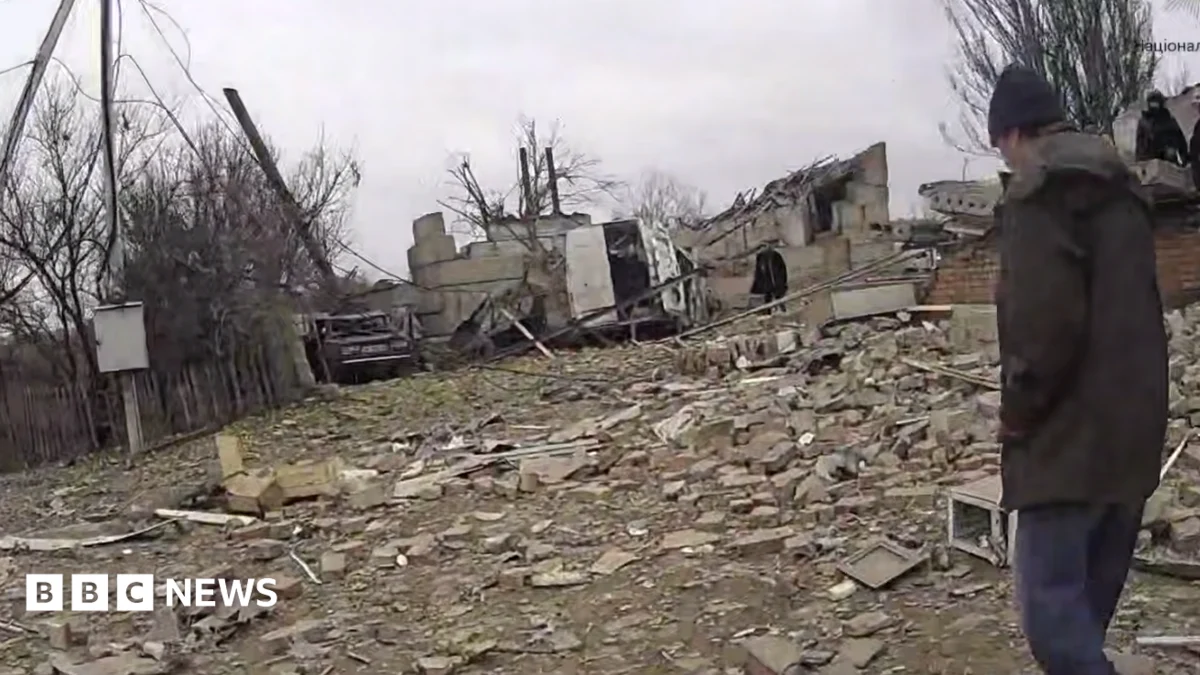
Horrifying bodycam footage, released by Ukraine’s national police on Wednesday, offers a chilling, first-hand account of a brutal Russian "double-tap" bombing attack that targeted civilians and first responders in the Zaporizhzhia region. The video captures the immediate aftermath of a devastating initial strike, the panicked moments before a second, even more lethal bombardment, and underscores President Volodymyr Zelensky’s condemnation of the act as a war crime with insufficient global outcry.
The footage begins by showcasing the sheer devastation wrought by the first explosion in the village of Kamyshuvakha. Rubble is strewn everywhere, and shocked local residents, their faces etched with disbelief and trauma, stare at the ruins of their homes and community. Severely damaged buildings stand as stark monuments to the initial assault. The scene is one of chaos and immediate danger, with the air thick with dust and the palpable fear of those who have just survived a direct attack.
Amidst this wreckage, a voice crackles over a two-way radio, belonging to a military official. The urgent warning is directed at the police officers on the ground: more glide bombs are being launched, specifically targeting Kamyshuvakha. The words are sharp, laced with the grim reality of impending further destruction. "Quickly [go] to the shelter!" one of the police officers commands, his voice strained but firm, as he directs the dazed local residents toward safety. The video shows individuals, including some seemingly in shock, moving towards a designated shelter, which is described as being at least two floors underground. The desperate scramble for safety is a poignant illustration of the terror inflicted by the relentless Russian bombardment.
The recording captures the final, harrowing moments before the second strike. Seconds after the civilians and officers have entered the underground shelter, the world outside is violently obliterated once more. The shelter itself is hit, and the bodycam footage abruptly ends, leaving the viewer with the devastating implication of what transpired next. Ukraine has stated that this shelter was located near a local school, a place that had been repurposed for the vital distribution of humanitarian aid, highlighting the callousness of the attack that struck those providing and receiving essential assistance.
The veracity of the video has been corroborated by BBC Verify, which has confirmed that the location depicted is identical to that shown in earlier footage released by the Ukrainian State Emergency Service (DSNS). This earlier footage documented the aftermath of Monday’s attack on Kamyshuvakha, solidifying the timeline and the undeniable reality of the events.
President Zelensky, in a forceful statement posted on social media on Wednesday, articulated the gravity of the attack and the specific nature of the Russian strategy. He revealed that "nine aerial bombs were dropped by the Russians." He meticulously detailed the sequence of events: "First, they hit people who came to receive humanitarian aid, and then rescuers and police officers who arrived at the scene." This deliberate targeting of civilians seeking aid and the subsequent targeting of those attempting to provide assistance and secure the area paints a damning picture of Russia’s conduct in the conflict.
The Ukrainian president’s distress was evident as he lamented the international community’s response, or lack thereof. He stated, "Unfortunately, there has been very little reaction from the world to this insane attack." He unequivocally described the incident as yet another example of "thousands" of war crimes perpetrated by Russia, emphasizing the ongoing impunity with which such atrocities are seemingly carried out.
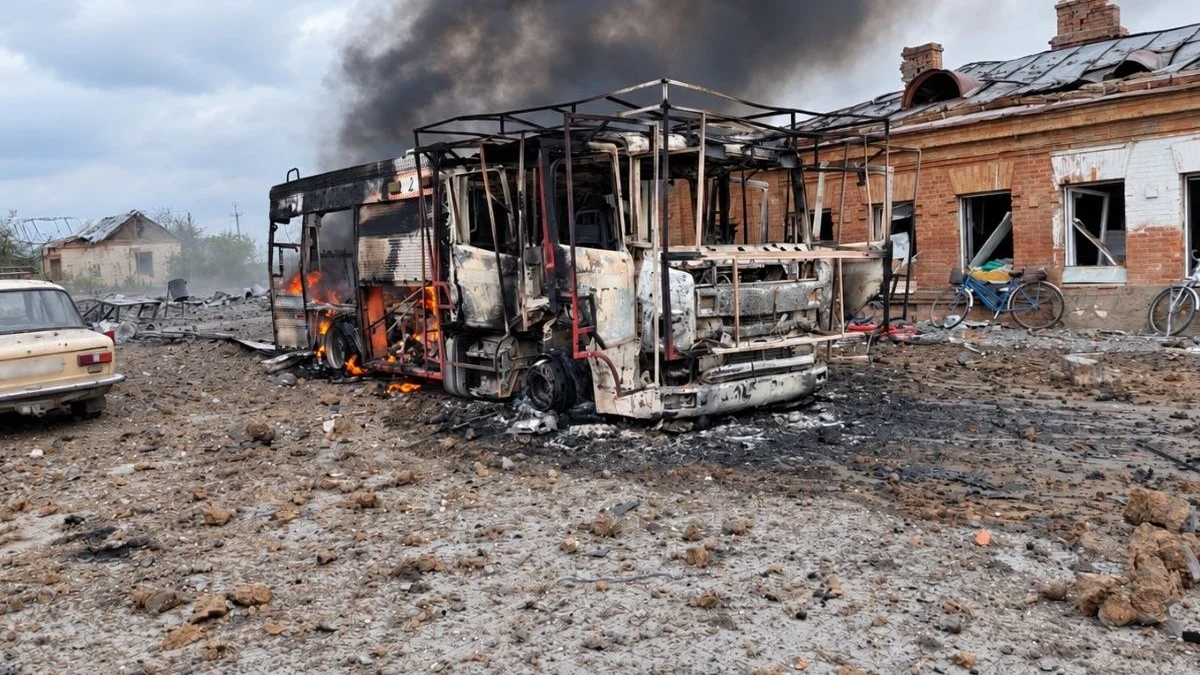
In conjunction with the bodycam footage, Ukraine’s DSNS had previously released another video, a stark visual testament to the destructive power unleashed upon Kamyshuvakha. This separate footage captured a massive crater, a gaping wound in the earth, left in the wake of the attack, further underscoring the intensity and indiscriminate nature of the bombardment.
The Russian military has maintained its customary silence, offering no public comment on the allegations or the released footage. This lack of transparency and accountability is characteristic of Russia’s response to numerous accusations of war crimes and civilian casualties throughout the full-scale invasion of Ukraine, which was initiated by Russian President Vladimir Putin in February 2022.
In a separate development on Wednesday, President Zelensky provided an update on diplomatic efforts aimed at de-escalating the conflict and ultimately achieving peace. He disclosed that he had engaged in an extensive, "great detail" discussion lasting "an hour-and-a-half" with Steve Witkoff and Jared Kushner, identified as former US President Donald Trump’s peace envoys. This meeting preceded anticipated trilateral negotiations involving Ukraine, Russia, and the United States, scheduled to take place in Abu Dhabi on November 10-11.
The Ukrainian leader, who is currently undertaking a surprise visit to Spain, also revealed that his delegation had held a separate and "meaningful" meeting in Brussels. This gathering included representatives from key international players, including the United States, the European Union, France, Britain, Germany, as well as NATO and the World Bank. The focus of this high-level discussion was on "post-war reconstruction" efforts for Ukraine, indicating a forward-looking approach to rebuilding and recovery, even amidst ongoing hostilities.
Furthermore, Zelensky indicated that the discussions in Brussels would continue on Thursday, with a specific agenda item being the formulation of "security guarantees" for Ukraine, a crucial element for ensuring the nation’s long-term safety and sovereignty.
It is noteworthy that these diplomatic engagements are occurring at a time when the prospects for a swift resolution to the conflict appear dim. Since the suspension of the trilateral talks aimed at ending the war in February, Moscow has demonstrably intensified its attacks. This escalation coincides with reports that Kyiv has been facing critical shortages of Western-supplied interceptors, significantly diminishing its capacity to defend against incoming missiles.
Analysts, therefore, anticipate that the upcoming talks in Abu Dhabi are unlikely to yield any major breakthroughs. The entrenched positions of the warring parties and the current military realities suggest a prolonged and complex negotiation process. The devastating attack in Kamyshuvakha, as vividly captured in the bodycam footage, serves as a grim reminder of the human cost of this protracted conflict and the urgent need for effective international intervention and accountability.
Additional reporting by Paul Brown, BBC Verify.


 Nakalama John
 atisusanti

 Ramos Leo

 Roy Suryo
