
 George Anjay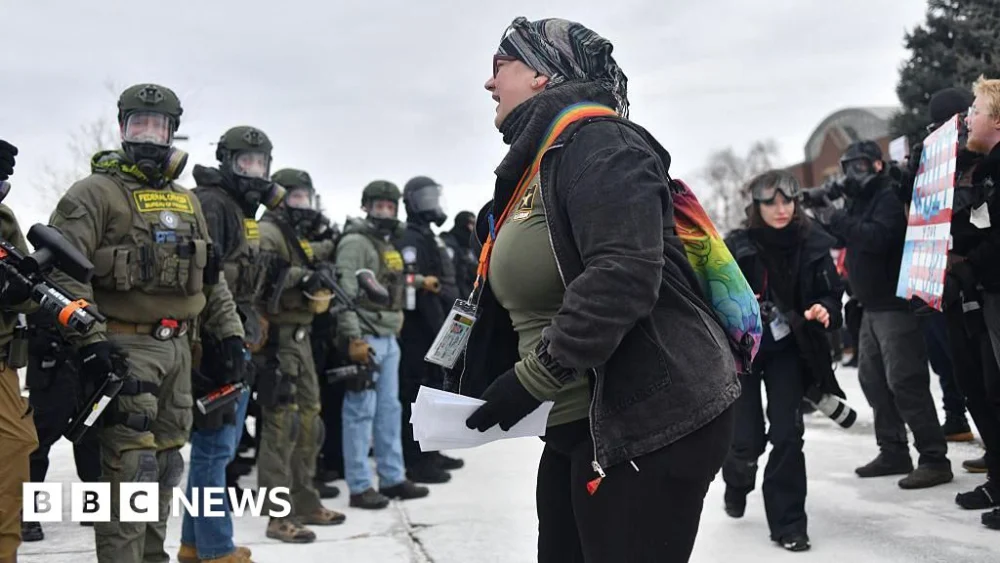
A significant federal ruling has been handed down in Minneapolis, with US District Judge Katherine Menendez issuing a preliminary injunction that dramatically curtails the crowd control tactics Immigration and Customs Enforcement (ICE) agents can employ against individuals deemed to be peacefully protesting federal immigration operations. The order, which came into effect Friday night, specifically prohibits ICE agents from arresting or deploying pepper spray and similar less-lethal munitions against demonstrators who are engaged in "peaceful and unobstructive" activities. This includes those who are merely observing or monitoring the actions of ICE personnel.
The timing of this judicial intervention is particularly salient, occurring just ahead of anticipated weekend protests that are expected to swell in response to widespread immigration enforcement actions across the city. These demonstrations are further galvanized by the recent fatal shooting of protester Renee Good by an ICE agent on January 7th, an incident that has cast a long shadow over federal immigration activities in Minneapolis and ignited widespread public outcry. In the wake of the ruling and the heightened tensions, the US Department of Homeland Security has publicly stated that it is implementing measures to ensure the safety of its officers against what it characterizes as "rioters."
In an effort to preempt potential escalation and ensure public safety, Minnesota officials issued urgent appeals on Friday, imploring protesters planning to take to the streets over the weekend to maintain order and conduct themselves peacefully. The state’s National Guard has been placed on high alert, and a substantial contingent of law enforcement officers has been strategically deployed throughout the city. This proactive measure is intended to manage both the planned anti-ICE demonstrations and a counter-demonstration that a conservative influencer has organized.
Judge Menendez’s comprehensive 83-page order meticulously outlines the restricted actions for federal agents. It explicitly forbids the arrest of individuals engaged in peaceful protest and prohibits the use of “pepper-spray or similar nonlethal munitions and crowd dispersal tools against persons who are engaging in peaceful and unobstructive protest activity.” Beyond direct confrontation with demonstrators, the injunction also imposes limitations on ICE’s ability to detain individuals within vehicles. Specifically, agents are barred from “stopping or detaining drivers and passengers in vehicles where there is no reasonable articulable suspicion that they are forcibly obstructing or interfering” with their official duties. The ruling clarifies that the act of lawfully following immigration agents at a safe and appropriate distance does not, in itself, constitute reasonable suspicion sufficient to justify a vehicle stop. This aspect of the ruling is particularly significant, addressing concerns raised by protesters about being harassed or intimidated through vehicular surveillance.
In response to Judge Menendez’s injunction, a spokesperson for the Department of Homeland Security issued a statement to CBS, the BBC’s US partner, asserting that the agency “is taking appropriate and constitutional measures to uphold the rule of law and protect our officers and the public from dangerous rioters.” This statement suggests a divergence in perspective between the federal agency and the court regarding the nature of the protests and the necessity of certain enforcement tactics.
The White House has also publicly voiced its disapproval of the ruling. Spokesperson Abigail Jackson, in remarks to Politico, characterized the decision as “absurd” and accused it of embracing “a dishonest, left-wing narrative.” Jackson further defended the actions of federal agents, stating, “Here’s the truth: federal agents have acted lawfully to protect themselves and ensure the integrity of their operations when individuals attempt to intervene.” This response underscores a strong pushback from the executive branch against the judicial restrictions, framing the agents’ actions as legitimate self-defense and necessary for operational integrity.
Minneapolis has been in a state of heightened alert and unrest since the January 7th shooting of Renee Good, an incident that has spurred ongoing protests throughout the city. The past week has seen isolated but significant clashes reported between protesters and federal officers, indicating a palpable friction between the two groups. The presence of federal agents, particularly ICE, has been a focal point of these confrontations, with protesters expressing concerns about overreach and aggressive tactics.
On Saturday, the Minnesota National Guard confirmed its readiness to support local law enforcement and public safety agencies, posting on the social media platform X that its troops were “on standby, ready to assist.” The Guard further elaborated that its soldiers would be distinguishable on the ground by wearing “high-visibility yellow vests ‘to help distinguish them from other agencies in similar uniforms,’” a measure likely intended to prevent confusion and potential misidentification amidst a complex law enforcement presence.
Adding another layer of complexity to the unfolding situation, the Department of Justice announced on Friday that it has initiated an investigation into two prominent Minnesota Democrats: Governor Tim Walz and Minneapolis Mayor Jacob Frey. The investigation reportedly centers on allegations of attempts to impede federal immigration operations. Both Walz and Frey have been vocal critics of ICE’s operations within the city, adding a political dimension to the ongoing tensions.
US Attorney General Pam Bondi issued an online statement asserting, “A reminder to all those in Minnesota: No one is above the law.” This statement signals the Justice Department’s intent to scrutinize the actions of state and local officials in relation to federal enforcement activities. However, Governor Walz and Mayor Frey have not only condemned the investigation but have also been critical of its premise. Governor Walz, in his own statement, decried the move as “weaponizing the justice system against your opponents,” labeling it an “authoritarian tactic.” This sharp rebuke from the state’s chief executive suggests a deep concern about the potential for political retribution and the erosion of democratic norms.
The legal battle initiated by the protesters, which led to Judge Menendez’s injunction, highlights a broader societal debate about the balance between lawful protest, federal enforcement powers, and the rights of individuals to assemble and express dissent without fear of reprisal. The ruling by Judge Menendez represents a significant victory for those advocating for greater accountability and restraint in federal law enforcement tactics, particularly in the sensitive context of immigration enforcement and civil liberties. The coming days and weeks will likely see continued scrutiny of ICE’s operations in Minneapolis, the response from federal authorities, and the ongoing legal and political ramifications of this developing story. The federal government’s position, as articulated by the White House and the Department of Homeland Security, suggests a readiness to challenge the judicial restrictions, setting the stage for potential further legal appeals and continued public discourse on the matter.



 Roy Suryo

 Nakalama John
 atisusanti
 Ramos Leo
