
 George Anjay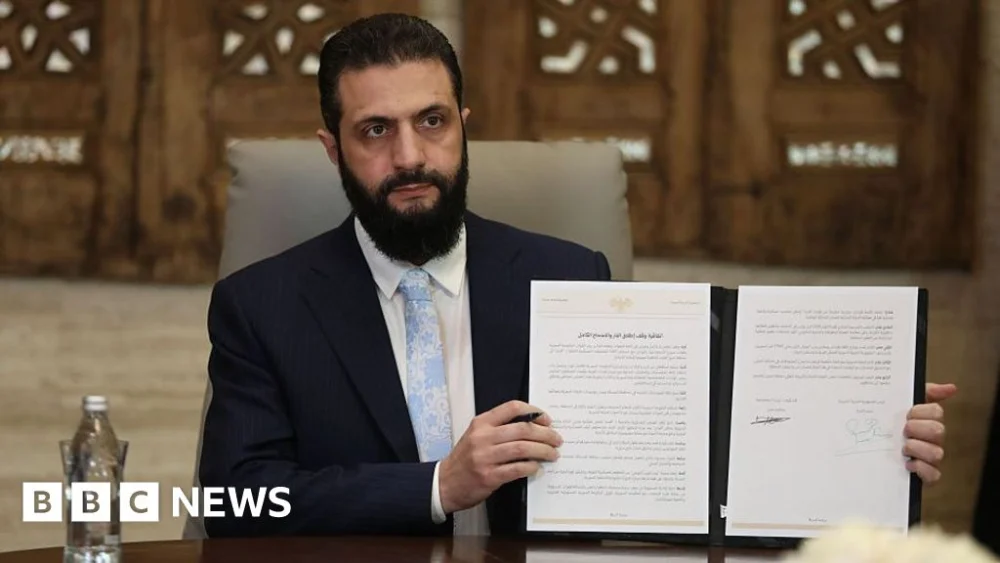
In a seismic shift that promises to redefine the geopolitical landscape of the Middle East, the Syrian government and the Kurdish-led Syrian Democratic Forces (SDF) have announced an immediate nationwide ceasefire, marking a pivotal moment in the country’s protracted civil war. The agreement, which grants the Syrian government near-total control over its territorial integrity, brings an end to nearly two weeks of intense fighting and ushers in a new era of integration for the SDF into the fabric of Syrian state institutions. This landmark accord, encompassing a comprehensive 14-point plan, signifies a profound reconciliation and a determined effort to unify a nation fractured by years of conflict.
Speaking from the heart of Damascus, President Ahmed al-Sharaa declared that the deal would facilitate the reassertion of Syrian state authority over three strategically vital eastern and northern governorates: al-Hasakah, Deir Ezzor, and Raqqa. These regions, long under the de facto administration of the SDF, hold significant economic and strategic importance, including vast oil and gas reserves. The announcement was the culmination of a high-stakes meeting in Damascus between President al-Sharaa and Tom Barrack, the United States’ special envoy to Syria, who lauded the agreement as a crucial stride towards a "unified Syria." The presence of Barrack underscored the international community’s keen interest in a stable and cohesive Syrian state, particularly in the ongoing global effort to combat remnants of the Islamic State group (ISIS).
While SDF commander Mazloum Abdi was initially slated to attend the crucial meeting, unforeseen weather conditions regrettably prevented his travel, leading to a postponement of his visit to Damascus until Monday. This logistical hiccup, however, did not derail the momentum of the negotiations, which have been building for months. The SDF, a formidable fighting force that emerged as a key partner for the United States in its campaign against ISIS, has played a critical role in liberating vast swathes of northeastern Syria from the group’s brutal clutches. Established almost a decade ago during the throes of the Syrian civil war, the SDF’s autonomous administration was forged with substantial backing from the U.S., which provided crucial armament and training to counter ISIS. This partnership allowed the SDF to not only defeat ISIS but also to govern a diverse array of both Kurdish and Arab-majority territories, establishing a complex and evolving governance structure.
The newly inked agreement, formally endorsed by both President al-Sharaa and Commander Abdi, outlines a clear roadmap for the transfer of power and responsibilities. Under its terms, Syrian authorities will assume oversight of all civilian institutions, border crossings, and the critical oil and gas fields that have been the bedrock of Kurdish self-rule. In a move designed to foster national unity and security, SDF military and security personnel will undergo a rigorous vetting process before being integrated into Syria’s national defense and interior ministries. This integration is expected to enhance the capabilities of the Syrian armed forces and law enforcement agencies, ensuring a cohesive approach to national security. Furthermore, Damascus will take on the significant responsibility of managing prisons and detention camps currently housing tens of thousands of foreign ISIS fighters and their families, a move that addresses a major international concern regarding the custody and rehabilitation of these individuals.
A particularly groundbreaking aspect of the agreement is Damascus’s reaffirmation of its commitment to recognizing Kurdish cultural and linguistic rights. This includes the official recognition of the Kurdish language and the designation of the Kurdish New Year as a national holiday. This represents the first formal acknowledgment of Kurdish rights since Syria gained its independence from French colonial rule in 1946, signaling a significant departure from past policies and an embrace of the country’s rich ethnic diversity. This recognition is expected to foster greater inclusivity and a sense of belonging among the Kurdish population, contributing to long-term national stability.
Crucially, the agreement also reaffirms Syria’s active participation in the U.S.-led coalition against the Islamic State. This commitment underscores the continued importance of international cooperation in eradicating the lingering threat of extremist ideologies and militant groups. The collaborative effort against ISIS, which has been a cornerstone of regional security, is now set to be bolstered by a more unified Syrian government.
The path to this comprehensive agreement has been arduous, marked by months of stalled negotiations following a previous failed integration attempt. The current accord arrives in the wake of significant military developments, including the recent movement of Syrian government forces into Raqqa and nearby oil facilities, a development that followed an SDF withdrawal earlier on Sunday. President al-Sharaa had previously voiced strong sentiments regarding the territorial control of the SDF, stating last week that it was "unacceptable for a militia to control a quarter of the country and hold its main oil and commodities resources." This assertion highlights the underlying strategic and economic considerations that have shaped the negotiations and the ultimate terms of the agreement.
The integration of the SDF into the Syrian national military structure is a complex undertaking, requiring careful planning and execution. The vetting process for SDF personnel will be crucial in ensuring that individuals are aligned with the national security objectives of a unified Syria. The economic implications of the Syrian government assuming control of oil and gas fields are substantial, potentially providing a much-needed revenue stream for reconstruction and development efforts across the country. The recognition of Kurdish cultural and linguistic rights, while a significant step forward, will also require ongoing efforts to ensure its full implementation and to foster genuine reconciliation between different ethnic and religious communities.
The international community will be closely monitoring the implementation of this agreement, as it holds the potential to usher in a new era of stability for Syria and the wider region. The success of this integration will depend on the commitment of all parties involved to upholding the terms of the agreement, fostering trust, and working collaboratively towards a shared future. The ceasefire, while immediate, is just the first step in a long and challenging process of national healing and reconstruction. The coming months will be critical in determining the long-term impact of this landmark accord on the future of Syria and its people. The deal’s success will hinge on sustained political will, effective governance, and a genuine commitment to inclusivity and national reconciliation.



 Roy Suryo

 Nakalama John
 atisusanti
 Ramos Leo
