
 George Anjay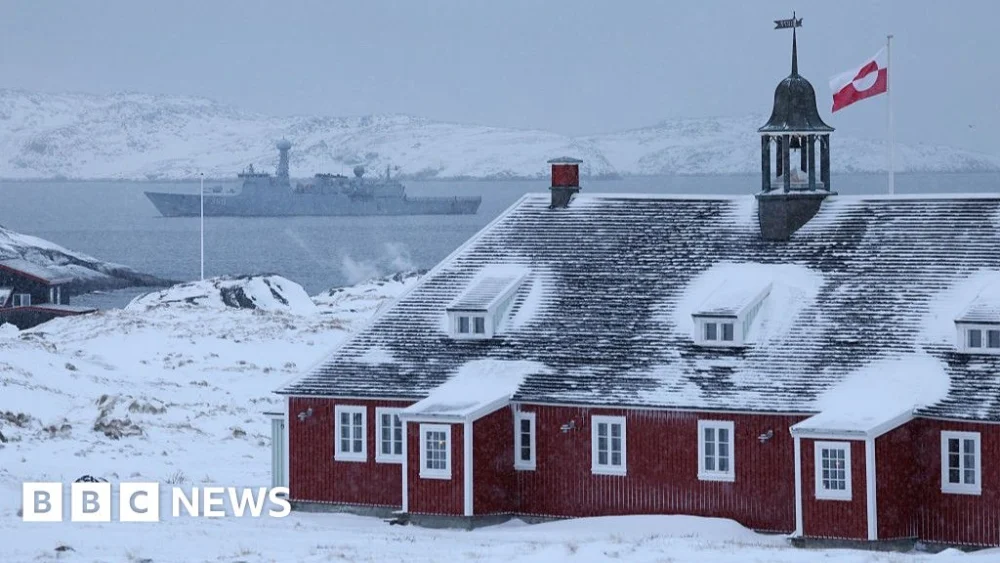
Denmark’s Prime Minister Mette Frederiksen has delivered a defiant stance, declaring that "Europe will not be blackmailed," as she and a growing coalition of European allies firmly reject United States President Donald Trump’s extraordinary threats of tariffs over Greenland. The unprecedented move by Trump, who has openly pursued the acquisition of the autonomous Danish territory, has ignited a firestorm of condemnation across the Atlantic, with European leaders rallying in solidarity with Denmark and signaling a united front against what they perceive as coercive foreign policy.
President Trump’s aggressive posture has escalated dramatically, with reports indicating he plans to impose substantial tariffs on eight key US allies – Denmark, Finland, France, Germany, the Netherlands, Norway, Sweden, and the United Kingdom – should they oppose his ambition to control Greenland. The rationale presented by Trump for this aggressive stance centers on Greenland’s perceived critical importance to US national security. He has not shied away from suggesting that the United States might even resort to forceful means to secure the territory, a prospect that has drawn widespread and severe criticism from international observers and governments alike.
In a powerful and unified response, the nations targeted by Trump’s tariff threats have issued a joint statement, unequivocally asserting that the US president’s plan risks plunging transatlantic relations into a "dangerous downward spiral." The statement underscores the deep concern among these nations, emphasizing that "Tariff threats undermine transatlantic relations." They have reiterated their "full solidarity with the Kingdom of Denmark and the people of Greenland," signaling a robust defense of national sovereignty and territorial integrity.
These European nations, many of whom are integral members of the North Atlantic Treaty Organization (NATO), have stressed their shared commitment to bolstering Arctic security, recognizing it as a "shared transatlantic interest." Their statement clearly articulates their readiness to "engage in a dialogue based on the principles of sovereignty and territorial integrity that we stand firmly behind," drawing a clear line in the sand regarding their unwavering principles.
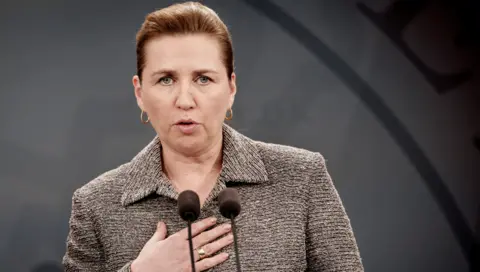
Prime Minister Frederiksen, in a direct address on Facebook, echoed this sentiment of resolute defiance. "We want to cooperate and we are not the ones seeking conflict," she stated. "And I am happy for the consistent messages from the rest of the continent: Europe will not be blackmailed." She further emphasized the critical importance of upholding "the fundamental values that created the European community," highlighting the ideological underpinnings of the unified European response.

The diplomatic ramifications of Trump’s actions have spurred urgent high-level communications. United Kingdom Prime Minister Sir Keir Starmer confirmed he had engaged in crucial phone calls with Prime Minister Frederiksen, as well as European Commission President Ursula von der Leyen and NATO Secretary-General Mark Rutte, prior to speaking with President Trump. A spokesperson for Starmer’s office conveyed that he had reaffirmed the UK’s position that Greenland’s security is a paramount concern for all NATO members. Crucially, the spokesperson added, "He also said that applying tariffs on allies for pursuing the collective security of NATO allies is wrong," directly challenging the logic and legality of Trump’s proposed trade sanctions.
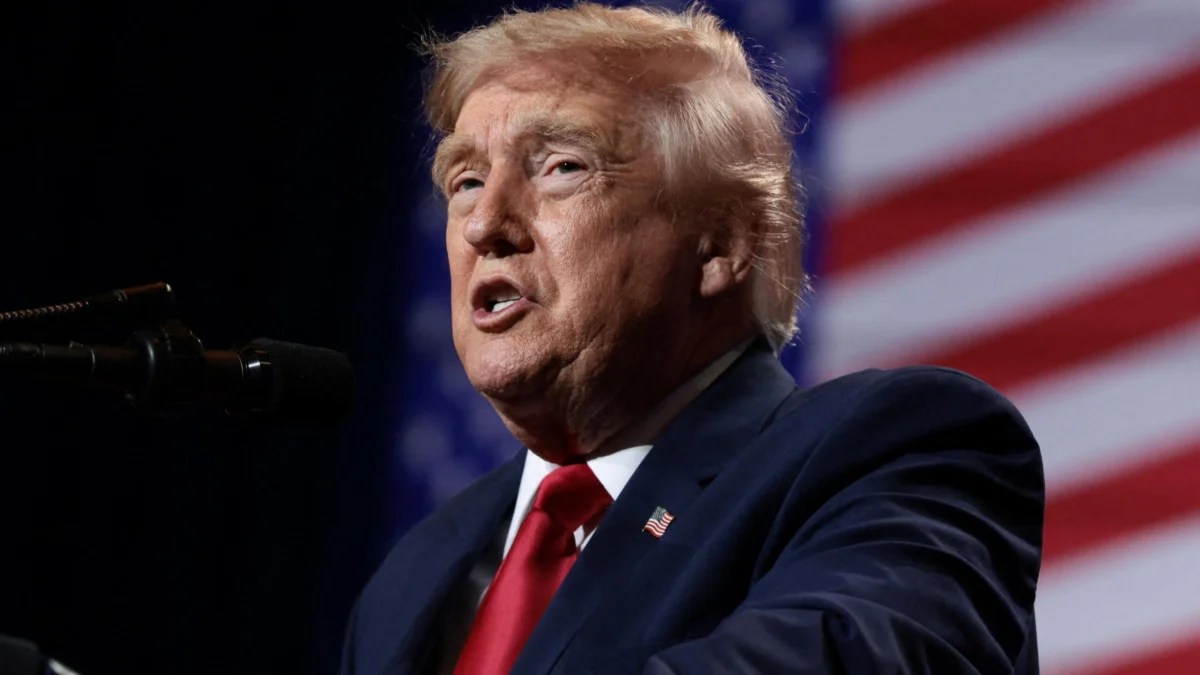
The specifics of Trump’s tariff threat are alarming in their scope and potential impact. A 10% tariff on goods originating from Denmark, Norway, Sweden, France, Germany, the United Kingdom, the Netherlands, and Finland is slated to come into effect on February 1st. This initial tariff could potentially escalate to 25% and remain in place until a "deal was reached" – a vague condition that offers little clarity and ample room for prolonged economic pressure. Trump’s justification for this drastic measure, as articulated in his own words, highlights a disturbing framing of the situation: "These Countries, who are playing this very dangerous game, have put a level of risk in play that is not tenable or sustainable," he wrote, ominously concluding, "This is a very dangerous situation for the Safety, Security and Survival of our Planet."
The US president’s insistence on Greenland’s strategic importance for American security has been a recurring theme. His previous pronouncements, suggesting Washington would acquire the territory "the easy way" or "the hard way," have fueled anxieties about the potential for coercive tactics. Greenland, a vast, sparsely populated territory, holds significant strategic value due to its rich natural resources and its pivotal location between North America and the Arctic. This geographic advantage makes it an ideal vantage point for early warning systems in the event of missile attacks and for monitoring maritime activity in the strategically vital Arctic region.
US Treasury Secretary Scott Bessent, in an interview on NBC News’ "Meet the Press," attempted to rationalize the US pursuit of Greenland by stating, "Greenland can only be defended if it is part of the US, and it will not need to be defended if it is part of the US." He expressed his belief that "the Europeans will understand that this is best for Greenland, best for Europe and best for the United States," a statement that has been widely interpreted as dismissive of European sovereignty and concerns.
The practical implications of Trump’s tariff threats on existing trade agreements with the UK and the EU remain a subject of intense speculation. French President Emmanuel Macron, who is actively orchestrating the European response, has indicated his intention to formally request the activation of the EU’s "anti-coercion instrument" should Trump proceed with imposing the tariffs. This instrument is designed to protect European businesses and member states from coercive measures by third countries.
The upcoming World Economic Forum in Davos, Switzerland, is set to become a focal point for these escalating tensions. President Trump is scheduled to address the forum on the theme of "how can we co-operate in a more contested world?" His attendance, alongside leaders such as President Macron and the heads of state from Germany and the EU, will undoubtedly provide a platform for direct engagement and potential confrontation. Canadian Prime Minister Mark Carney has also voiced his nation’s "concern by the recent escalation" and announced plans for "significantly increasing Arctic security – strengthening our military and investing in critical infrastructure." He underscored Canada’s belief that "the best way to secure the Arctic is by working together within Nato," reinforcing the importance of multilateral cooperation.
Dutch Prime Minister Mark Rutte has also engaged in diplomatic outreach, reporting a conversation with Trump "regarding the security situation in Greenland and the Arctic." He expressed his anticipation of further dialogue, stating, "We will continue working on this, and I look forward to seeing him in Davos later this week."
Public sentiment in both Denmark and Greenland against Trump’s territorial ambitions appears to be robust and vocal. Demonstrations condemning the potential US takeover of Greenland were held over the weekend in Nuuk, the capital of Greenland, and in various Danish cities. These rallies preceded the announcement of the tariff threats, indicating a pre-existing and strong opposition to the US president’s actions.
These public displays of dissent coincide with a visit to Copenhagen by a delegation from the US Congress. The leader of this delegation, Democratic Senator Chris Coons, characterized President Trump’s rhetoric as "not constructive," offering a dissenting voice from within the US political establishment.
Furthermore, Greenland’s representative to the US has provided compelling data regarding the territory’s self-determination. According to their account, a referendum held in January 2025 revealed that only 6% of Greenlanders favored becoming part of the US, while a significant 85% expressed opposition. This data directly contradicts the notion that Greenlanders would welcome a US takeover.
Recent polling data from the United States further highlights a lack of public support for such an acquisition. A Reuters/Ipsos poll released last Wednesday indicated that a mere 17% of Americans support the US taking control of Greenland, with a substantial 47% expressing opposition to Trump’s pursuit of the island. These figures suggest that the US president’s vision for Greenland may not resonate with the American public, adding another layer of complexity to his ambitious geopolitical maneuver. The unfolding situation underscores a significant transatlantic rift, with Europe standing firm against what it perceives as an unacceptable exercise of power and a threat to the established international order.



 Roy Suryo

 Nakalama John
 atisusanti
 Ramos Leo
