
 George Anjay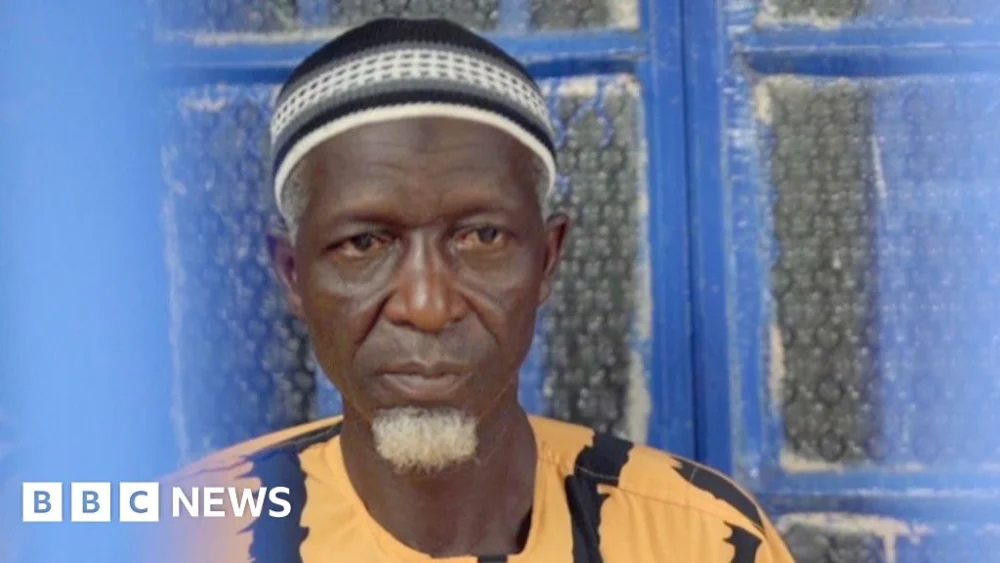
Musa’s story, brought to light by BBC Africa Eye’s exclusive access to an Interpol-assisted police unit in Sierra Leone, paints a grim picture of vulnerability and exploitation. The traffickers, operating across borders with disturbing ease, prey on individuals desperate for a better life, particularly in impoverished communities. They entice victims with visions of work in far-flung destinations like the United States, Canada, Dubai, and Europe, demanding substantial sums upfront for supposed "administration costs." Once this payment is made, the victims are often transported to neighboring countries and coerced into recruiting others, a cruel twist that traps them in a cycle of deception. The promised jobs, of course, never materialize.
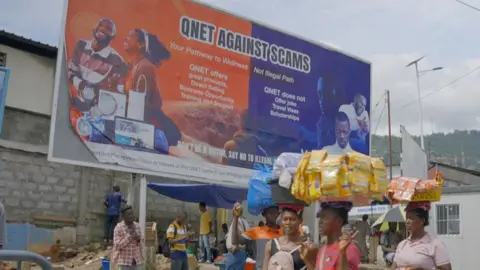
The scale of this scam is staggering, with thousands across West Africa falling prey to these sophisticated networks. While QNET itself is a legitimate direct-selling company involved in wellness and lifestyle products, its business model, which has faced scrutiny in the past, has become a fertile ground for exploitation. Criminal elements have hijacked its brand, using its name as a smokescreen for their illicit activities. QNET has publicly acknowledged the problem and launched its own "QNET Against Scams" campaign across the region, featuring billboards and media adverts designed to warn the public. The company has also vehemently denied any direct link to human trafficking. However, for families like Musa’s, these campaigns offer little solace against the immediate devastation caused by the traffickers.
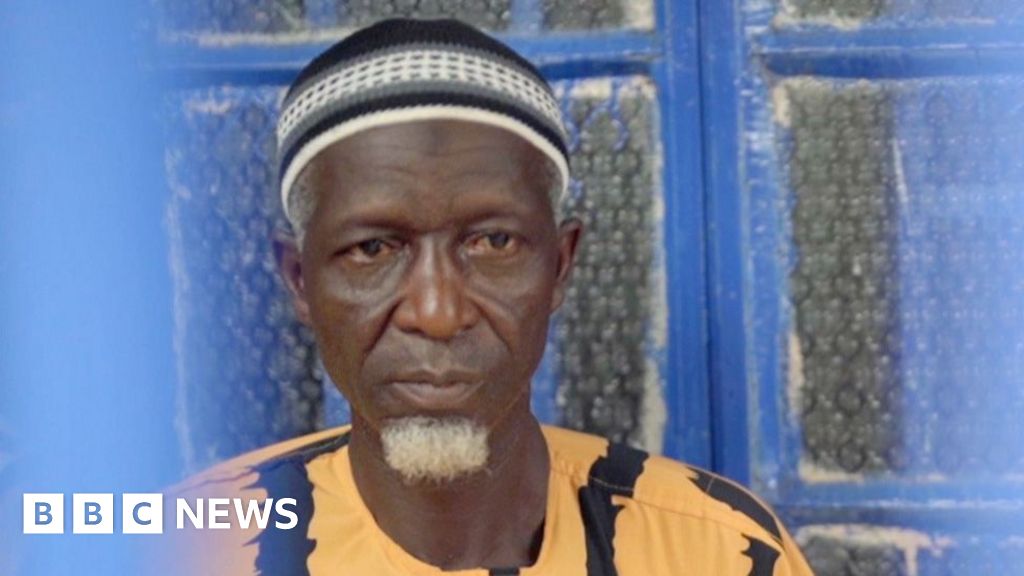
The financial toll on Musa’s family has been immense. They had already handed over $25,000 (£19,000) to the traffickers, a sum that covered the initial joining fees and additional payments made in a desperate bid to secure his children’s release. Musa’s journey to Makeni, a city in central Sierra Leone, was his last resort, a testament to a father’s unwavering love and determination.
Mahmoud Conteh, head of investigations at Interpol’s anti-trafficking unit in Sierra Leone, confirmed that Musa’s case was a high priority. "It’s very easy for these traffickers to manoeuvre across each of our borders at these illegal crossing points," Conteh explained, highlighting the porous nature of border security in the region, which facilitates the movement of victims and perpetrators alike. When Conteh’s unit received intelligence about a large group of young people being held captive in Makeni, Musa joined the police in a raid, his hope for a reunion a palpable undercurrent amidst the tense operation.
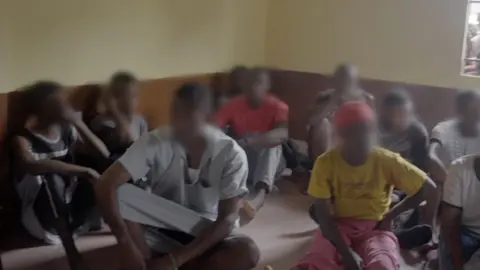
The scene inside the raided property was one of squalor and despair. Bags and clothes were scattered across the floors, with evidence suggesting that 10 to 15 people were forced to sleep in each room. The Interpol team meticulously gathered everyone present, discovering that some of the victims were as young as 14. "The majority are Guineans. There is only one Sierra Leonean among them. All the rest are Guineans," Conteh reported. While Musa’s children were not among those found, a glimmer of hope emerged when one young man reported that they had been held there the previous week, offering the first potential sighting of his children in nearly a year.
Following the raid, the rescued individuals were transferred to the police station for screening. Nineteen of them were subsequently repatriated to Guinea. Conteh revealed that his unit has conducted over 20 similar raids in the past year alone, successfully rescuing hundreds of victims of human trafficking. The traffickers, however, are adept at moving their victims across borders, making the task of dismantling these networks a constant challenge.
The BBC’s investigation also encountered the story of Aminata (name changed to protect her identity), a 23-year-old Sierra Leonean who was trafficked within her own country. She recounted how a friend introduced her to individuals claiming to represent QNET in mid-2024. After a seemingly successful interview, she was informed of a preparatory course before an eventual move to the US for further study and employment. The catch, as always, was a $1,000 joining fee, a sum her family had painstakingly saved for her college education.
"When they first recruit you, they feed you, they take care of you. But as time goes by, they stop," Aminata disclosed, her voice tinged with the trauma of her experience. The desperation for survival, she explained, forced her to "go the extra mile," a euphemism for selling her body to men to earn money and sustain herself. The traffickers also pressured her to recruit others, providing her with an international phone number to create the illusion that she was already abroad. "They take you to the airport and you dress well like you’re about to travel. They give you a passport, give you fake travel papers," she detailed, the staged departure a cruel charade. They would then take her photograph to send to friends and family, further solidifying the lie.
Aminata managed to persuade six friends and relatives to join the scheme, still clinging to the hope of the promised US job. This hope, however, remained perpetually unfulfilled. "I felt awful because they wasted their money and they suffered because of me," she confessed, the weight of guilt evident in her words. She was held on the outskirts of Freetown, Sierra Leone’s capital, for about a year before the stark reality of the scam finally dawned on her. When she failed to recruit anyone else, she became expendable to the traffickers. Her escape, when she finally decided to flee, was met with no resistance.
Returning home, burdened by the shame of her deception and the realization that her family and friends believed she was living abroad, was an agonizing experience. "I was scared to go back home," she admitted. "I’d told my friends that I’d travelled abroad. I’d told my family the same. I was thinking about all the money they’d given me to get there."
While precise statistics on victims of these labor scams are scarce, the media across West Africa is replete with reports of gangs preying on the desperation of individuals seeking a better future. Over three days, the BBC accompanied police on approximately a dozen raids in Makeni, encountering hundreds of young people trafficked from Burkina Faso, Guinea, Ivory Coast, and Mali. The police reported arresting 12 suspected traffickers. However, the low number of successful prosecutions underscores the immense challenges faced by under-resourced authorities in combating these pervasive scams. US State Department statistics reveal a stark reality: between July 2022 and April 2025, Sierra Leone recorded only four trafficking convictions, a minuscule figure compared to the scale of the problem.
Tragically, Foday Musa never found his children. He was forced to return to Guinea at the end of September, his heart heavy with despair. Conteh later informed the BBC that Musa’s children were released by the traffickers shortly after his departure. While his daughter did eventually make it back to Guinea, she has not returned to her village and has not contacted her father, a silence that speaks volumes about the profound shame and trauma experienced by many victims. The whereabouts of Musa’s son remain unknown, leaving their father in a state of agonizing uncertainty. "After all that has happened, I really just want it all to be over and to see my kids," Musa expressed, his voice laced with a father’s enduring longing. "We’d love them to come back to the village now – I’d love them to be here with me." The enduring pain of this father’s search highlights the devastating human cost of these exploitative schemes that continue to devastate lives across West Africa.
Additional reporting by Paul Myles, Chris Walter, Olivia Acland and Tamasin Ford.



 Roy Suryo

 Nakalama John
 atisusanti
 Ramos Leo
