
 George Anjay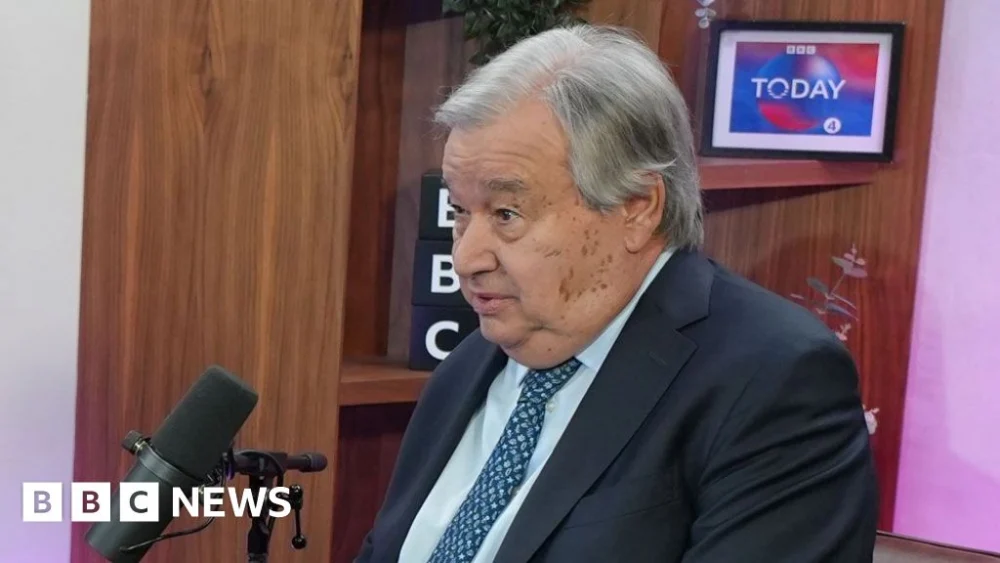
The United States is operating with a perceived impunity, believing its immense power supersedes the principles of international law, United Nations Secretary-General António Guterres has asserted in a candid interview with the BBC. He articulated a "clear conviction" within Washington that multilateral solutions are increasingly irrelevant, with emphasis placed instead on "the exercise of the power and influence of the United States and sometimes in this respect by the norms of international law." These pointed remarks come in the wake of significant geopolitical events, including recent US actions in Venezuela and ongoing discussions surrounding Donald Trump’s proposals to annex Greenland. Guterres expressed grave concern that the foundational tenets of the UN, including the fundamental equality of all member states, are under considerable strain.
President Trump has previously been a vocal critic of the United Nations, notably questioning its purpose during his address at the UN General Assembly in September. He claimed to have single-handedly resolved protracted conflicts where the UN, in his view, had not been sufficiently supportive. "Later I realised that the UN wasn’t there for us," he stated, reflecting a sentiment of perceived unilateral efficacy over collective action.
Confronted with this critique, Guterres acknowledged the UN’s struggle to compel member states to adhere to the international legal framework enshrined in the UN Charter. He maintained that the organization is "extremely engaged" in resolving major global conflicts. However, he highlighted the inherent imbalance of leverage, stating, "But the UN has no leverage – the big powers have stronger leverage." He raised a critical question about whether this superior leverage is being deployed to foster genuine, enduring solutions to conflicts or merely to implement superficial fixes, noting, "There is a big difference between the two things."
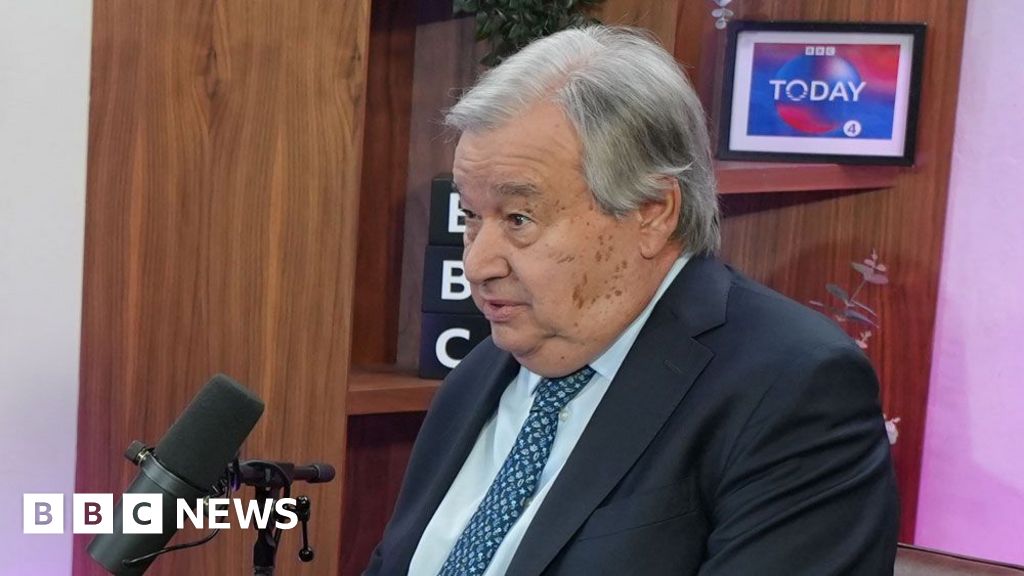
Guterres also underscored the urgent need for UN reform to effectively address the "dramatic problems and challenges" confronting its 193 member states. "There are those that believe the power of law should be replaced by the law of power," he stated, directly referencing the mindset he perceives as prevalent. "Indeed, when one sees the present policy of the United States, there is a clear conviction that multilateral solutions are not relevant and that what matters is the exercise of the power and the influence of the United States and sometimes in this respect by the norms of international law."
He further critiqued the UN Security Council, the body ostensibly responsible for maintaining international peace and security, suggesting it no longer accurately reflects the global landscape and has become "ineffective." The current structure, which grants permanent members – France, China, Russia, the United Kingdom, and the United States – veto power, has been a persistent point of contention. Both Russia and the US have notably utilized this veto power to obstruct international efforts aimed at resolving conflicts in Ukraine and Gaza, respectively. Guterres contended that vetoes are increasingly employed to advance the narrow interests of individual member states and expressed particular disapproval of the disproportionate representation of "three European countries" among the permanent members. He advocated for a restructuring of the Security Council to "regain legitimacy" and "give voice to the whole world," alongside limitations on veto powers to prevent unacceptable "blockages."
Guterres, a former Prime Minister of Portugal, assumed the role of UN Secretary-General in 2017 and is nearing the end of his term. In his annual address to the General Assembly, a customary platform for outlining the organization’s priorities, he painted a somber picture of a world beset by chaos, "brimming with conflict, impunity, inequality and unpredictability." He identified "brazen violations of international law" as a paramount challenge to the global order.
The conflict in Gaza remains a central focus for the UN, according to Guterres. He detailed the significant obstacles faced in distributing aid within the strip, citing Israeli restrictions on the entry of international humanitarian organizations. At one point, Israel even supported an external contractor, the Gaza Humanitarian Organization (GHQ), to perform tasks traditionally managed by the UN for decades. Tragically, hundreds of Palestinians lost their lives attempting to access food supplies at GHQ sites. When questioned about the UN’s perceived powerlessness in Gaza, Guterres clarified, "Of course, but let’s be clear. For a long time, Israel was saying that humanitarian aid was not distributed because the UN was not able to do so. Of course, whenever Israel would not allow us to move into Gaza, we couldn’t move into Gaza. And then there was a ceasefire, and a massive flow of humanitarian aid." He emphasized, "We were ready, provided we had the conditions."
In recent pronouncements to the UN General Assembly, Guterres declared that "1945 problem-solving" is inadequate for addressing the complexities of the present era, referencing the organization’s foundational structure. The continuous influx of challenges, from US-orchestrated leadership changes in Venezuela to the violent suppression of protests in Iran and Donald Trump’s ambition to acquire Greenland, intensifies these concerns. The discourse surrounding the decline of multilateralism and the reluctance of some global leaders to champion the rule of international law is growing increasingly vocal.
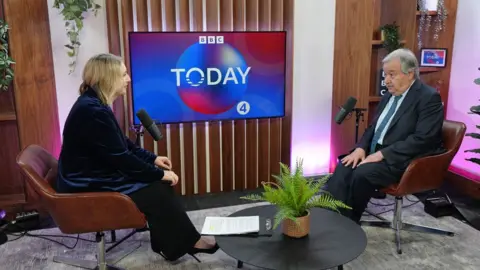
Despite these profound challenges, António Guterres expressed a persistent sense of optimism. "I think that people are sometimes reluctant to confront the powerful. But the truth is that if we don’t confront the powerful, we will never be able to have a better world," he concluded, underscoring the imperative of challenging established power dynamics to foster a more equitable global future. The interview, conducted by Anna Foster for the BBC’s Today programme, provided a stark insight into the UN chief’s assessment of the current international landscape and the role of major powers within it. His observations highlight a growing disconnect between the ideals of international cooperation and the pragmatic exercise of power by some of the world’s most influential nations. The assertion that the US prioritizes its own power over international law, as articulated by Guterres, represents a significant indictment of the current global governance system and raises critical questions about its future efficacy.



 Roy Suryo

 Nakalama John
 atisusanti
 Ramos Leo
