
 George Anjay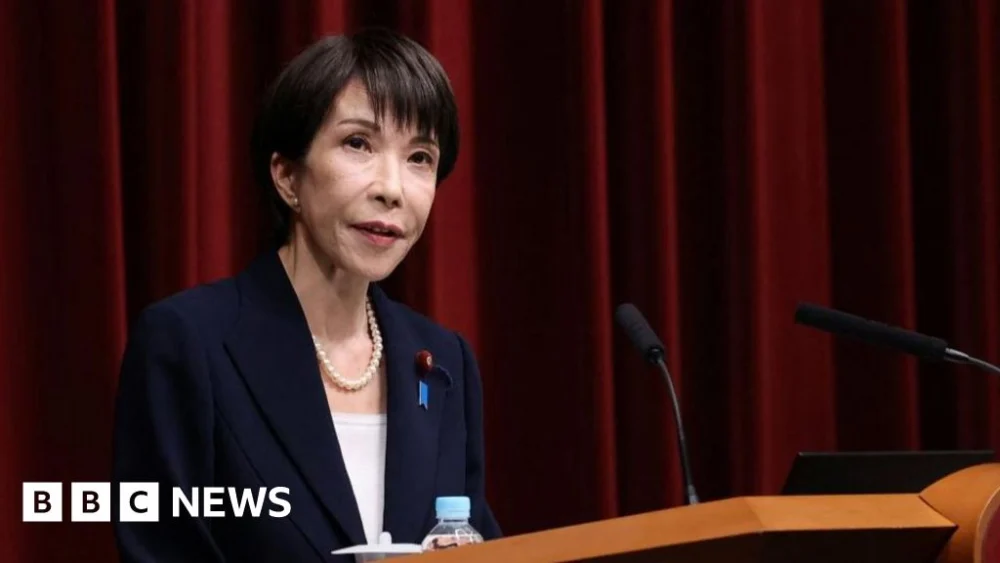
In a bold and potentially precarious move, Japanese Prime Minister Sanae Takaichi is set to dissolve the parliament on Friday, ushering in a general election on February 8th. This snap election, occurring a mere three months after she assumed office, is Takaichi’s calculated gamble to leverage her surprisingly robust public approval ratings into a commanding majority in the powerful House of Representatives. The decision, she stated at a press conference in Tokyo, was "extremely weighty" and would "determine Japan’s course together with the people."
As Japan’s first female leader, Takaichi and her cabinet have basked in significant public support since their inauguration last October. This popularity, however, stands in stark contrast to the perceived sluggishness of her Liberal Democratic Party (LDP) in opinion polls. The move is undeniably risky, marking Japan’s second general election in as many years and posing a critical test of public appetite for her ambitious plans to significantly boost public spending amidst widespread concerns over the rising cost of living.
Takaichi, having been elected as prime minister by lawmakers on October 21st, is now seeking a direct public mandate in the House of Representatives, the more influential of Japan’s two parliamentary chambers. She candidly admitted to being "constantly concerned that the Takaichi cabinet has not yet been tested in an election where the public chooses the government" since taking office. "Is Sanae Takaichi fit to be prime minister? I wanted to ask the sovereign people to decide," she declared to the assembled press. The campaign for the election of the 465 lower house MPs, who serve four-year terms, is scheduled to commence on January 27th.
The Liberal Democratic Party (LDP), a political colossus that has governed Japan almost uninterruptedly since 1955, currently holds 199 seats in the House of Representatives, including three held by its independent allies, making it the largest single party. The LDP’s current coalition with the Japan Innovation Party grants it a slender majority, just enough to maintain power. Takaichi, a staunch conservative and a protégé of former Prime Minister Shinzo Abe, is also a self-proclaimed admirer of Margaret Thatcher, earning her the moniker "Japan’s Iron Lady." She entered office with a clear mandate to revitalize the Japanese economy, which has grappled with years of stagnation.
Takaichi’s economic strategy centers on robust government-led spending, a revival of the stimulus measures that characterized the "Abenomics" era. Her tenure, though brief, has been marked by soaring personal poll ratings, a level of popularity not seen for a Japanese prime minister since Shinzo Abe himself in 2012. This period has also witnessed significant geopolitical shifts, prompting a substantial increase in Japan’s defense capabilities. In December, her cabinet approved a record defense budget of nine trillion yen (approximately $57 billion USD or £43 billion GBP). This decision is a direct response to escalating concerns over China’s growing military assertiveness in the region, with Tokyo officially identifying its neighbor’s military activities as its "greatest strategic challenge."
Takaichi’s assertive stance has not gone unnoticed by Beijing. Since November, she has been a target of China’s criticism, particularly following her public remarks suggesting Japan could deploy its own self-defense force in response to a Chinese attack on Taiwan. This diplomatic friction has led to a significant deterioration in bilateral relations, pushing them to their lowest point in over a decade. Concurrently, Takaichi has actively pursued closer ties with the United States. Her meeting with US President Donald Trump during his visit to Japan last October was characterized by mutual praise and the signing of a crucial deal on rare earth minerals. The leaders also signed a document heralding a new "golden age" for US-Japan relations, underscoring a deepening strategic alignment.
Despite the LDP’s generally lukewarm reception among the broader Japanese electorate, Takaichi and her government have managed to achieve impressive approval ratings, hovering between 60% and 80%, according to opinion polls. This personal popularity is precisely what Takaichi is banking on to secure a "sole majority" for the LDP, thereby enabling her to implement more decisive policies with greater ease. Dr. Seijiro Takeshita, a management professor at the University of Shizuoka, explained to the BBC World Service’s Asia Specific podcast, "She wants to solidify her position to make things smoother at a later stage."
However, the gamble of a snap election is fraught with inherent risks. The LDP’s leadership has historically been susceptible to shifts in public opinion, and Takaichi’s ascension to power marks the fourth change in prime minister within a five-year span. Her predecessors’ tenures were often cut short by declining public support and various scandals. A stark precedent exists in the actions of her immediate predecessor, Shigeru Ishiba, who also called a snap election shortly after taking office. That decision resulted in one of the LDP’s worst electoral performances, leading to the loss of its majority in the House of Representatives.
Adding another layer of complexity to the electoral landscape is the emergence of a newly consolidated opposition force, the Centrist Reform Alliance. This bloc, formed just last week, comprises Japan’s largest opposition party, the Constitutional Democratic Party of Japan, and the Komeito party, which had previously been the LDP’s coalition partner. This unified opposition could present a formidable challenge to Takaichi’s aspirations for a sweeping victory.
Takaichi has emphasized that the dissolution of parliament is being undertaken only "after establishing a thorough system" to ensure no disruption to essential economic policies, particularly those impacting livelihoods and addressing rising prices. The Prime Minister’s strategy appears to be a calculated move to capitalize on her current popularity, which is perceived as a fleeting phenomenon. Dr. Jeffrey Kingston, a professor of Asian studies at Temple University in the US, commented to the BBC that Takaichi is hoping "people will trust her to deliver on her promises." He further elaborated that her high approval ratings are "only going to decline so she wants to lock in the benefits of a long honeymoon." This implies a strategic imperative to secure a mandate while public sentiment is overwhelmingly in her favor, before potential economic headwinds or political controversies erode her support base. The upcoming election will therefore serve as a crucial referendum not only on Takaichi’s leadership but also on the LDP’s ability to navigate Japan’s complex economic and geopolitical challenges.




 Roy Suryo

 Nakalama John
 atisusanti
 Ramos Leo
