George Anjay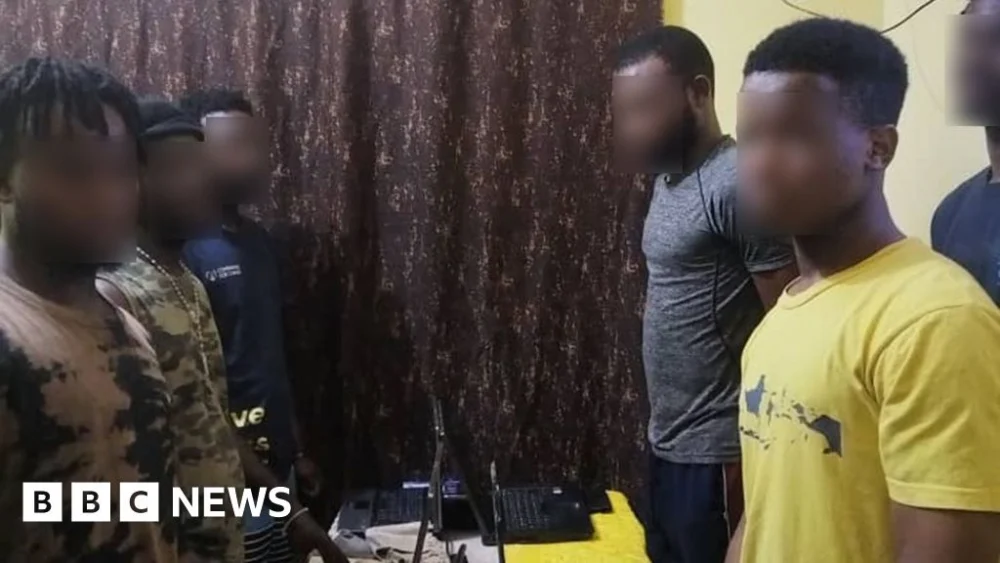
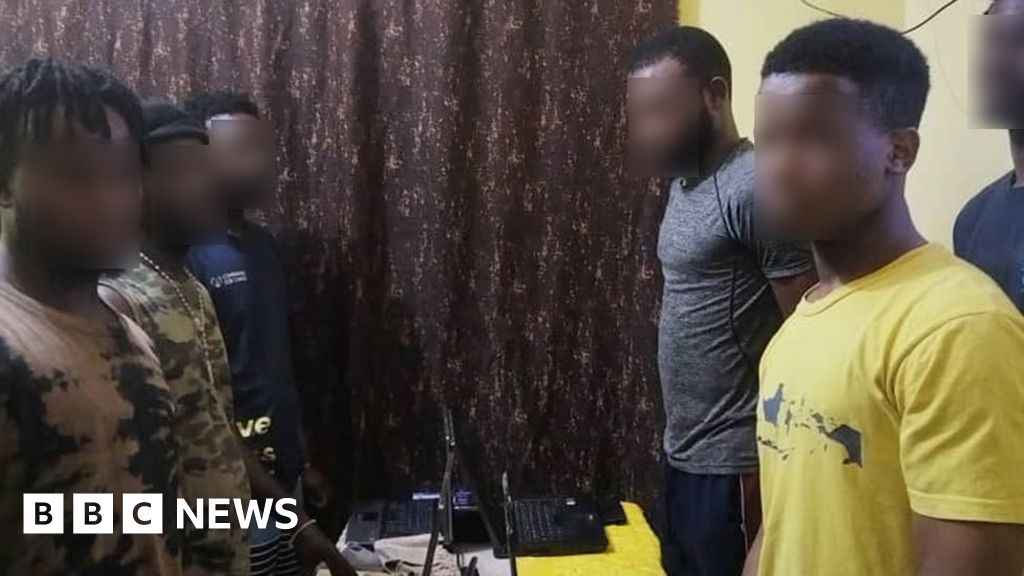
Ghana’s security forces have conducted a significant operation, arresting nine Nigerian nationals suspected of orchestrating a sprawling network of cyber-criminal activities from covert bases within and around the nation’s capital, Accra. In a parallel development, an additional 44 individuals, also Nigerian, were detained, having allegedly been lured to Ghana under deceptive pretenses and subsequently exploited as victims within these illicit operations. These individuals have been transferred to the custody of the Ghana Immigration Service for further processing and investigation. The multi-agency operation, spanning two days and driven by robust intelligence gathering, resulted in the seizure of a substantial arsenal of digital tools and weaponry, including 62 laptops, 52 mobile phones, and two pump-action shotguns, underscoring the serious nature of the criminal enterprises being dismantled.
This recent crackdown highlights a disturbing and escalating trend within Ghana, where foreign nationals, primarily from Nigeria, are being ensnared by fraudulent employment schemes. These individuals are often transported to Ghana with promises of lucrative job opportunities, only to find themselves confined to restricted compounds, their personal documents confiscated, and their freedom curtailed. Under duress and coercion, they are then compelled to participate in various forms of cyber-crime, including sophisticated romance scams and business email compromise schemes. In romance scams, victims are manipulated into believing they have formed a genuine romantic connection, leading them to transfer funds to their fictitious online partners. Business email compromise, on the other hand, involves impersonating trusted individuals or entities to trick unsuspecting employees into divulging sensitive company information or remitting substantial sums of money.
The success of this operation is a testament to the collaborative efforts of multiple Ghanaian security agencies, with the Cyber Security Authority (CSA) playing a pivotal role in coordinating the intelligence and tactical execution. The Minister of Communications, Sam George, a vocal proponent of cybersecurity initiatives in Ghana, confirmed the arrests and subsequent handover of the suspects. In a post on the social media platform X, he stated, "All the arrested individuals have been duly profiled and handed over to the Ghana Immigration Service for safekeeping and further investigations." Minister George also issued a stern warning to foreign nationals contemplating travel to Ghana, urging them to exercise extreme caution and diligently verify the legitimacy of any employment offers extended by their fellow countrymen. This advisory aims to preempt further instances of individuals being lured into exploitative situations.
The Ghanaian authorities have demonstrated a resolute commitment to eradicating cyber-criminal syndicates operating within their borders. Minister George indicated that individuals apprehended in previous, similar operations have either been repatriated to Nigeria for prosecution or are currently facing legal proceedings in Ghanaian courts. The CSA, in conjunction with other governmental bodies, has been actively engaged in a comprehensive strategy to dismantle these criminal networks. This strategy includes forging strong partnerships with international law enforcement agencies, notably those in the United States, to facilitate the apprehension of high-profile cybercriminals. These collaborations are crucial in tackling the transnational nature of cyber-crime, which often involves sophisticated cross-border operations.
Among the notable successes in recent times was the apprehension of Frederick Kumi, a well-known Ghanaian social media influencer operating under the alias "Abu Trica." Kumi is accused of perpetrating a massive romance scam that defrauded vulnerable Americans of an estimated $8 million (£5.9 million). While the allegations are severe, Kumi has not yet issued a public statement or commented on the accusations leveled against him. His arrest underscores the fact that individuals from various walks of life can become involved in or facilitate cyber-criminal activities.
Another significant achievement for Ghanaian law enforcement was the dismantling of a criminal syndicate that had successfully defrauded over 200 victims, collectively losing approximately $400,000 (£300,000). The successful prosecution and conviction of individuals involved in such schemes serve as a deterrent and reinforce Ghana’s commitment to being a safe and secure environment, both for its citizens and for legitimate foreign investors and visitors. The ongoing efforts by the Cyber Security Authority and its partners are not merely reactive measures but are part of a proactive strategy to build a more robust cybersecurity infrastructure and enhance public awareness regarding the pervasive threats posed by cyber-criminals.
The operational methods employed by these cybercrime networks often involve exploiting technological vulnerabilities and human psychology. Romance scams, for instance, prey on the emotional needs and desires of individuals, building trust and rapport over extended periods before initiating financial requests. Business email compromise attacks, on the other hand, leverage sophisticated social engineering techniques to impersonate legitimate business contacts, often using spoofed email addresses and convincing narratives to trick employees into transferring funds or divulging confidential data. The recovered laptops and mobile phones are likely to contain extensive evidence of these fraudulent activities, including communication logs, financial transaction records, and potentially sophisticated malware designed to facilitate these operations.

The presence of firearms, such as the two pump-action shotguns seized, suggests that these criminal organizations may also be involved in other illicit activities or are prepared to resort to violence to protect their operations or enforce their control over the exploited individuals. This adds another layer of complexity and danger to the criminal enterprises being targeted by Ghanaian authorities. The fact that 44 individuals were found in the same premises as the alleged masterminds, in a state of apparent captivity and coercion, points towards a well-organized and exploitative structure. The authorities are now faced with the challenge of rehabilitating these victims and ensuring they receive the necessary support to reintegrate into society, while also gathering their testimony to bolster the prosecution of the arrested suspects.
Ghana’s proactive stance against cyber-crime is crucial for maintaining its reputation as a stable and attractive destination for legitimate business and tourism in West Africa. The government’s investment in cybersecurity infrastructure and its commitment to international cooperation are vital in combating a threat that transcends national borders and impacts individuals and economies globally. The recent arrests are a significant step in this ongoing battle, sending a clear message that Ghana will not be a haven for cybercriminals and that perpetrators will be brought to justice. The continuous efforts to educate the public, both within Ghana and abroad, about the risks and red flags associated with online scams and fraudulent schemes are equally important in empowering individuals to protect themselves from falling victim to these sophisticated criminal operations. The collaboration with agencies like the FBI and other international bodies further strengthens Ghana’s capacity to investigate and prosecute complex cyber-criminal cases, reinforcing its position as a responsible global partner in the fight against digital crime. The long-term success of these endeavors will depend on sustained vigilance, continuous adaptation to evolving criminal tactics, and unwavering commitment to upholding the rule of law in the digital age.




 Roy Suryo

 Nakalama John
 atisusanti
 Ramos Leo