atisusanti
The boss of the biggest UK-headquartered tech firm has stated that artificial intelligence holds the key to discovering cancer cures that human ingenuity will not achieve within our lifetimes. Rene Haas, chief executive of the Cambridge-based chip designer Arm Holdings, articulated a compelling vision where complex biological puzzles, such as modeling the intricate impact of DNA markers on cancer, currently beyond human comprehension, will ultimately be unraveled by advanced computing. He believes that as AI models become more sophisticated and the computational power to run them increases, these monumental challenges will be overcome.
Haas elaborated on the transformative potential of AI, predicting a near-future where widespread humanoid robots become a reality within the next five years. However, he cautioned that the current accelerated pace of AI development is being significantly hampered by a critical shortage of the specialized chips essential for constructing the vast data centers that power these advanced systems. Adding a layer of pragmatism, Haas expressed skepticism regarding the feasibility of establishing substantial chip manufacturing capabilities within the UK in the foreseeable future.
Arm Holdings, a company whose foundational designs form the "brains" or CPUs of microchips found in hundreds of billions of devices globally – from smartphones and automobiles to smartwatches and countless other gadgets – has recently seen its market valuation surge. This meteoric rise, fueled by the AI boom, propelled Arm to become, in cash terms, the most valuable UK-based company in history during its peak share price earlier this summer. Haas, who stepped down from the board of the prominent British pharmaceutical giant AstraZeneca in April, shared these insights during an interview on the BBC’s "Big Boss Interview" podcast.
"AI is going to… find a cure for cancer that today you and I, other humans [could] not in our lifetimes. I believe in our lifetime, AI will help cure cancer," Haas declared with conviction. He further elaborated on the immense complexity of biological systems, stating, "Modelling a cell, modelling a human, modelling how a DNA marker is impacted by cancer – it’s too complex a problem, not only for humans today, but the computers that run AI." Yet, he remained optimistic about the trajectory: "However, going forward, as we feed more and more of the models into these computers, and the computers get more sophisticated to run the models, they’re going to solve it." Haas’s perspective is informed by his significant role within Arm’s main owner, the Japan-based Softbank, a conglomerate with a diverse portfolio of tech investments, including a stake in OpenAI, a leading AI research laboratory.
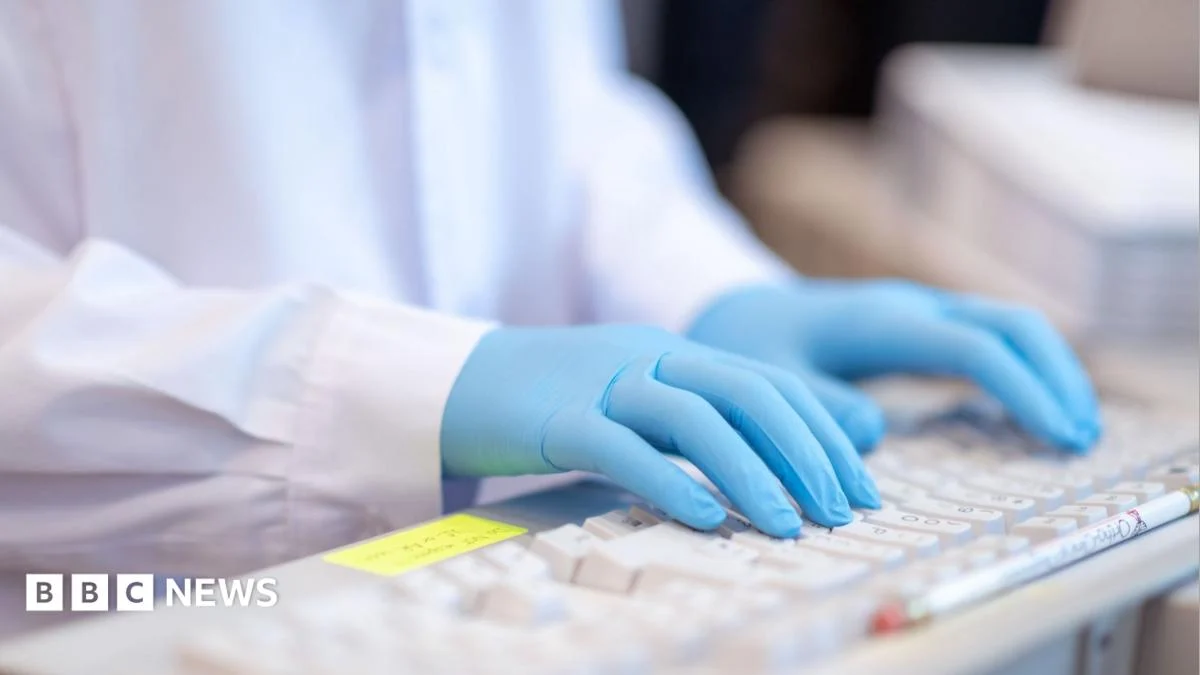
Offering a complementary viewpoint from the scientific community, Professor Chris Bakal, affiliated with the Institute of Cancer Research in London and CEO of Sentinal4D, emphasized that the pertinent question is no longer if AI will be utilized in cancer research, but rather what data will be fed into these systems. He highlighted the practices within research laboratories like his, where AI is being trained on data meticulously generated from patient samples, rather than relying on information scraped from the internet. Professor Bakal stated, "It is not scraped from the internet. It does not need a giant data centre to run. The future of medical AI will not belong to whoever builds the biggest computer. It will belong to whoever has the right measurements." He underscored the tangible benefits of this approach, noting, "That kind of prediction could cut years from the time it takes to develop new treatments. This is where AI delivers real benefit to patients."
In a comprehensive discussion, Haas also projected the future role of AI-powered robots, stating that the chips designed by Arm will be instrumental in fueling self-learning AI robots across various sectors within the next decade. He envisioned these robots playing a significant role in manufacturing, cleaning, security, infrastructure projects like building bridges, and undertaking repair tasks. "With artificial intelligence, these robots can see, learn, and essentially be reprogrammed for new tasks. So, in the service industry, the robot that was programmed to make a bed can also learn how to arrange the towels in a room, or clean the dustbins, or whatever you want to go off and do," Haas explained, illustrating the adaptable nature of future robotic capabilities.
Addressing prevalent concerns about AI leading to widespread job displacement, Haas offered a more nuanced perspective. While acknowledging that some shifts in the workforce are inevitable, he contended that "the estimates of jobs going away and being completely replaced by machines is a bit overstated." He believes that the emergence of new opportunities will counterbalance the jobs that are transformed or eliminated. Furthermore, Haas dismissed fears of an imminent market correction for AI companies, attributing this sentiment to an underestimation of the sustained, long-term demand for AI technologies. He proudly noted that Arm’s power-efficient chip technology is currently powering half of the world’s AI data centers, underscoring its critical role in the AI infrastructure.
This strategic position has precipitated a significant evolution in Arm’s business model in recent months, with the company now actively selling its own microchips. Haas revealed that Facebook-owner Meta approached Arm to develop the Arm AGI chip, and the demand has been "off the charts," with over $2 billion in orders since its launch in March.
Despite this burgeoning demand and technological advancements, challenges persist in the global supply chain for many types of chips. Haas identifies this supply constraint as a major impediment to the widespread deployment of AI and the construction of necessary data centers. He pointed to ambitious plans for colossal "multi-gigawatt" data centers in locations like France and the United States, and even speculative concepts for data centers in space, all of which are contingent on a robust chip supply. "We are absolutely in a supply-constrained environment. Can you get enough chips? We need more fabs [chip factories] before we can put a data centre in space," he stated.
However, Haas expressed doubt about the viability of establishing significant chip manufacturing operations in the UK, despite ongoing government discussions with the industry about potentially relocating parts of the physical chip supply chain to the country. He reasoned, "I don’t think it’s necessary for the UK to [build] fabs. Fabs are very expensive. They take a lot of specialised workers. They take a lot of natural resources, and there’s a pretty broad ecosystem for those." His view suggests that the economic and logistical hurdles associated with building and operating advanced chip fabrication plants might outweigh the benefits for the UK at this juncture.
For decades, Arm Holdings has been regarded as a beacon of UK technological innovation. Consequently, some government ministers have voiced regret over the company’s sale to Japanese investors in 2016 and its subsequent partial flotation on New York’s Nasdaq rather than the London Stock Exchange. However, Haas countered these sentiments by emphasizing that half of Arm’s employees remain based in the UK and asserted that the company is "by far and away the largest employer in Cambridge," highlighting its continued significant presence and contribution to the UK’s technological landscape.



 George Anjay
 Nakalama John
 Ramos Leo