George Anjay
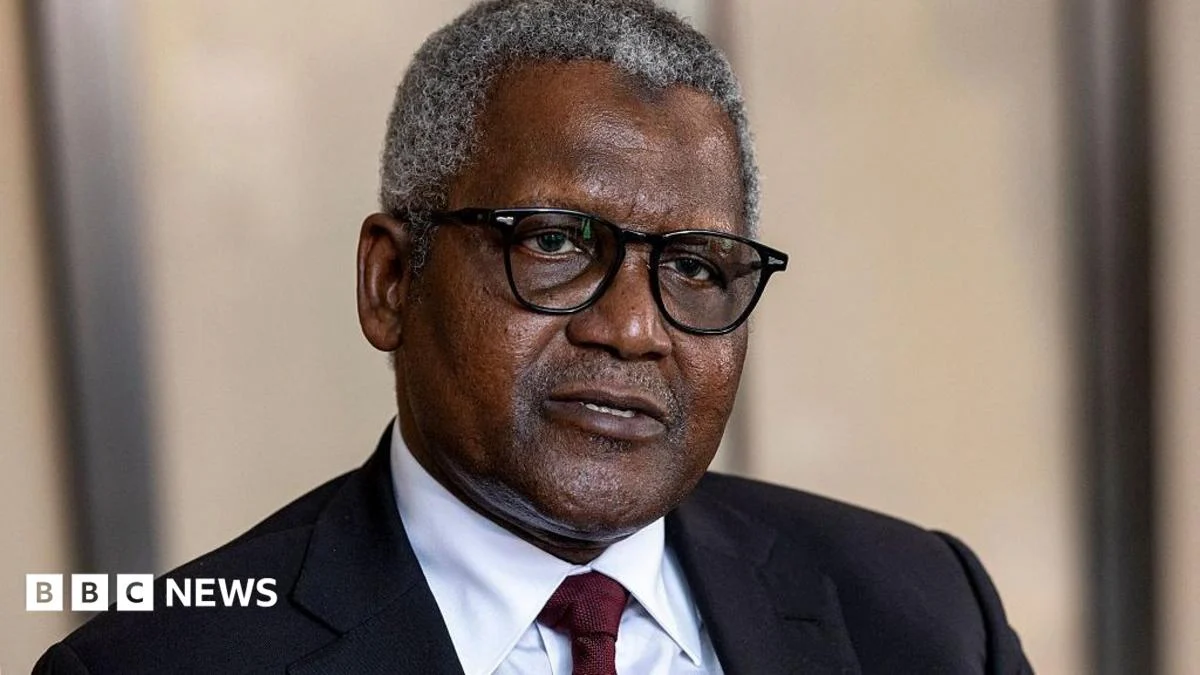
Nigerian billionaire Aliko Dangote, Africa’s wealthiest individual, is poised to officially break ground on a colossal $16 billion oil refinery in Lamu, a strategically significant location on Kenya’s northern coast. The ambitious project, a joint venture with Kenya’s President William Ruto, represents East Africa’s largest industrial undertaking by capacity, with the refinery slated to process an impressive 700,000 barrels of crude oil daily upon its completion. This monumental development, however, is not without its challenges, as a segment of local residents have voiced their dissent, staging protests to demand more equitable compensation for the land designated for the refinery’s expansive footprint.
In a candid interview with the BBC’s Focus on Africa programme, Dangote, a titan of industry, vehemently dismissed the land compensation protests, characterizing them as orchestrated maneuvers by local marketers and international stakeholders seeking to disrupt progress. He asserted with unwavering confidence that the refinery project would proceed as planned and remain on schedule for its projected completion by 2030. The Lamu refinery is set to etch its name in Kenyan history as the nation’s most significant infrastructure project since its independence, eclipsing even the $5.1 billion Standard Gauge Railway in terms of scale and economic impact.
Dangote directly addressed the compensation claims, refuting their validity and emphasizing that the company had acquired only the land necessary for its operations, all of which was made available by the Kenyan government. "To come and say some people are demonstrating, demonstrating about what? Have you ever seen people demonstrating against themselves in terms of development?" he questioned, conveying a resolute stance against being deterred by the demonstrations.
However, concerns extend beyond land compensation. Walid Ali, a co-founder of the Save Lamu campaign group, articulated the community’s deep-seated anxieties regarding the potential environmental ramifications of such a large-scale industrial project. "We are asking for the findings from the environmental impact assessment so that we can see what mitigation measures are being proposed," Ali stated, underscoring the urgent need for transparency. He further highlighted a pattern of environmental considerations being marginalized in past development initiatives, expressing apprehension that the Lamu refinery might follow suit.
Ali also pointed to a significant disconnect in communication, noting that the Save Lamu campaign had not yet directly engaged with the Dangote Group due to a perceived lack of direct community consultation. "They have only been talking to the government. There is no ownership of the project by the community," he lamented, emphasizing the importance of local buy-in for the project’s long-term success and social acceptance.
During its peak construction phase, Dangote projects that the refinery will be a significant job creator, generating an estimated 60,000 employment opportunities. He stressed that the economic benefits would ripple outwards, extending far beyond those directly employed by the project. "Are we going to bring robots? Of course, the people will benefit," he remarked, alluding to the substantial human capital that will be engaged.
The strategic decision to establish a refinery in Kenya, a nation that does not produce crude oil, has drawn scrutiny. Critics have questioned the rationale, suggesting that neighboring countries like Tanzania or Uganda, which are actively pursuing oil exports via the East African Crude Oil Pipeline, might have been more logical locations. However, Kenya’s Energy and Petroleum Minister, Opiyo Wandayi, clarified that the refinery’s location does not dictate its crude oil sourcing. "Refineries get crude oil from the market. And the market is open," he explained to the BBC.
Dangote echoed this sentiment, drawing a parallel with Singapore, a nation renowned for its robust refining capacity despite possessing no domestic oil reserves. "Singapore doesn’t produce a single drop of oil, yet they have a lot of refineries," Dangote pointed out, illustrating the global nature of the oil market and the strategic advantages of refining infrastructure.
Beyond its core refining function, the Lamu project is also set to include a substantial 1,000-megawatt power plant. Dangote views reliable electricity as a critical impediment to industrialization across the African continent, particularly in mineral-rich nations that continue to export raw materials rather than investing in local processing. His broader vision encompasses a significant expansion of power generation capacity across Africa, with plans to develop 10,000 megawatts by 2030, a figure that could potentially double depending on market demand.
The power plant in Lamu is designed not only to support Dangote’s extensive operations but also to attract and facilitate other industries anticipated to establish a presence in the region. "The power is there and what you do is what we call plug and play," Dangote stated, highlighting the integrated nature of the development.
Kenya currently grapples with relatively high fuel prices, and the establishment of a new refinery has ignited hopes that increased domestic refining capacity could eventually lead to a reduction in pump prices. However, the ultimate cost of fuel remains heavily influenced by the international price of crude oil, the primary feedstock for gasoline and diesel.
The Lamu refinery represents Dangote’s most substantial proposed investment outside of his native Nigeria. Construction is slated to commence on November 1st. Notably, Dangote’s existing refinery in Nigeria boasts a comparable processing capacity of 700,000 barrels per day. He has further ambitious plans to double this capacity, a move supported by his recent successful floatation of 4.1 million ordinary shares, which raised approximately $2.1 billion. This strategic expansion underscores Dangote’s unwavering commitment to solidifying his position as a dominant force in Africa’s burgeoning energy sector.




 Nakalama John

 atisusanti

 Ramos Leo