Nakalama John
President Milei specifically singled out the Sea Lion oilfield, where a British and an Israeli firm are poised to commence exploration work, describing it as a "clear and present danger" to Argentine interests and sovereignty. More than four decades after the brief but brutal war over the archipelago in the South Atlantic, the sovereignty of the islands remains a deeply emotive and hotly disputed matter between London and Buenos Aires.
The UK government, contacted for comment on Milei’s latest statements, reiterated its unwavering position this week: Falkland Islanders "are British with a right to determine their own future." This principle of self-determination has been the cornerstone of the UK’s policy on the islands since the conflict.
During his address, Milei underscored Argentina’s historical and legal claims to the Falklands, framing them as an integral part of Argentine territory unjustly held by a foreign power. His assertive rhetoric immediately drew a strong reaction from the islands themselves. Teslyn Barkman, a former member of the Falkland Islands Legislative Assembly, conveyed to the BBC that Milei’s speech had "probably irked every single Falkland islander." Speaking from the capital, Stanley, Barkman firmly stated, "we have a burgeoning economy for a small place… we will remain forever British," reflecting the deeply held sentiment of the islanders.
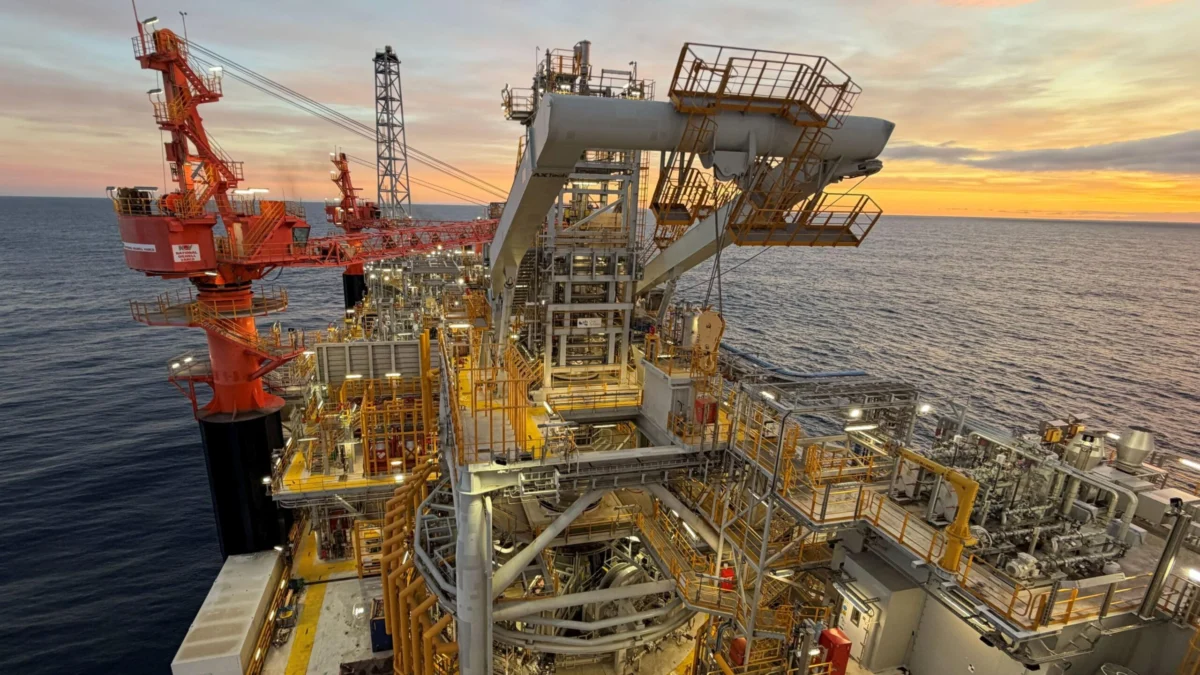
The core of Milei’s announcement was a proposal to introduce a bill to the Argentine parliament designed to impose stringent sanctions on energy firms planning or actively engaged in oil exploration off the Falklands. The Sea Lion oilfield, located approximately 130 miles from the islands, is estimated to contain a substantial 1.7 billion barrels of oil, representing a significant potential economic boon. Two oil companies, Britain’s Rockhopper Exploration and Israel’s Navitas Petroleum, are scheduled to begin extracting oil from this field within the next two years. President Milei asserted that Argentina could not, and would not, permit such activities to proceed. Rockhopper has previously characterized the field’s reserves as "highly marketable crude," highlighting its commercial attractiveness. Navitas, in a video posted earlier this year, showcased its ongoing preparatory work in the Falklands, including the construction of a dock, a heliport, and accommodation facilities for oil workers, demonstrating the advanced stage of their plans. The BBC has reached out to both companies for their responses to Milei’s recent comments.
"If we do not act swiftly in a few months, they will have the material capacity to access the oil that lies underneath our sea – something that has never happened before," Milei warned, emphasizing the urgency of his proposed legislative action. While Argentina already has a law allowing for restrictions on oil companies participating in projects deemed unauthorized on the islands, the precise nature and extent of the new sanctions, and how they would be enforced or tightened, remain to be clarified by the upcoming bill. Such measures could range from financial penalties and asset freezes to restrictions on operations within Argentine-claimed waters or even international legal challenges, potentially complicating the companies’ global operations and investor relations.
The dispute over the Falkland Islands, or Malvinas, has roots stretching back centuries, with both Britain and Argentina citing historical claims. Argentina maintains that the islands were inherited from Spain upon its independence and were unjustly seized by Britain in 1833. The UK, conversely, points to continuous administration since then, the self-determination of the islanders, and its victory in the 1982 conflict. That conflict, triggered by an Argentine invasion in April 1982, lasted 74 days and resulted in the deaths of 255 British military personnel, three islanders, and 649 Argentine military personnel. The British military task force successfully ejected the Argentine forces, reaffirming UK control. In a 2013 referendum, residents of the islands overwhelmingly voted to remain a British overseas territory, with 99.8% voting in favour and only three votes against, a result that the UK views as definitive proof of the islanders’ wishes.
Milei’s bold announcement also drew attention to shifting dynamics in international relations, particularly concerning the United States. His claim that the US was "assessing their historical position in regard to the Falklands" came on the heels of controversial remarks by former President Donald Trump. When asked in an interview with GB News earlier on Thursday whether the US would "come to the UK’s aid" during a potential territorial dispute, Trump responded that Britain had "not been there to help me" with his country’s war with Iran. These comments followed previous statements from Trump suggesting the US could revise its neutral stance on the islands’ sovereignty if the UK failed to increase its defense spending. Milei interpreted these as signs of a potential alignment, stating, "That is not empty words as they understand that Argentina is a reliable partner and a valuable ally for decades to come," while controversially describing the UK as a nation "in decline."
Adding to the diplomatic intrigue, hours before Milei’s speech, Sarah Rogers, a senior official in the US State Department, posted a photo of herself with Milei on social media, accompanied by the caption: "Exciting things are happening in the Western Hemisphere." This public display of camaraderie fueled speculation about a potential rapprochement or shift in US foreign policy under a future Trump administration, or even under the current one, given Milei’s strong pro-US stance.
Further underscoring his nationalist agenda and strategic vision, Milei also announced plans for a naval base in Tierra del Fuego, Argentina’s southernmost province. Such a base would enhance Argentina’s naval projection capabilities in the South Atlantic, potentially impacting the balance of power in the region and serving as a symbolic assertion of its claims over the Falklands and the wider South Atlantic.
The enduring nature of the dispute and the deep emotions it stirs were vividly illustrated in 2022 when Argentina players, celebrating their World Cup victory over England, waved a banner in support of their country’s territorial claim to the Malvinas. This incident, like Milei’s current pronouncements, serves as a powerful reminder that for Argentina, the Falklands issue remains an open wound and a core national aspiration, constantly threatening to flare up into renewed diplomatic, economic, or even military tensions. The proposed sanctions mark a significant escalation in this long-running saga, pushing the dispute back into the international spotlight and potentially ushering in a new, more confrontational phase.


 George Anjay
 Ramos Leo
 atisusanti
 Roy Suryo