
 Nana Banana
In a monumental stride for space exploration, NASA is poised to launch the Artemis II mission, sending four astronauts on a historic voyage around our celestial neighbour, the Moon. This crewed orbital mission is a critical precursor, paving the way for a future lunar landing and, eventually, the establishment of a sustained human presence on the Moon. The Artemis program, years in the making and involving thousands of dedicated individuals, represents an estimated investment of $93 billion to date. Yet, for some, a sense of déjà vu lingers; more than half a century ago, America’s Apollo missions etched their names in history by landing the first humans on the lunar surface. With six successful landings between 1969 and 1972, the Moon felt thoroughly explored and, for many, "ticked off" the space agenda. This raises a pertinent question: why is the United States now dedicating such immense resources, effort, and capital to return to a destination seemingly already conquered? The answer lies in a confluence of scientific discovery, strategic geopolitical interests, economic opportunities, and the overarching ambition to prepare humanity for its next giant leap – to Mars.
Valuable Resources: More Than Just Dust
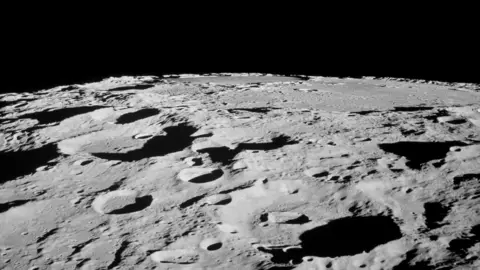
While the Moon’s landscape may appear barren, dry, and dusty, it harbors a wealth of invaluable resources. Professor Sara Russell, a planetary scientist at the Natural History Museum, highlights that "The Moon has got the same elements in it that we have here on Earth." Among these are rare earth elements, critical components in modern technology, from smartphones and electric vehicles to renewable energy systems and advanced military applications. These elements, such as neodymium, europium, and dysprosium, are increasingly scarce and difficult to mine on Earth, making their potential lunar reserves incredibly attractive. Beyond rare earths, the Moon also contains significant deposits of metals like iron and titanium, essential for construction and manufacturing. Perhaps one of the most intriguing potential resources is Helium-3, a light isotope of helium that is exceptionally rare on Earth but relatively abundant on the Moon. Helium-3 is a highly sought-after fuel for future nuclear fusion reactors, offering a clean and efficient energy source that could revolutionize global power generation.
However, the single most compelling resource on the Moon, and arguably the biggest draw for a sustained human presence, is water. "It has water trapped in some of its minerals, and it also has substantial amounts of water at the poles," Russell explains. These lunar poles contain permanently shadowed craters, where temperatures remain low enough for ice to accumulate and persist over billions of years. Access to water is not merely a convenience; it is foundational for any long-term lunar habitation. Beyond providing drinking water for astronauts, it can be electrolyzed – split into its constituent hydrogen and oxygen. Oxygen is vital for breathable air, sustaining human life within habitats. Hydrogen and oxygen, when recombined, also form powerful rocket fuel, enabling future missions to launch from the Moon to other destinations, such as Mars, without needing to haul all their propellant from Earth. This concept, known as In-Situ Resource Utilization (ISRU), is central to making deep-space exploration economically viable and sustainable. The ability to "live off the land" significantly reduces the cost and complexity of space missions, transforming the Moon from a distant outpost into a potential fueling station and manufacturing hub.
Race for Space Dominance: A New Cold War in Orbit
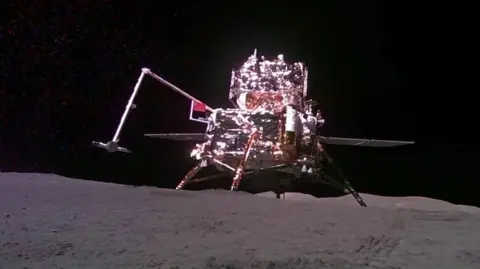
The original Apollo missions of the 1960s and 1970s were unequivocally a product of the Cold War, driven by an intense geopolitical race for space dominance between the United States and the Soviet Union. Today, the competitive landscape has shifted, with China emerging as a formidable rival in space. China’s space program has made astonishing progress in recent decades, successfully landing robotic probes and rovers on the Moon (Chang’e missions), establishing its own modular space station (Tiangong), and openly declaring its ambition to land humans on the Moon by 2030.
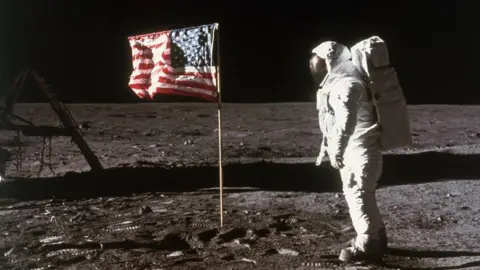
In this renewed space race, prestige remains a powerful motivator – being the first to establish a sustained presence and plant a flag in the lunar dust carries significant symbolic and geopolitical weight. However, the stakes are now considerably higher, centering on where exactly that flag is planted. Both the US and China are keenly interested in securing access to areas with the most abundant resources, particularly the water ice concentrated at the lunar poles. This pursuit has ignited a scramble for the best "lunar real estate." While the United Nations 1967 Outer Space Treaty stipulates that no country can claim sovereignty over the Moon, the interpretation regarding resource extraction and operational control is less clear. Dr. Helen Sharman, the first British astronaut, elucidates this nuance: "Although you can’t own a piece of the land because of the UN treaty, you can basically operate on that land without anybody interfering with it." She adds, "So the big thing right now is to try to grab your piece of land. You can’t own it, but you can use it. And once you’re there, you’ve got it for as long as you want it." The Artemis Accords, a series of bilateral agreements initiated by the US, aim to establish a framework for responsible and transparent lunar exploration, reflecting an effort to shape international norms and alliances in this new era of lunar competition. Securing strategic locations on the Moon is not just about resources; it’s about projecting power, demonstrating technological leadership, and establishing a foothold for future deep-space endeavors.
Paving the Way to Mars: The Ultimate Proving Ground
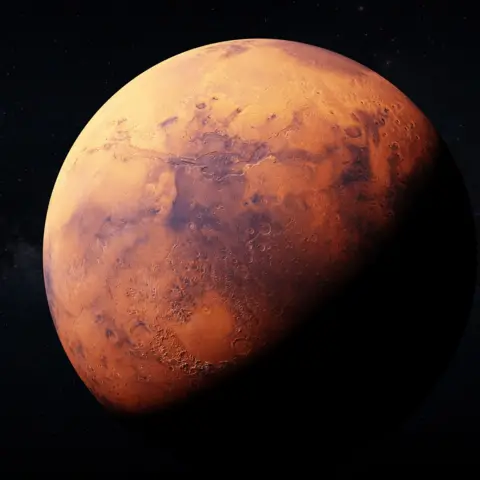
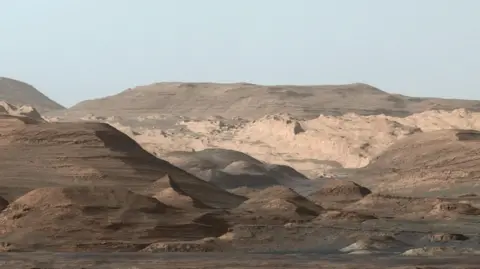
NASA’s long-term vision extends far beyond the Moon; the agency has its sights firmly set on sending humans to Mars by the 2030s. This ambitious timeline necessitates overcoming unprecedented technological hurdles. The Moon serves as an indispensable proving ground, a stepping stone for the far more complex journey to the Red Planet. As Libby Jackson, head of space at the Science Museum, explains, "Going to the Moon and staying there for a sustained period is much safer, much cheaper and much easier to be a test bed for learning how to live and work on another planet."
Establishing a Moon base will allow NASA and its international partners to rigorously test and perfect critical technologies and operational procedures that will be essential for Mars missions. These include developing robust closed-loop life support systems for recycling air and water, building habitats capable of protecting astronauts from the Moon’s extreme temperature swings (ranging from -173°C to 127°C) and the constant threat of dangerous space radiation (solar flares and cosmic rays). Engineers will work to design reliable power generation systems, potentially including small lunar fission reactors or advanced solar arrays that can operate efficiently during the long lunar nights. Techniques for utilizing lunar regolith (soil) for 3D printing structures, thereby reducing the need to transport materials from Earth, will also be refined. Furthermore, a lunar outpost provides a unique environment to study the long-term physiological and psychological effects of living in reduced gravity and isolation, insights that are crucial for the much longer and more distant Mars missions. The challenges of a Mars mission – a journey of many months, with limited communication delays and no easy return – are orders of magnitude greater than those for the Moon. "These are all technologies that if you try them for the first time on Mars and they go wrong, it’s potentially catastrophic. It’s much safer and much easier to try them out on the Moon," Jackson emphasizes. The Moon offers a relatively accessible and forgiving environment to fail, learn, and iterate before embarking on the ultimate interplanetary journey.
Mysteries Yet to Be Unlocked: A Lunar Time Capsule
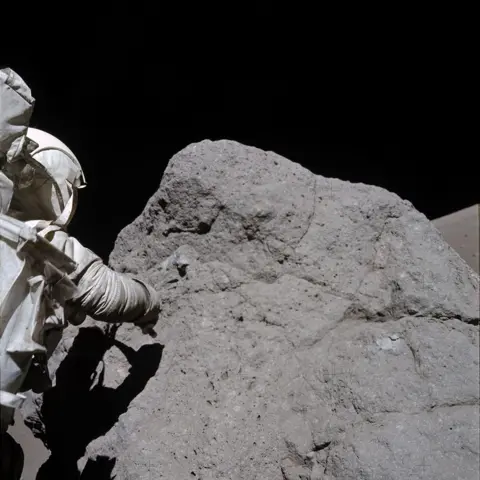
Beyond its strategic and practical utility, the Moon remains a treasure trove of scientific mysteries. The rock samples brought back by the Apollo astronauts revolutionized our understanding of our celestial neighbor and, by extension, our own planet. "They told us that the Moon was formed by this incredibly dramatic event, where a Mars-sized body smashed into the Earth and the bits that came off formed the Moon. We know about that because of the Apollo rocks," says Professor Sara Russell. This "Giant Impact Hypothesis" fundamentally reshaped planetary science.
However, Apollo’s sampling was limited to specific equatorial regions. A return to the Moon with Artemis opens up new, previously unexplored territories, particularly the polar regions with their water ice and ancient, undisturbed terrains. Because the Moon lacks plate tectonics, wind, or rain to erode and recycle its surface, it acts as a remarkably preserved "time capsule." It holds a geological record spanning 4.5 billion years, offering invaluable clues about the early history of the Earth, the formation of the solar system, and the processes that shaped planetary bodies. Scientists are eager to collect new hauls of rocks from these different areas, analyze the composition of lunar ice, study the Moon’s deep interior through seismic instruments, and investigate the effects of solar wind on lunar surfaces. Furthermore, the Moon’s far side, permanently shielded from Earth’s radio interference, presents an unparalleled location for establishing radio observatories, allowing astronomers to detect faint signals from the early universe that are obscured by Earth’s atmosphere. "A new haul of rocks from a different area of the Moon would be amazing," Russell concludes, underscoring the vast potential for groundbreaking discoveries.
Inspiring a New Generation: The Legacy of Exploration
The grainy black-and-white footage of Neil Armstrong’s "one small step" beamed back from the Apollo missions captivated a generation, transforming the audacious dream of space travel into a tangible reality. While only a select few would go on to become astronauts, the Apollo era undeniably ignited a passion for science, technology, engineering, and mathematics (STEM) among countless individuals, inspiring them to pursue careers in these critical fields.
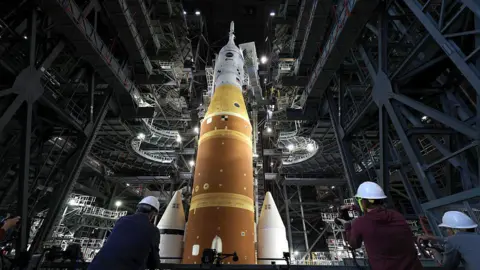
The Artemis missions, broadcast live and in stunning 4K resolution, are poised to replicate and amplify this "Apollo effect" for a new generation. With a more diverse astronaut corps, including the first woman and first person of color to walk on the Moon, Artemis aims to make space exploration more relatable and aspirational to a broader global audience. "We live in a world of technology. We need scientists, engineers and mathematicians – and space has a brilliant ability to excite people about those subjects," says Libby Jackson. This renewed excitement is not just about scientific curiosity; it’s a strategic investment in human capital. A thriving space program fosters innovation, drives technological advancements, and creates new jobs, contributing to a robust space economy that provides a substantial return on the billions of dollars invested. Moreover, technologies developed for space missions frequently find unexpected applications on Earth, leading to "spin-offs" that benefit society in areas ranging from medical imaging and water purification to advanced materials and computing.
Ultimately, beyond the tangible benefits of resources, strategic advantage, and scientific discovery, the return to the Moon with Artemis embodies a fundamental human drive to explore, to push boundaries, and to achieve the seemingly impossible. As Helen Sharman eloquently states, "If we really come together, we can produce so much that’s beneficial to humankind. It shows us what humans are capable of." Artemis II and the subsequent missions are not just a rerun of Apollo; they are a sophisticated, multi-faceted endeavor designed to usher in a new era of sustainable space exploration, laying the groundwork for humanity’s permanent expansion into the cosmos, with the Moon as our essential first home away from Earth.




 Nakalama John
 Roy Suryo
 atisusanti
 George Anjay