
 George Anjay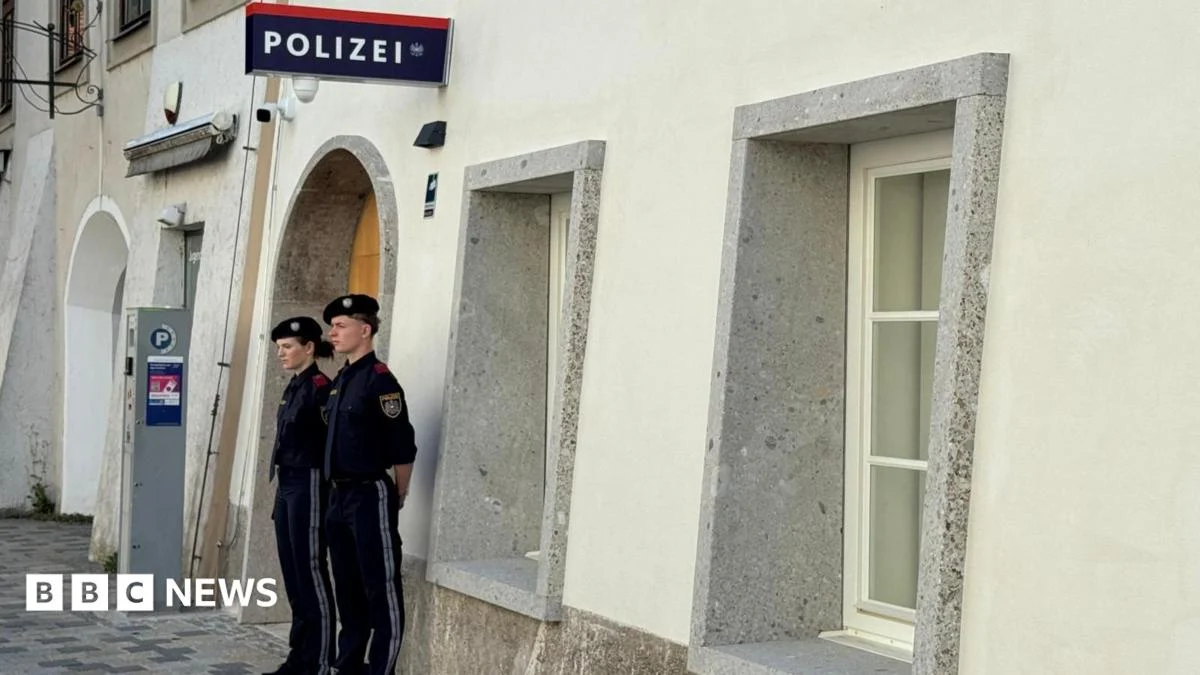
Austria has opened a police station in the house where Adolf Hitler was born, in the town of Braunau am Inn, a move intended to decisively sever the building’s association with Nazism and prevent it from becoming a focal point for neo-Nazi pilgrimage. This significant decision marks the culmination of decades of controversy and debate surrounding the fate of the 17th-century former inn, a site that has cast a long shadow over Austrian identity and its reckoning with its Nazi past. The building, now substantially refurbished and with its facade altered, has presented a persistent and complex challenge for Austrian authorities, who have grappled with finding a solution that acknowledges history without glorifying it.
Adolf Hitler, the architect of the Holocaust and World War II, was born in this modest dwelling on April 20, 1889. His family, however, only resided there for a few weeks before relocating to another address within Braunau. They ultimately left the town for good when Hitler was a mere three years old, moving to Linz and later Vienna. The historical connection, though brief in Hitler’s personal timeline, became inextricably linked to the building due to his eventual rise to infamy. His only return to Braunau after leaving as a child was a brief, symbolic stop in 1938, en route to Vienna, following the Anschluss, the annexation of Austria by Nazi Germany. This act underscored the building’s potential as a site of historical resonance, albeit a deeply disturbing one.
For many years, the Austrian Interior Ministry leased the property from its long-time owner, a local woman named Gerlinde Pommer. The ministry paid a substantial rent, a deliberate strategy aimed at preventing the house from falling into the hands of those who might exploit it for extreme right-wing tourism or as a shrine. This approach, while pragmatic in its intent, also highlighted the difficulty in finding a permanent and fitting use for a property so heavily burdened by its association with a figure responsible for unimaginable atrocities.
The debate over the building’s future intensified over the years. At one point, the then-Interior Minister, Wolfgang Sobotka, publicly advocated for the demolition of the house and the construction of a new building in its place. This sentiment echoed an earlier, more radical offer from a Russian parliamentarian who expressed a desire to purchase the house and “blow it up,” a visceral reaction to the building’s dark legacy. However, these proposals were met with a significant storm of criticism. Many historians, cultural commentators, and citizens argued that destroying the house would be a form of historical erasure, a denial of Austria’s complicity and its responsibility in confronting its Nazi past. They contended that the building, despite its origins, served as a tangible reminder of a period that must be remembered, not forgotten, and that engagement with the past, however painful, was essential for true reconciliation.
In 2019, after considerable deliberation and public discourse, the Austrian government announced a new direction: the house would be transformed into a police station. This decision aimed to neutralize the building’s symbolic power as a potential pilgrimage site by repurposing it for a civic function. An EU-wide competition was subsequently launched to solicit architectural designs for the renovation, ensuring a modern and functional space while respecting the historical context. Millions of euros were invested in the refurbishment of the formerly yellow building, which has undergone a significant transformation in its appearance, shedding its previous character to adopt a more contemporary and unobtrusive design.
However, the decision to establish a police station has not been universally embraced. Critics argue that the move sends a mixed signal, potentially trivializing the building’s dark history or suggesting an attempt to sweep it under the rug. Some had envisioned the site becoming a center for historical reflection and a place to confront the Nazi past directly, fostering a deeper understanding of the era and its consequences. Others, like local historian Florian Kotanko, expressed a preference for the return of the Lebenshilfe charity, an organization that had previously occupied the building and focused on supporting people with disabilities.
Kotanko elaborated on the complexities of finding a suitable occupant for the site: "But even this charity organisation did not want to come back because they thought they would be used as a fig leaf for a political discussion, and so the government had to decide in another way." This statement reveals the immense pressure and the delicate balancing act faced by the authorities, attempting to satisfy various stakeholders and find a solution that was both practical and ethically sound. The charity’s reluctance underscored the ongoing sensitivity surrounding the building and the fear of being co-opted into a political narrative.
In its current iteration as a police station, there is a deliberate absence of any overt signage acknowledging the building’s historical connection to Adolf Hitler. This intentional anonymity is a key element of the strategy to de-emphasize its past. However, to deter any potential neo-Nazi activity, the building is equipped with security cameras that diligently record the activities of any visitors. The only tangible link to Hitler that remains visible from the exterior is a memorial stone situated on the street outside. This stone, erected in 1989, bears a poignant inscription: "Never again Fascism; In memory of millions of dead." It originates from the nearby former Mauthausen concentration camp, a chilling reminder of the horrors perpetrated under the Nazi regime. Notably, Hitler’s name is conspicuously absent from the inscription, shifting the focus to the victims and the broader ideology of fascism.
Despite these efforts to recontextualize the site, Florian Kotanko believes that the building’s history will continue to resonate, even if fewer neo-Nazis are drawn to it. He emphasizes the importance of confronting this difficult heritage: "You have to deal with it, and so we all try to deal with it in an open and correct way. It’s not a matter of being proud, but it’s a matter of dealing with the fact." This sentiment encapsulates the ongoing process of historical reckoning that Austria, like many nations, continues to navigate. The police station, while an innovative solution, represents one chapter in this larger, enduring effort to understand, acknowledge, and ultimately overcome the legacy of the Nazi era. The building’s transformation into a functional, civic space signifies a deliberate attempt to re-establish its identity, moving away from the shadow of a dark past and towards a future defined by law, order, and a continuous, albeit somber, remembrance. The success of this endeavor will be measured not only by the absence of neo-Nazi gatherings but by Austria’s ongoing commitment to grappling with its history in a transparent and responsible manner, ensuring that the lessons learned from this dark period are never forgotten.




 Roy Suryo

 Nakalama John
 atisusanti
 Ramos Leo
