Ramos Leo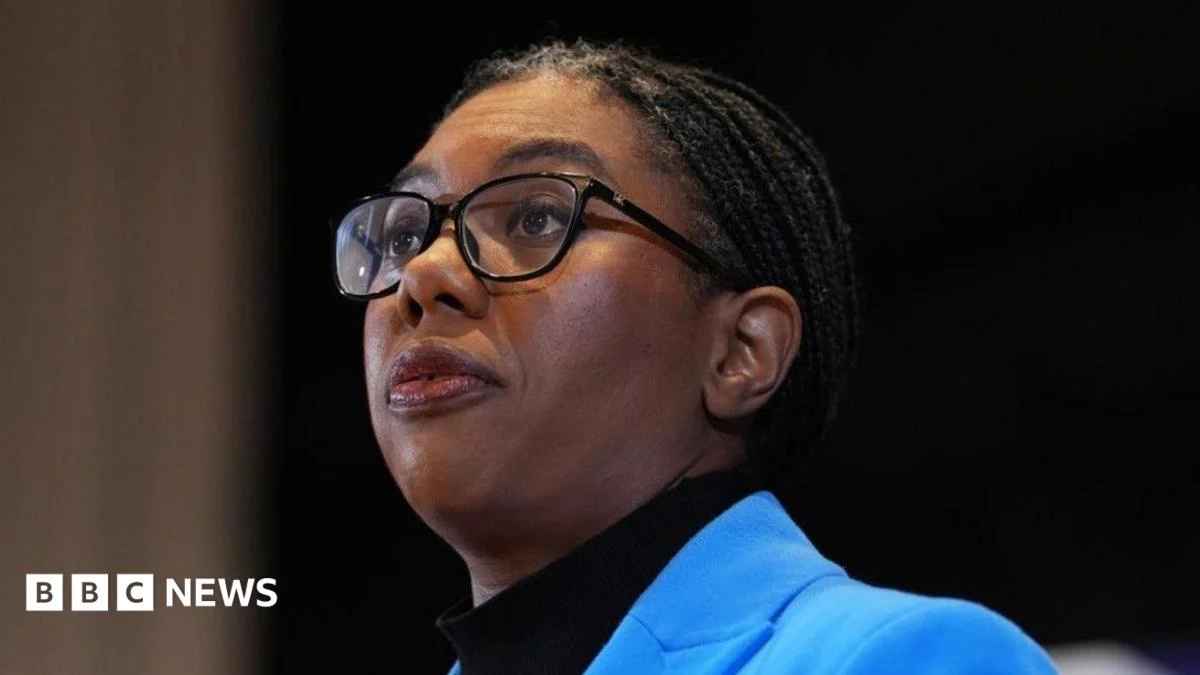
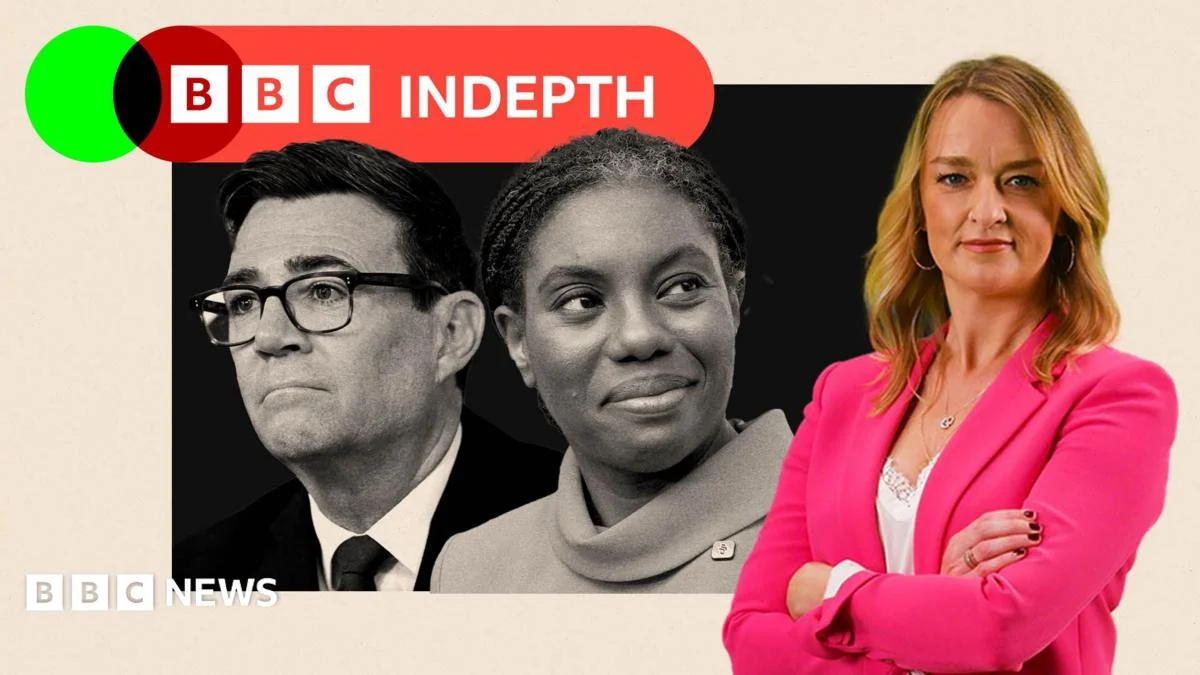
Conservative leader Kemi Badenoch has issued a forceful demand for Prime Minister Andy Burnham to enact emergency legislation without delay, aiming to permanently halt the early release of hundreds, potentially thousands, of prisoners across the country. The call comes amidst a growing political storm over the government’s approach to the escalating prison overcrowding crisis, which has seen accusations of mismanagement and blame-shifting dominate the political discourse.
Prime Minister Burnham had announced last week that he was pausing the controversial early release scheme, a move that would have seen approximately 700 prisoners freed in its initial phase, slated for September. This temporary halt followed an intense public backlash, particularly from survivors and victims of serious crimes, who expressed profound distress and fear at the prospect of offenders returning to communities sooner than expected. However, the Conservative opposition argues vehemently that a mere pause and subsequent government review are insufficient to address the systemic dangers posed by the scheme and will not ultimately prevent dangerous offenders from being released. They contend that only robust, fast-tracked legislation can provide the necessary safeguard for public safety.
The early release initiative itself is a direct response to unprecedented overcrowding within the nation’s penal system. Labour attributes this critical situation to a decade and a half of Conservative governments, which they claim failed demonstrably to build sufficient new prisons and adequately manage the inmate population. A Labour spokesperson retorted, "It’s this government that is fixing the Tories’ mess," underscoring their narrative that they inherited a broken system.
Indeed, the practice of early release was first implemented by a Conservative government in 2023, initially as a temporary measure to alleviate prison capacity pressures. It began with prisoners being released 18 days early, then extended to 70 days. By June 2024, before Labour assumed power, an alarming 10,000 prisoners had already been released early under these provisions. When Sir Keir Starmer’s government entered Downing Street in July 2024, the severity of the crisis became starkly apparent: there were fewer than 100 spare prison places across the entire adult male estate. This perilous situation directly prompted the creation of the Sentencing Act, designed to facilitate the early release of an additional 6,000 prisoners from September onwards, in an attempt to prevent the complete collapse of the prison system.
While the Sentencing Act explicitly excludes the most serious and dangerous offenders, such as murderers serving life sentences or those on extended sentences for grave crimes, a critical flaw highlighted by critics is that the eligibility for early release is predominantly based on the length of sentence, rather than the specific type of offence committed. This distinction means that individuals convicted of serious violent or sexual crimes, who received fixed-term sentences, could still qualify for early release, raising significant concerns about public protection.
Kemi Badenoch is now spearheading the charge, urging Prime Minister Burnham to bypass traditional parliamentary procedures and fast-track emergency legislation specifically designed to ensure that serious offenders remain incarcerated for the full duration of their sentences. Her rhetoric is sharp and unyielding. "It’s all well and good cutting bills and bus fares, but that pales into insignificance when paedophiles and rapists are about to be let out on our streets," she is expected to declare at a press conference scheduled for Tuesday, where she will appear alongside victims of crime. Badenoch intends to use the platform to challenge Burnham directly, stating, "Burnham needs to show us he’s ready to take the tough decisions," implying that his current approach lacks the necessary resolve.
The Conservative leader warns of an imminent threat: without immediate emergency legislation, dangerous offenders are set to begin their early release from the very day MPs return to Parliament after the summer recess, on Tuesday, September 1st. She is specifically calling on Burnham to revoke the legislation scheduled to come into effect on September 2nd and, if necessary, to recall Parliament from its recess to ensure that the worst violent and sexual offenders are explicitly and unequivocally exempted from any form of early release. This drastic measure, she argues, is the only way to avert a potential public safety crisis.
Echoing Badenoch’s urgency, Conservative shadow justice secretary Nick Timothy emphasized the psychological toll on victims. "Victims should not have to live in fear all summer waiting for a review," he stated, highlighting the anxiety and uncertainty faced by those affected by crime. Timothy painted a stark picture of the impending releases: "The clock is ticking. Thousands of rapists, paedophiles, and other serious criminals are set to be released in September. Labour must act now and stop the mass release of dangerous criminals." Earlier this month, the Conservative front bench had already sought to apply pressure on the government to reconsider the early release plans, specifically warning that the scheme could lead to some convicted rapists leaving prison earlier than anticipated, a point that continues to fuel their opposition.
The government, prior to Burnham’s pause, had initially defended the plan, framing it as a pragmatic political choice to manage offenders on strict conditions within the community, rather than facing the complete collapse of the prison system. They argued that such a collapse would leave sex offenders and other serious criminals to act with impunity due to a lack of secure detention. The decision to pause the scheme, however, marked a significant shift in stance, directly influenced by widespread criticism, particularly from the family of Thames Valley Police officer Andrew Harper. PC Harper was tragically killed in Berkshire in 2019 when he was dragged by a car down a country road by three teenagers. Two of PC Harper’s killers, who were both sentenced to 13 years in prison, would have been eligible to benefit from the early release scheme from June 2027, when the longest fixed sentences would have begun to be affected.
PC Harper’s widow, Lissie Harper, was a vocal critic of the plans, describing them as "deplorable." She powerfully articulated the human cost of such policy decisions, stating that politicians were "making decisions from behind a desk that will have real and lasting consequences" for the families of victims, whose lives are irrevocably altered by such crimes. Her poignant intervention is widely credited with galvanizing public opinion and prompting the government’s temporary retreat.
Defending the review of the Sentencing Act that Prime Minister Burnham has now announced, a Labour Party spokesperson did not mince words when responding to Conservative criticism. "The Conservatives have some nerve," the spokesperson declared. "During their 14 years in office, they shut 23 prisons, created just 482 jail places, and granted early release to 10,000 prisoners – leaving the criminal justice system teetering on the verge of collapse." Labour reiterated its commitment to rectifying what it calls a "Tories’ mess," highlighting its own efforts: "It’s this government that is fixing the Tories’ mess. We have already delivered over 3,000 prison places and we’re investing billions to deliver thousands more," signaling a long-term strategy to rebuild prison capacity.
Other political parties have also weighed in on the contentious issue, reflecting the broad societal concern. Liberal Democrat justice spokesperson Jess Brown-Fuller MP articulated a fundamental principle: "The reality is that in a properly functioning justice system, no victim or loved ones should ever be told that their perpetrator is being released earlier than expected." She, too, placed blame squarely on the previous administration, stating, "Unfortunately, the Conservatives left our prisons on the brink of collapse, creating a capacity crisis that required emergency action to keep the system functioning and the public safe." Brown-Fuller concluded with a challenge to the current government: "Now that the government claims to have increased prison capacity, there is a clear opportunity for Burnham to correct some of the mistakes made by his predecessors with this scheme."
Reform UK’s Home Affairs spokesperson, Zia Yusuf, was equally critical, labeling the policy "disastrous" but pointing out its origins under the Tories. Yusuf went further, noting that Kemi Badenoch herself had, in 2024, supported efforts to expand the early release scheme, seeking to expose what Reform UK perceives as hypocrisy. "It’s clear that only one party has consistently opposed early release and proposed strong law and order reforms to ensure hardened criminals are locked up for the full duration of their sentences," Yusuf asserted in a statement, positioning Reform UK as the sole consistent voice for stringent justice. "Only Reform UK will fix lawless Britain," the party’s Home Affairs spokesperson added, aiming to distinguish their stance on criminal justice from both Labour and the Conservatives.
The political battle over prison reform and early release schemes is thus intensifying, with Badenoch’s demand for emergency legislation elevating the debate to a critical juncture. The stakes are undeniably high: public safety, the integrity of the justice system, and the political credibility of all major parties are now on the line as the September deadline looms. The government faces immense pressure to balance the urgent need for prison capacity with the imperative to protect communities and uphold victims’ rights, all while navigating a treacherous political landscape.


 Roy Suryo
 Nakalama John
 atisusanti