Ramos Leo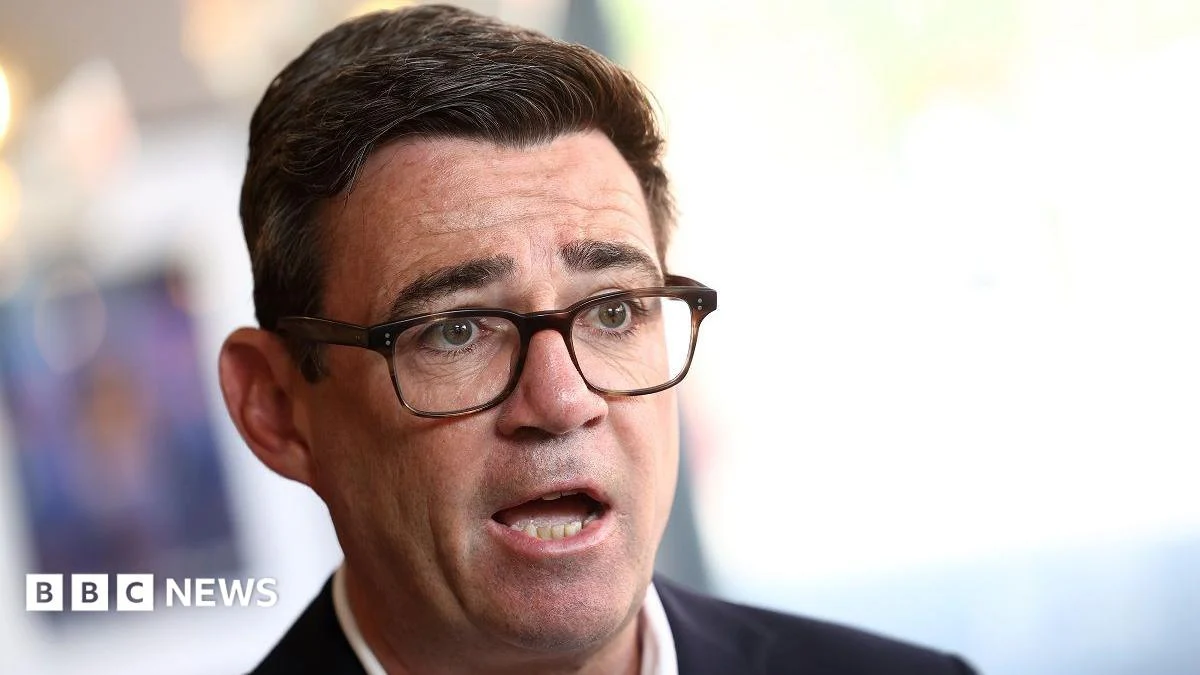
Prime Minister Andy Burnham has expressed strong confidence that Jessie Cole and Albert Bowers, the men convicted of the manslaughter of PC Andrew Harper, can indeed be excluded from the government’s controversial early release scheme, a declaration that comes amidst escalating public outcry and intense political pressure. This firm stance marks a significant pivot from earlier suggestions of limited governmental power, as Burnham has now instructed the Justice Secretary to urgently devise a mechanism to prevent the early liberation of Harper’s killers, promising a comprehensive plan will be presented to Parliament by September.
The case of PC Andrew Harper remains a deeply resonant tragedy across the UK. Harper, a 28-year-old newlywed police constable from Wallingford, Oxfordshire, died in August 2019 in the line of duty. He was dragged for over a mile behind a Seat Toledo car as he attempted to apprehend three teenagers who were fleeing the scene of a quad bike theft in Berkshire. The horrific circumstances of his death, and the subsequent trial that saw his killers convicted of manslaughter rather than murder, sparked widespread national grief and calls for justice. Jessie Cole and Albert Bowers, alongside the driver Henry Long, were eventually jailed for their roles in Harper’s death. Long received a 16-year sentence, while Cole and Bowers were each handed 13-year terms for manslaughter. Under the current parameters of the early release scheme, it is Cole and Bowers who are poised to become eligible for freedom as early as next year, a prospect that has reignited profound anguish for Harper’s family and sparked a nationwide demand for intervention.
The government’s early release scheme, formally known as the End of Custody Supervised Release (ECSR) scheme, was initially introduced by the previous Starmer government to address a severe and escalating overcrowding crisis within England and Wales’s prison system. The situation has reached critical levels, with usable capacity consistently hovering at nearly 100%, and ministers having warned that prison spaces could run out entirely as soon as October. This chronic lack of space is the culmination of decades of rising prison populations coupled with insufficient investment in new facilities under successive administrations. To mitigate this looming catastrophe, the law was changed to allow for the earlier release of certain offenders. Specifically, the release point for some prisoners has shifted from 40% or half of their custodial term to one-third, while for others, it has moved from two-thirds to half. The scheme aims to free approximately 5,000 offenders to create essential breathing room within the strained correctional facilities.
Prime Minister Burnham, having inherited this complex challenge upon taking office, has found himself navigating a delicate political tightrope. His position on the early release scheme has undergone a noticeable evolution in recent weeks. Just last week, he publicly stated that he had "pushed to the very limits of what is possible to do" and that "there is nothing more" he could ask for without risking the "prison system reaching capacity and collapsing within months." These comments, published in a prominent article, suggested a government stretched to its operational limits. He had already moved to make exemptions for those convicted of serious sexual offences, including rape, serious child sex offences, and other grooming crimes, announcing a review to identify any grooming gang members who might be eligible for early release. However, manslaughter convictions were not initially included in these exclusions, a significant omission that fuelled the public backlash regarding Harper’s killers.
The intense pressure from Harper’s family, victim advocacy groups, and the public at large appears to have significantly influenced the Prime Minister’s resolve. Debbie Adlam, PC Harper’s mother, has been a vocal and relentless campaigner for justice. Her recent comments to the BBC, describing her "turmoil" over conflicting reports regarding the potential early release of her son’s killers and lambasting the handling of the situation as a "hash," underscored the profound emotional toll on victims’ families. Her distress, amplified by widespread media coverage, undoubtedly contributed to the growing political imperative for action.
On Tuesday, in a more assertive tone, Burnham insisted that he had "never accepted ‘there was nothing more that could be done’" to prevent the early release of more offenders, including Harper’s killers. He told reporters, "nothing has changed," maintaining that he has been "pushing on this issue every single day in office" since becoming Prime Minister. This attempt to reconcile his earlier comments with his current, more confident stance highlights the immense pressure he faces to deliver a solution that satisfies public demand for justice while grappling with the operational realities of the prison system. Furthermore, Burnham announced his intention to seek cross-party talks to build "consensus" on the approach to early releases, signalling a desire for a unified political front on this sensitive issue.
The practical and legal challenges of barring Cole and Bowers from the scheme, however, remain substantial. The fundamental difficulty lies in how to prevent these specific individuals from being treated like other prisoners with similar sentences without either setting a problematic legal precedent or introducing highly unusual bespoke legislation. If ministers were to simply declare that all prisoners with manslaughter convictions could not be considered for the scheme, this would have an immediate and wide-ranging impact on many other inmates currently serving sentences for similar offences. Such a broad exclusion would require careful legal drafting and parliamentary approval, potentially leading to further debates about the fairness and consistency of the justice system.
The Ministry of Justice and the Justice Secretary now face the arduous task of identifying a legally sound and politically acceptable method to make this exclusion. Options could include a highly specific amendment to the ECSR criteria that focuses on the particular nature of the manslaughter offence in Harper’s case, or perhaps a revised risk assessment framework that effectively disqualifies those whose crimes involved extreme violence against public servants. However, any such intervention must avoid the perception of creating ex post facto laws targeted at specific individuals, which could raise significant concerns about due process and the rule of law.
The broader implications of this situation are profound. It underscores the perpetual tension between the demands for victim-centred justice and public safety on one hand, and the pragmatic necessity of managing an overburdened prison system on the other. It also highlights the powerful influence of public opinion and media scrutiny on government policy, especially in cases that touch the national conscience as deeply as PC Harper’s death. The government’s decision regarding Harper’s killers will not only determine the immediate fate of Cole and Bowers but will also set an important precedent for future early release policies and the perceived fairness of the justice system. As September approaches, all eyes will be on Parliament to see how Prime Minister Burnham intends to deliver on his confident promise and bring a measure of peace to PC Harper’s grieving family. The review into grooming gang members also remains ongoing, with no confirmation yet on whether it will lead to actual prevention of their early release, adding another layer of complexity to the government’s unfolding strategy for prison reform and public protection.



 Roy Suryo

 George Anjay
 Nakalama John