Ramos Leo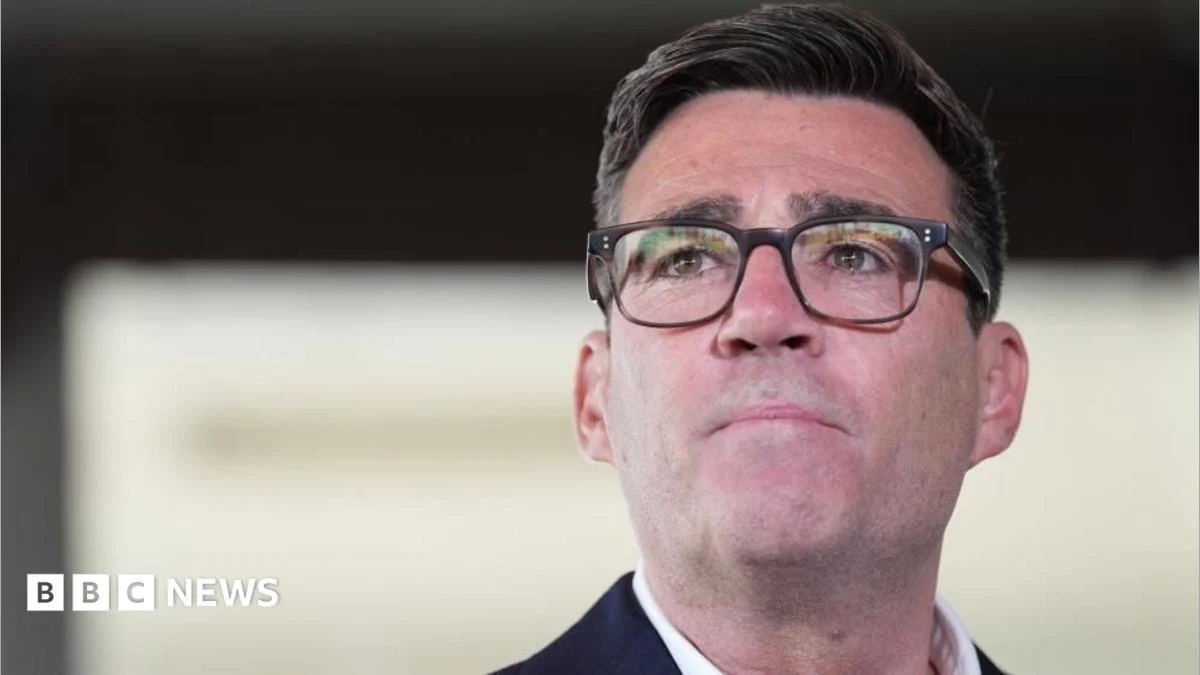
By lunchtime today, the United Kingdom will mark a truly extraordinary milestone: its fifth prime minister in a mere four years. This unprecedented rate of leadership turnover starkly encapsulates the turbulent, unpredictable, and often disorienting state of British politics in the early 2020s. The sheer velocity of change at the apex of power underscores a deep-seated instability that has come to define the nation’s political narrative, raising questions about governance, international standing, and public trust.
The summer of 2022 saw the dramatic exit of Boris Johnson, still in office but clearly on his way out, following a series of scandals that eroded his mandate. His departure ushered in a period of intense political volatility, beginning with Liz Truss’s famously brief tenure, whose radical economic policies triggered market chaos and forced her resignation after just 49 days. She was succeeded by Rishi Sunak, who inherited an economy in crisis and a Conservative Party deeply divided, tasked with restoring fiscal credibility and stability. Most recently, Sir Keir Starmer took the helm, navigating a landscape still reeling from successive crises. Each transition, while following established constitutional norms, has chipped away at the perception of a stable and predictable government, leaving a nation yearning for continuity and clear direction.
It is little wonder, then, that Andy Burnham, as he prepares to step into this whirlwind, is acutely conscious of this incessant churn at the top. This awareness, we are told, will be a central theme in his early pronouncements. His critics, both within the Labour Party and beyond, might permit themselves a wry smile at this sentiment. Many would argue that Burnham, a prominent figure in British politics for decades, with a significant power base as Mayor of Greater Manchester, has been strategically positioning himself for this very moment for a considerable time. His previous bids for the Labour leadership and his vocal critiques of Westminster from his regional platform have often been interpreted as a long-game strategy, making his arrival in Downing Street the culmination of sustained political ambition.
The backdrop to this extraordinary political era is a society grappling with profound challenges. In the post-pandemic, post-Brexit 2020s, the national mood is undeniably impatient, marked by a pervasive sense that life is getting harder for many. The economic fallout from global events, coupled with the long-term implications of Brexit, has created an environment where the cost of living crisis bites deep, energy bills soar, and public services strain under pressure. This cocktail of economic anxiety and social fragmentation has inevitably led to political support becoming increasingly volatile and fragmented. The consequence of such widespread discontent has been a consistent trend: those in government, regardless of party or individual leader, have found themselves deeply unpopular, struggling to connect with a disillusioned electorate.
This challenging environment is precisely the backdrop to Burnham’s imminent arrival in Downing Street, echoing the circumstances faced by Sir Keir Starmer 746 days ago – on another sunny July day, just two years prior. The prevailing trend of unpopular governments, struggling to maintain public confidence amidst a barrage of crises, is the formidable force Burnham is now determined to buck. It’s a task that demands not just new policies, but a fundamentally different approach to leadership and governance.
Burnham is reportedly determined to hit the ground running, signalling an intent to immediately stamp his authority and vision on the government. A key aspect of his strategy will be to maintain, where possible, the distinctive style of leadership he adopted so successfully as the mayor of Greater Manchester. His time in Manchester was characterized by a more accessible, less formal approach, often prioritizing direct engagement with citizens and a focus on regional empowerment. While the formal rules and traditions of the House of Commons and necessary meetings with the King will undoubtedly necessitate a more frequent donning of a suit than he has been accustomed to in recent years, other deeply ingrained conventions may be very intentionally ditched. I hear, for instance, that he may break with tradition by not bothering with a lectern for his first address as prime minister outside 10 Downing Street on Monday. This seemingly minor detail carries significant symbolic weight, suggesting a desire to present a more direct, less guarded, and more personal connection with the public, contrasting with the often-stiff formality associated with the office.
Furthermore, I also hear he is keen on establishing regular question and answer sessions with voters around the country – a concept one ally enthusiastically described as "People’s Question Time." This initiative, if implemented, would represent a significant departure from the Westminster bubble, aiming to foster greater transparency, accountability, and direct dialogue between the government and its citizens. It reflects a commitment to a more participatory democracy, bringing the decision-making process closer to the people and potentially rebuilding trust by demonstrating a willingness to listen and respond directly to public concerns. Such a move would be a clear extension of his regional mayoral style, seeking to nationalize a more grassroots, community-focused approach to politics.
Before Burnham’s momentous arrival, however, will come Sir Keir Starmer’s departure, a moment of transition steeped in both protocol and personal reflection. Having spent his final weekend in office at Chequers, the prime minister’s historic country retreat in Buckinghamshire, Sir Keir will return to Downing Street for a brief, final address to the nation. This speech, notably delivered with a lectern, will be his last public statement as prime minister before heading to Buckingham Palace to formally tender his resignation to the King.
I expect Sir Keir will use this opportunity to reflect on what he views as his key achievements, both domestically and on the world stage. His team speaks with particular pride about several policy successes during his tenure. These include a notable reduction in immigration figures, which had been a persistent political challenge, and a significant decrease in NHS waiting lists in England, a testament to efforts to tackle the post-pandemic backlog in healthcare. Furthermore, they highlight initiatives aimed at lifting children out of poverty, a long-standing social justice priority, and the introduction of a social media ban for teenage children, a controversial but widely debated measure intended to safeguard youth mental health. These points will likely form the core of his legacy, presented as tangible improvements to the lives of ordinary Britons.
I expect there will be a modest gathering of staff and supporters to see him off from Downing Street, a poignant moment marking the end of one chapter and the beginning of another. In the fluid and often factional world of politics, there will undoubtedly be some overlap between the supporters of the departing prime minister and those eagerly anticipating the arrival of his successor. However, as one would expect, there will also be distinct groups present – those loyal to Starmer who may view Burnham’s ascent with mixed feelings, and those who have long backed Burnham, perhaps seeing this as a long-overdue change.
The afternoon and evening will bring the much-anticipated news of appointments to the new cabinet, a crucial indicator of Burnham’s priorities and governing philosophy. Among these, we hear, will be the intriguing appointment of a cabinet minister whose primary focus will be artificial intelligence. This signals a forward-thinking agenda, recognizing the transformative power and potential challenges of AI, and positioning the UK to be a leader in this critical technological domain.
A keen eye will naturally be on who secures the traditional "great offices of state": the Chancellor of the Exchequer, responsible for the nation’s finances; the Home Secretary, overseeing domestic security and justice; and the Foreign Secretary, leading the country’s international relations. Names like Shabana Mahmood, Wes Streeting, Ed Miliband, Angela Rayner, and Lucy Powell are frequently mentioned in speculation. The specific roles these prominent figures secure will speak volumes about Burnham’s strategic approach – whether he seeks to build a broad church, reward loyalists, or signal a specific ideological direction. We will soon find out if he prioritizes economic caution, social reform, or a robust global presence through these appointments.
We will also begin to get a clearer sense of the new prime minister’s immediate policy priorities. The persistent cost of living crisis and soaring energy bills are almost certain to be at the top of his agenda, demanding urgent action and innovative solutions. Beyond specific policies, the structural changes to government will also be scrutinized. To what extent will the No 10 operation be beefed up, signaling a more centralized approach to policy-making? Crucially, how much clout will No 10 North, Burnham’s proposed office in Manchester, truly have? This latter point is particularly significant, as it could indicate a genuine commitment to rebalancing power away from London and empowering regional voices, a cornerstone of his political identity.
What beckons in the coming hours is no longer novel, given the recent, rapid turnover of prime ministers. However, its increased frequency does not diminish its significance. Each transition represents a fundamental shift in direction, policy, and national leadership. What we learn in the coming hours, from the composition of the cabinet to the early policy pronouncements and the symbolic gestures of a new leader, will have a profound and lasting bearing on how we are governed in the coming weeks, months, and indeed, years. The challenge for Andy Burnham is not merely to lead, but to restore a sense of stability and purpose to a nation weary of constant change.



 Nakalama John
 George Anjay
 atisusanti
 Roy Suryo