
 Ramos Leo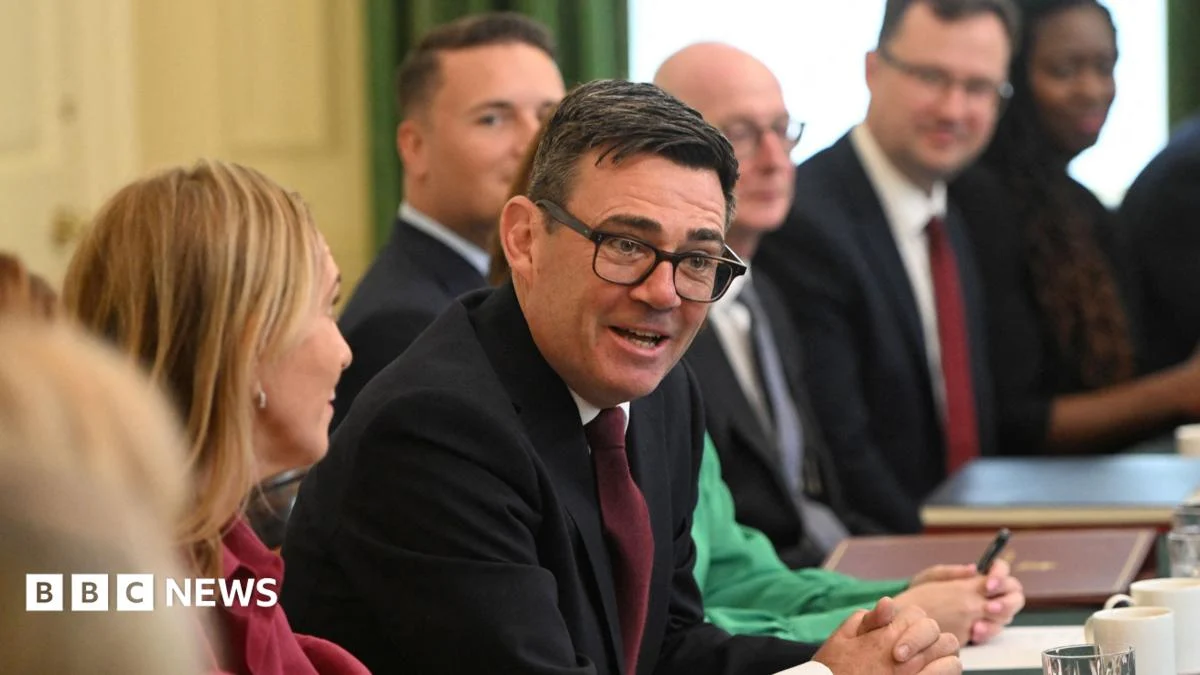
However, the nascent government immediately faced scrutiny over its funding strategy for this flagship policy. Burnham’s plan to finance the VAT reduction by scrapping Sir Keir Starmer’s proposed digital ID scheme triggered an early and sharp row, raising questions about the fiscal prudence of the new administration. Downing Street swiftly moved to clarify, asserting that the estimated £850 million cost of the VAT cut for the remainder of the financial year could be offset by redirecting £1.8 billion previously earmarked by the antecedent government for the digital ID scheme’s rollout over the next three years.
Yet, this explanation did little to quell the brewing controversy. Darren Jones, a prominent Starmer loyalist who was among a clutch of ministers dismissed from the cabinet on Monday, vociferously challenged the funding mechanism. Jones contended that the digital ID programme itself was "unfunded" within existing budgets, thereby demanding that Burnham provide a clear and transparent account of where the money for the VAT cut would genuinely be found. Opposition parties seized on this early vulnerability, echoing Jones’s concerns and highlighting that the government’s own budget watchdog had previously indicated that funding for the digital ID scheme was intended to be sourced from within existing departmental budgets, not as a standalone £1.8 billion allocation available for redirection. Sir Mel Stride, the Conservative shadow chancellor, wasted no time in criticizing the new government, stating, "We are only one day in and already Labour are playing fast and loose with the public finances." In response, the Prime Minister’s spokesman remained resolute, insisting that the policy would be robustly funded by "redirecting savings" identified by departments, which were originally intended to cover the costs of the digital ID scheme.
The cabinet meeting itself began with a palpable sense of anticipation and solidarity, as Burnham was greeted with a round of applause from his senior ministers. This moment marked the formal commencement of his leadership, following a whirlwind Monday evening during which he appointed his core team. Further, more junior ministerial appointments are expected to be unveiled on Tuesday, completing the full composition of the new government.
Monday’s wide-ranging reshuffle signaled a profound shift in direction and personnel, marking a clear break from the Starmer era. Several high-profile Starmer loyalists, including the former Shadow Chancellor Rachel Reeves and Shadow Foreign Secretary David Lammy, found themselves out of government. In their place, experienced figures and close allies of Burnham were elevated. Ed Miliband, a former Labour leader, was notably promoted to Foreign Secretary, bringing a wealth of experience to the international stage. Meanwhile, Louise Haigh, a trusted Burnham ally, was entrusted with the significant responsibility of running the Cabinet Office, a role crucial for coordinating government policy and ensuring departmental alignment with the Prime Minister’s agenda.
Perhaps the most surprising and strategically significant appointment was that of John Healey as Chancellor of the Exchequer. Healey, who had previously resigned as Starmer’s defence secretary in a widely publicized dispute over military spending, has been handed one of the most powerful and demanding roles in government. His return to a front-line position, especially as Chancellor, took Westminster by surprise, signaling Burnham’s willingness to make bold and unconventional choices. Speaking to staff at the Treasury, where he previously served as a minister during the New Labour period, Healey immediately sought to reassure markets and the public, declaring that discipline over tax and spending would be his "first duty." He firmly recommitted to the existing tax and spending rules established by his predecessor, aiming to project an image of fiscal responsibility. However, Healey also emphasized that his government would seek to make the "fullest possible use of public investment" within that established fiscal framework, alongside actively maximizing private and international investment, hinting at a proactive approach to economic growth within a disciplined financial envelope.
During the televised portion of the cabinet meeting, Burnham reiterated his immediate focus on the cost of living crisis, promising that further measures would be unveiled in the coming days. He issued a direct challenge to his ministers, tasking them with generating innovative suggestions to alleviate household costs, stressing that "There are things can be done, big and small." The Prime Minister also underscored his government’s commitment to fiscal transparency, vowing to always demonstrate "how we are going to pay for" policies and emphasizing the critical need for "discipline" on spending. He conceded, however, that funding new announcements prior to his first official Budget – the traditional forum for major tax and spending decisions – would necessitate ministers being "prepared to reprioritise" how they allocate their existing departmental budgets. This approach was already evident in Burnham’s initial announcement on Monday regarding rough sleeping: a commitment of an additional £340 million over five years, which is expected to be funded from "uncommitted" spending within the housing department’s existing budget.
The specifics of the energy bill announcement detail a reduction of VAT on household electricity from 5% to zero, a measure set to benefit households in England, Wales, and Scotland. This policy is estimated to provide a typical household with annual savings of approximately £45. Significantly, the VAT cut will not extend to Northern Ireland due to the complexities of post-Brexit trade rules agreed upon by the previous Conservative government. Instead, ministers at Stormont have been offered additional funding from the Treasury, which they can utilize to implement their own tailored cost of living measures. Both the Conservative Party and Reform UK had previously advocated for a similar VAT reduction, with Nigel Farage of Reform UK hailing it as a benefit of Brexit. However, Farage quickly tempered his praise, insisting that the measure would not "address the real issue of the cost of living" and criticized the continued presence of green levies on energy bills, suggesting the government’s action was insufficient.
Beyond immediate policy, Burnham’s vision for regional rebalancing also took a concrete step forward with the confirmation of further details regarding his plan for a new Downing Street unit in Manchester, to be known as No 10 North. The government announced that this unit, expected to be initially housed in a building currently occupied by the intelligence service GCHQ, will be granted significant control over aspects of local economic growth and devolution strategy. This initiative reflects Burnham’s long-standing advocacy for greater regional power and investment, aligning with his political identity as a prominent figure from the North of England. In conjunction with this, a new Office for the Prime Minister and the Cabinet will be established in London, designed to ensure that all government departments remain sharply focused on "top strategic priorities," as detailed in a parliamentary written statement announcing these structural changes. To facilitate the relocation of central government functions, civil servants currently working in London have been offered relocation packages to encourage their move north. Symbolically reinforcing his commitment to this regional agenda, Downing Street indicated that Prime Minister Burnham intends to work from No 10 North "at least one day a week," underscoring his dedication to decentralizing power and fostering growth across the United Kingdom.



 Roy Suryo

 Nakalama John
 atisusanti
