
 Ramos Leo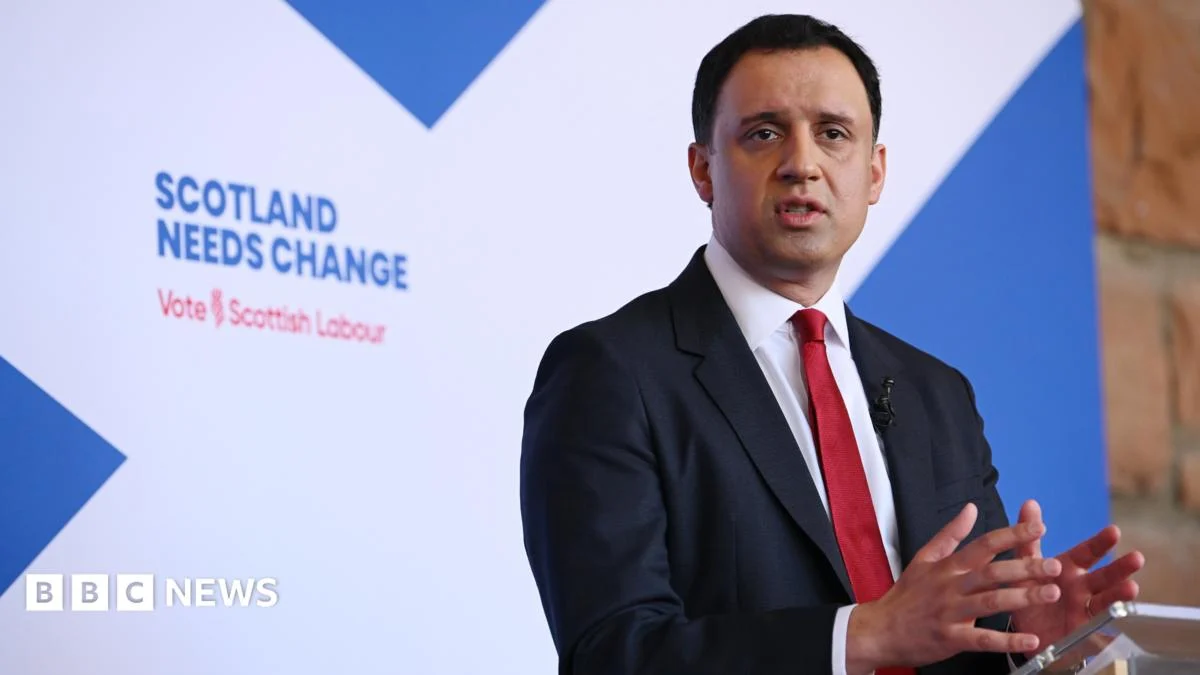
When Sarwar publicly declared in February that Sir Keir Starmer should step down from his leadership role, it sent shockwaves through the Labour Party, creating a moment of profound and colossal jeopardy for the then-prime minister. Sarwar, as the leader of Scottish Labour, held a unique and influential position, and his call for Starmer’s resignation was not easily dismissed as mere backbench dissent. It came at a time when Starmer’s authority was already perceived to be waning, amidst a series of electoral setbacks, persistent criticism over the party’s direction, and a growing sense of internal disquiet regarding his ability to lead Labour to a general election victory. The public nature and high profile of Sarwar’s intervention suggested, for a brief period, that it might trigger an immediate and irrevocable collapse in Starmer’s leadership, potentially forcing a leadership contest or an early resignation.
The immediate aftermath saw a rapid mobilisation of Starmer’s loyalists. One after another, cabinet ministers, often seen as the bedrock of a prime minister’s support, took to social media to post messages of solidarity and unwavering loyalty. As was noted at the time, such public displays of support, usually unremarkable in stable political times, become intensely newsworthy precisely when the opposite – a fracturing of support or imminent challenge – appears to be a very real and tangible possibility. The flurry of tweets and statements was an attempt to shore up Starmer’s position, to project an image of unity and control, and to deter further public challenges. However, the very necessity of such a concerted effort underscored the precariousness of his situation and the depth of the internal crisis that Sarwar’s comments had laid bare.
Now, just five months on from that defining moment of defiance, Anas Sarwar is poised to swap the legislative chambers of the Scottish Parliament for the historic corridors of Westminster, preparing to take up a ministerial brief within Andy Burnham’s new government. His appointment to the House of Lords is a critical element of this transition, providing the mechanism for him to enter the UK government without needing to stand for a Westminster constituency. This move raises intriguing questions about the future leadership of Scottish Labour, the relationship between the party’s Scottish and UK wings, and indeed, Sarwar’s personal political ambitions. It can be seen as a strategic move by Burnham to bring a prominent, nationally recognised figure into his fold, one who demonstrated a willingness to take a stand against the previous regime, thereby signalling a break with the past and rewarding a key player in the recent power shift.
Sarwar will not be alone in this cohort of newly empowered former critics of Sir Keir Starmer. He joins Miatta Fahnbulleh, who has been appointed as the new Energy Secretary in Burnham’s cabinet. Fahnbulleh holds the distinction of being the first government minister to resign from Sir Keir’s administration, publicly stating that she had "lost faith in him." Her resignation, which occurred earlier in the year, was widely interpreted as a significant blow to Starmer’s authority, suggesting that the discontent was not confined to the backbenches but had permeated his frontbench team. Fahnbulleh, known for her sharp intellect and progressive policy positions, particularly on economic and environmental issues, brings a distinct voice to Burnham’s cabinet. Her rapid promotion to a senior ministerial role signals Burnham’s intention to embrace a broader range of perspectives and perhaps to distance his government from the perceived caution and centrism of the Starmer era. Her appointment to such a critical portfolio like energy underscores the importance Burnham places on tackling the cost of living crisis and transitioning to a greener economy, and her known independent streak suggests she will be a vocal advocate for these priorities.
Also now seated around the cabinet table is the new Foreign Secretary, Ed Miliband. Miliband, a former Labour leader himself, possessed a unique vantage point and considerable influence within the party. It became known in the final, turbulent weeks of Sir Keir’s premiership that Miliband had discreetly suggested to him that his time as leader was effectively up. While this advice was not delivered as a public ultimatum, its private conveyance from a figure of Miliband’s stature carried immense weight and contributed to the growing sense of inevitability surrounding Starmer’s departure. Miliband’s return to such a high-profile cabinet position, particularly as Foreign Secretary, reflects Burnham’s trust in his experience and diplomatic acumen, and perhaps also a strategic move to incorporate a figure who, while once leading the party, was not perceived as a staunch loyalist to Starmer in his final days. His presence also brings a sense of continuity and historical perspective to the new government, bridging different eras of Labour leadership.
The pattern of promoting former critics extends further into Burnham’s senior team. John Healey, who had resigned as Defence Secretary during Starmer’s final period in Downing Street, now finds himself in the powerful position of Chancellor of the Exchequer. Similarly, Wes Streeting, who also resigned as Health Secretary towards the end of Sir Keir’s tenure, has been appointed as the new Defence Secretary. These appointments are particularly telling. Both Healey and Streeting were significant figures in Starmer’s shadow cabinet, and their resignations, occurring in quick succession, were seen as clear indicators of a rapidly deteriorating situation for the then-prime minister. Their prominent roles in Burnham’s cabinet – particularly the Treasury and Defence, two of the most senior departments – suggest a deliberate strategy by Burnham to not only bring in talent but also to reward those who demonstrated a willingness to challenge the previous leadership. It could be interpreted as a message that integrity and independent judgment, even when it meant dissenting from the party leader, are valued attributes in the new administration.
This backdrop of shifting allegiances and the elevation of former critics lends particular weight to the comments made by Steve Reed, the former Communities Secretary and a doughty, unyielding defender of Sir Keir Starmer during some of his most intense moments of peril. As he departed government, Reed penned a pointed letter to Andy Burnham, stating: "I hope those who did not show loyalty to Keir will now show it to you. I am proud that I acted with integrity at every step over the turbulent past few months." Reed’s words are far more than a simple farewell; they are a stark and public indicator of the deep wells of private hurt, anger, and perceived betrayal that have been created by the tumultuous events of recent days, weeks, and months within the Labour Party.
While there is, predictably, an overwhelming public display of support for Burnham among Labour MPs in the immediate aftermath of his leadership victory, Reed’s statement serves as a potent reminder that the transition has not been without its emotional costs. It highlights the lingering resentments among those who remained steadfastly loyal to Starmer, even as his leadership faltered. The reference to "integrity" in Reed’s letter is particularly revealing, implying that he believes his unwavering loyalty was an act of integrity, and by extension, that those who challenged Starmer may have lacked it. This suggests a potential fault line within the party, with different factions holding differing interpretations of loyalty, integrity, and political conduct during a period of intense internal strife. Burnham will undoubtedly face the challenge of unifying these disparate factions and healing these divisions, even as he builds his own government.
The public intervention of Darren Jones, another loyal lieutenant of the former prime minister, should also be viewed within this complex context of post-leadership transition. Jones recently took a swipe at the funding mechanisms behind the government’s planned cut in VAT on domestic electricity bills. While ostensibly a policy critique, such an intervention from a known Starmer loyalist, so soon after the leadership change, could be interpreted as more than just a disagreement on fiscal policy. It hints at the ongoing tensions and the potential for residual factionalism to manifest in policy debates, even under a new leader. It suggests that while the leadership question may have been settled, the underlying ideological or strategic differences that contributed to Starmer’s downfall may still simmer beneath the surface, potentially posing challenges for Burnham’s attempts to present a unified front.
Labour’s switch from one leader to another was, in some respects, less drawn out and dramatically theatrical than it might have been. Crucially, there was no formal leadership challenge to Sir Keir Starmer once his position became untenable, nor did more than one contender emerge to replace him once he had announced his intention to step down. This streamlined process, largely driven by a consensus around Andy Burnham, avoided the bruising public spectacle of a prolonged leadership contest, which has often left the party deeply divided in the past. This relative smoothness might, on the surface, suggest a party capable of managing transitions with maturity and unity.
However, it is equally true that what we have witnessed climaxing this week, and building up for many months, is far from cost or pain-free for a political party. The internal machinations, the shifts in loyalty, the private anxieties, and the public declarations of dissent or support have taken their toll. The emotional and political capital expended during this period of uncertainty has been considerable. Bruised egos, fractured relationships, and deeply held convictions about the right course for the party cannot simply be erased by a change in leadership. Some of that inherent cost and pain is manifesting itself now, in the nuanced comments of figures like Steve Reed and Darren Jones, in the strategic elevation of certain individuals, and in the underlying tensions that will inevitably persist as the new government finds its footing. This period of readjustment and reconciliation may well continue for some time, as the Labour Party seeks to consolidate its new leadership, define its future direction, and heal the lingering wounds from the turbulent Starmer era. Burnham’s challenge will be to channel these energies towards a common purpose, rather than allowing them to fester into renewed internal divisions.



 Roy Suryo

 Nakalama John
 atisusanti
