
 Nakalama John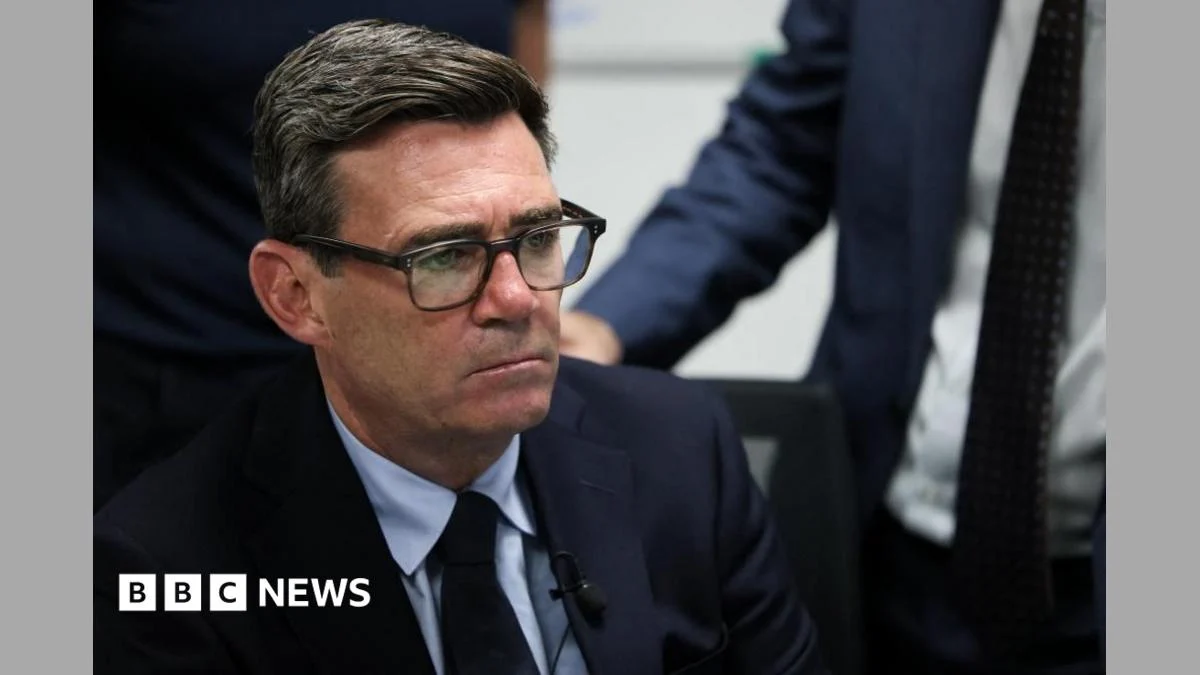
This tour comes at a critical juncture for the government, which is simultaneously facing intense scrutiny and mounting pressure over its controversial early release scheme for prisoners in England and Wales. A particular flashpoint in this debate is the revelation that two individuals convicted in connection with the killing of PC Andrew Harper will become eligible for early release from next year, drawing widespread condemnation from the victim’s family, former police officers, and opposition parties. The Prime Minister’s spokesperson acknowledged the ongoing public concern but reiterated the government’s stance, citing prison capacity limitations as a barrier to further restrictions on eligibility for the scheme.
Burnham’s commitment to tackling the cost of living reflects a broader governmental priority, though significant, large-scale interventions are widely anticipated to be held back until October’s Budget. Chancellor John Healey has previously signaled his unwavering dedication to "strong fiscal discipline," a stance that will inevitably constrain the government’s financial latitude and dictate the scope of any new spending commitments. This disciplined approach means that while targeted measures are expected, a significant loosening of the purse strings before the Autumn fiscal statement is unlikely, setting clear expectations for both the public and the markets.
Having recently returned from a holiday, the Prime Minister is expected to be in "listening mode" during his upcoming tour, engaging directly with communities, businesses, and local leaders across the UK’s diverse nations and regions. This engagement is framed as a vital component of developing his ambitious "10-year plan to bring back hope" – a long-term vision aimed at fostering national prosperity and addressing deep-seated societal challenges. A Downing Street spokesman elaborated on the Prime Minister’s philosophy, stating, "He thinks Westminster has got used to telling people that everyday hassles – like hidden pricing and consumers being ripped off – must be accepted as part of life. He doesn’t think that’s right. That’s why he’s going to start rolling out a series of pro-consumer cost of living measures to give people some room to breathe."
The tour, therefore, serves a dual purpose: to unveil immediate, practical solutions to current financial woes and to gather grassroots intelligence that will inform the government’s enduring strategic agenda. The spokesman added, "He’s also going to be kicking off his summer tour around the country, getting out of Westminster and meeting people where they are. The Prime Minister is going to be in listening mode to help inform his 10-year plan to bring back hope and make Britain better off." This direct engagement is intended to counteract the perception of a detached government, seeking to rebuild trust and demonstrate a tangible connection to the lived experiences of ordinary Britons.
The "pro-consumer" aspect of the cost-of-living measures is expected to focus on areas where consumers often feel exploited or disadvantaged. This could include new regulations to increase price transparency, crackdowns on exploitative practices such as hidden fees and drip pricing, and stronger enforcement of consumer protection laws. There might also be an emphasis on encouraging competition in key sectors to drive down prices, or exploring targeted subsidies for essential goods and services, albeit within the constraints of the Chancellor’s fiscal discipline. The government may also seek to address issues like energy bill structures, scrutinize supermarket pricing practices, and ensure fair dealing across various retail and service industries, all aimed at ensuring households retain more of their hard-earned money.
However, the Prime Minister’s journey across the country will undoubtedly be shadowed by persistent questions regarding the forthcoming early release scheme, which is slated to commence in October. One of Burnham’s initial acts upon entering Downing Street was to initiate a review of the scheme, resulting in a narrowing of the criteria for eligibility. Despite these adjustments, individuals convicted of manslaughter will still qualify for the scheme. This includes two of the individuals involved in the tragic death of PC Andrew Harper, a detail that has ignited a fierce public and political backlash.
PC Harper’s family has been at the forefront of calls for these individuals to be denied early release, a plea echoed by former senior police officers and a chorus of opposition politicians. They argue that such releases undermine justice and public confidence in the judicial system. Yet, the Prime Minister has maintained that he cannot further restrict the scheme without risking severe overcrowding in prisons, a situation that could lead to even greater systemic challenges. Downing Street reaffirmed this position on Saturday night, quashing reports that the Prime Minister might be considering revisiting the case in light of the intense pressure. The government’s stance underscores a difficult balancing act between public demand for stringent justice and the practical realities of managing a strained prison estate.
Opposition parties have been quick to seize upon these issues, leveraging them to critique the government’s broader performance. The Conservatives, for instance, lambasted the government, asserting that its "tax hikes and red tape are hammering our high streets." Shadow Chancellor Mel Stride articulated a particularly sharp criticism, declaring, "This is breathtaking hypocrisy from Burnham… they are forcing businesses to close, destroying jobs and driving up prices for the public. Meanwhile, Labour are plotting to release dangerous criminals onto our streets, leaving people feeling unsafe in their communities." Stride’s comments highlight a dual attack, linking economic mismanagement to the decline of local businesses and simultaneously portraying the government as soft on crime due to the early release scheme.
The Liberal Democrat Treasury spokeswoman, Daisy Cooper, also weighed in, dismissing the Prime Minister’s tour as a mere "vanity tour" for struggling high street businesses that "need more than a new PM embarking on a vanity tour this summer." Cooper outlined the Lib Dem’s alternative vision for high street revitalization, advocating for specific policy interventions. She called for "reversing the damaging jobs tax" – likely referring to recent increases in National Insurance contributions – and demanded "an emergency VAT cut for hospitality" to support beleaguered pubs, restaurants, and hotels. Furthermore, Cooper proposed "replacing broken business rates" with a fairer system and implementing measures to "crack down on the ghost landlords leaving our shop fronts vacant," suggesting policies to incentivize the occupancy of empty retail premises.
Reform UK’s economic spokesman, Robert Jenrick, offered yet another perspective, focusing on direct cost reduction. Jenrick stated, "If Andy Burnham wants to help people with the cost of living, he should scrap the green levies and taxes on energy bills and rule out tax rises at the Budget." This approach emphasizes immediate financial relief by reducing the burden of environmental taxes on energy consumption and providing a clear commitment against future tax increases, aligning with Reform UK’s broader platform of lower taxes and reduced government spending.
As Prime Minister Burnham embarks on this pivotal tour, he faces a complex tapestry of challenges: delivering tangible relief from the cost of living crisis, navigating the political minefield of prison reform, and revitalizing local economies, all while operating under tight fiscal constraints. His "listening mode" and commitment to a "10-year plan" suggest an attempt to offer both immediate solutions and a long-term vision, but the intense scrutiny from opposition parties and the public alike will ensure that every announcement and every visit is met with critical analysis. The success of his tour will ultimately be judged not just by the measures announced, but by their perceived impact on the lives of ordinary Britons and the government’s ability to maintain public trust amidst ongoing controversies.


 atisusanti
 Nana Banana
 George Anjay
 Ramos Leo