
 Ramos Leo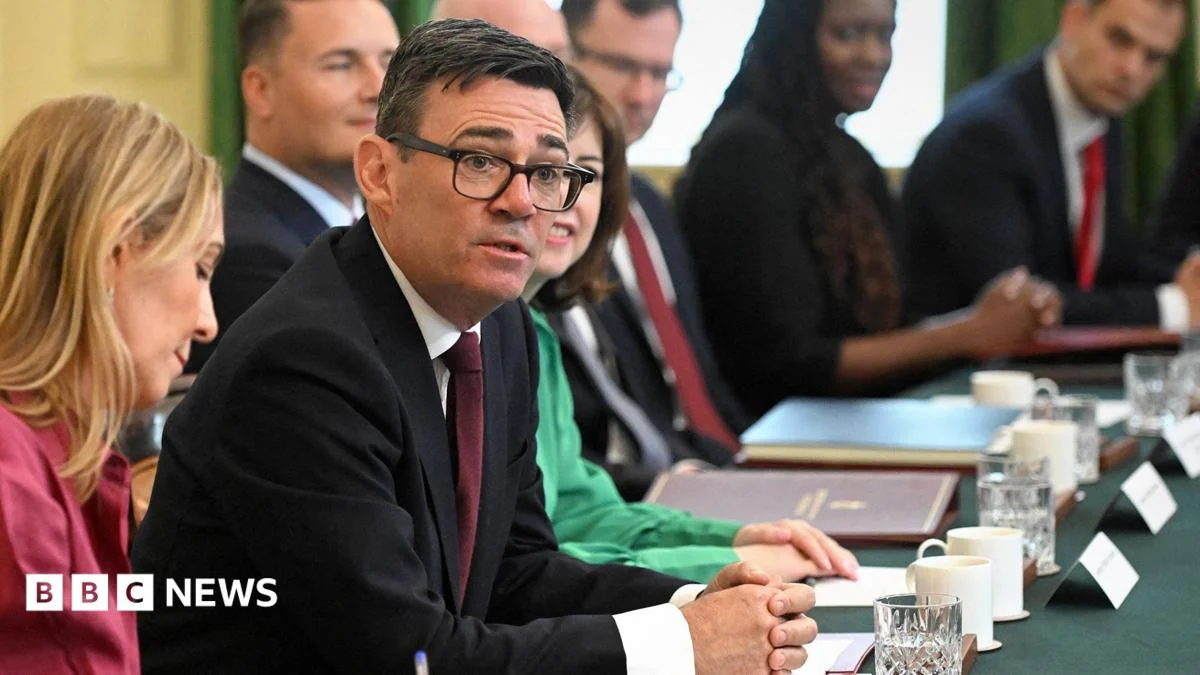
"We are on borrowed time if we don’t get a move on," Angela Rayner, the former deputy prime minister who is back in the cabinet this week as housing secretary, told the BBC’s Today programme on Friday, encapsulating the palpable urgency that has defined the fledgling Burnham administration’s first days. It has been quite the week at Westminster, a blur of activity and expectation. Sir Keir Starmer’s abrupt departure as prime minister on Monday, following a period of sustained internal party pressure and dwindling public confidence, already seems a distant memory. The Labour party, now under the stewardship of Andy Burnham, has plunged headfirst into the challenges of governance, seeking both to find its feet and to make a decisive, positive first impression – a task many new leaders face but few navigate with effortless grace.
An early, distinctive pattern has emerged from the new Downing Street operation: a strategic, early morning nugget of news dropping from No. 10, designed to set the day’s agenda and demonstrate proactive governance. On Thursday, the focus was on significant reforms to business rates in England, aiming to alleviate pressure on struggling high streets and local enterprises. Wednesday saw an announcement capping bus fares across England, a move directly addressing the cost of living and connectivity for millions. Tuesday delivered a headline-grabbing VAT cut on electricity bills, a popular measure intended to offer immediate relief to households grappling with soaring energy costs. These daily policy reveals, meticulously timed and packaged, suggest a communications strategy honed during Burnham’s mayoral tenure, focused on tangible, quick-win interventions.
Today, the prime minister is assembling what Rayner playfully calls "a pride of mayors" among other regional leaders for a pivotal meeting of the National Economic Council. This gathering is notable not just for its attendees, but for its location: the new No. 10 North in Manchester. Andy Burnham claims this new base, far from the traditional epicentre of power, represents the beginning of "the biggest rebalancing of power our country has seen" and he vows to bring forward "the biggest changes in the last 40 years." This bold declaration is central to his political identity, projecting an image of a leader committed to decentralisation and a fundamental shift in the UK’s economic and political geography.
Yet, his early announcements, despite their daily rhythm, have been considerably more piecemeal than such grand rhetoric suggests. He acknowledges this, stating that his comprehensive "10-year plan for Britain" will be unveiled later in the year, presumably once the initial flurry of activity subsides and a clearer strategic vision can be articulated. It is worth remembering that similar long-term visions were touted by both Boris Johnson and his allies, speaking of leveling up and national renewal, and later by Sir Keir Starmer, with his own blueprint for a decade ahead. Both, perhaps due to unforeseen crises or internal inconsistencies, fizzled out rather more quickly than anticipated, serving as a cautionary tale for any prime minister promising sweeping, generational change.
So, how should we assess how much politics has truly changed, or not, in these tumultuous few days? The early evidence – and let’s be frank, it is only that, given we are just a few days into this new era – points to Andy Burnham being both more sharp and more nimble than his predecessor in setting out what he is attempting to do. He has been adept at trying to point to early, concrete examples of what that might look like, with the consumer-focused announcements of the last few days serving as immediate demonstrations of intent. This contrasts sharply with the perception of the previous administration, which often struggled to translate policy into easily digestible, public-facing action.
Beyond the specific policies, Burnham has also been tinkering with the very mechanics of government. The creation of the Office of Prime Minister, designed to streamline decision-making and project a more direct leadership style, and the symbolic, yet physically tangible, establishment of No. 10 North, clearly signal his intent. He has made it abundantly clear that the arteries of power, while geographically dispersed, flow very much to and from him. This is a deliberate move to overcome the critique often levelled at Sir Keir Starmer and others: that one of the frustrations of being prime minister can be pulling levers only to find nothing actually happens, a symptom of entrenched bureaucracy and diffused authority. Burnham wants to be seen as the ultimate doer.
Burnham’s opponents, naturally, are having to recalibrate and work through how they take on a new prime minister whose style and priorities diverge significantly from his predecessor. The Conservative leader Kemi Badenoch’s al fresco speech and news conference on a rooftop in central London on Thursday was a tacit acknowledgement that the political terms of trade have irrevocably changed. She teased the new prime minister over his informal style – he "seems like a nice guy…I’m glad he’s got a sense of humour," she told us, a seemingly benign observation before she swiftly pivoted to the essence of her critique: that his offer was superficial, lacking depth and strategic coherence. "Is that it?" she asked, adding pointedly: "He is behaving like he’s still the mayor of Manchester. He is now the prime minister of the United Kingdom," a barb intended to diminish his national authority and expose perceived parochialism.
Burnham, for his part, wants to project a profound sense that he "gets it" – the acute cost of living pressures so many feel – and that he is unequivocally "getting a move on." His public persona is one of empathetic urgency, a leader attuned to the everyday struggles of ordinary people. Yet, in just these first few days, there has been a stark reminder that life comes at you fast as prime minister, and the political honeymoon, however brief, is swiftly punctuated by harsh realities.
Firstly, on the domestic front, his intervention on the early release of prisoners in England and Wales, demanding what he calls a "pause," is a stark case study in the intractable dilemmas of governing. Faced with dangerously crowded prisons, the government is forced into agonizing choices between least worst options – which criminals to free first, balancing public safety against the rule of law and human rights. This is not the realm of quick-win policies, but of profound moral and practical compromise.
Secondly, on the international front, the shadow of global instability looms large. After Burnham renewed America’s permission to use British airbases for what are termed "defensive" strikes on Iran, Tehran swiftly claimed those bases are now legitimate targets, dramatically escalating regional tensions. And, with the conflict in the Middle East already spiralling, the oil price is spiking again, threatening to undo any domestic economic gains and exacerbate the cost of living crisis. These are decisions of war and peace, with global repercussions, far removed from the local concerns of a city mayor.
Then there are the huge, systemic questions that tumble from Burnham’s big promises. He has pledged, for instance, "the biggest council house building programme since the post-war period." How would this colossal undertaking be paid for in an era of fiscal constraint? And what does the promise actually mean in concrete terms? It is worth a listen to Matt Chorley’s revealing interview with Angela Rayner on BBC Radio 5 Live on precisely this point – the housing secretary, despite her key role, wasn’t able to precisely define when the "post-war period" ended, and consequently, there was no numerical target attached to what appears to be a rather bold, yet nebulous, promise. This lack of specific detail on a flagship policy is particularly concerning, especially on the same day that Rayner acknowledged keeping Labour’s broader promise to build 1.5 million new homes in England by 2029 looks "a difficult target."
What about defence spending? The new chancellor, John Healey, packed it in as defence secretary in a previous shadow cabinet role precisely because he believed the department he now runs, the Treasury, didn’t adequately grasp the imperative of keeping the nation safe. Let’s see how he navigates this fundamental tension now the boot is firmly on the other foot, balancing national security needs against the economic realities he now oversees. Burnham is cutting business rates for some in England, a targeted intervention, but what of Labour’s more fundamental promise in its manifesto two years ago to "replace the business rates system, so we can raise the same revenue but in a fairer way"? Will this more ambitious structural reform ever happen, or will it be shelved in favour of piecemeal adjustments?
And beyond the potent symbolism of having a prime ministerial office outside London, what, in practical terms, can No. 10 North actually achieve? How much genuine clout and authority is it given in the daily machinations of government? Just how often will senior ministers genuinely be there, rather than making token appearances? And, crucially, how much will it cost to establish and maintain a parallel power structure? Civil servants are already being asked if they would like to relocate to the North West of England. While indications from Team Burnham suggest they take this decentralisation hugely seriously, will the inherently London-centric civil service truly respond to that call? And given the turbulence in politics in recent years, is it an idea that lives beyond this prime minister’s tenure? Given the intended long-term home of No. 10 North is currently a building site and is not due to be finished until 2032, this is a very live, and rather expensive, question.
Moreover, how many "noises off" do we hear from grumpy Starmerites as the early novelty of governing dilutes into the grind of administration? Given the speed with which one, Darren Jones, a prominent figure from the previous shadow cabinet, went public with a grumble about the new direction, it will be something Team Burnham will be acutely wary of. Internal party unity, especially after an unexpected leadership change, is always fragile.
Then, there is the new prime minister’s boldest claim of all – that he will be "bringing forward the biggest changes in the last 40 years." Really? He describes a desire for a "new political model and a new economic model." It is an understatement to say this triggers a cascade of questions. Including, for some of his critics, including Reform UK, a key one – where is your mandate for doing this? Having inherited the leadership, rather than winning it in a general election, Burnham’s legitimacy to enact such sweeping reforms will inevitably be challenged.
The fascinating question of the coming months, therefore, is the extent to which Andy Burnham can credibly, or not, as voters ultimately see it, set a clear pathway towards the transformational change he desires and then, in time, call a general election asking for an explicit endorsement of his ideas and direction. It is constitutionally three years until there has to be an election, but the precise timing up until then is entirely in his gift. His opponents are publicly saying "bring it on" when there is talk of an election sooner rather than later. Privately, however, plenty of Conservative and Reform folk acknowledge they are simply not ready yet, still reeling from Starmer’s sudden departure and attempting to regroup.
Could Andy Burnham be tempted to call a snap election? When asked, he has offered a statement of constitutional truth rather than a definitive answer either way: "we’re in a parliamentary democracy and, as we’ve seen through time, if somebody can command a majority of the MPs in the House of Commons, they obviously then have the legitimacy to lead things forward." Many prime ministers arriving in office between general elections crave their own mandate, seeing it as crucial for establishing authority and pushing through an agenda. Gordon Brown reflects in his memoirs the agonising private conversations he had about a snap election and in deciding against it, found himself going "from near hero to near zero in a day." Boris Johnson, conversely, went for it in 2019 and secured a near-landslide out of it, cementing his personal authority. Theresa May, on the other hand, went for it in 2017 and ended up losing the majority she had inherited, a catastrophic miscalculation. The recent history books, then, offer a less than clear guide, and Burnham has inherited a colossal majority, a legacy of the previous election. His decision and its timing will likely be driven by how quickly and how much he can truly do with that inherited power, and crucially, whether he can translate his initial energy into sustained popularity. Let’s see.



 Roy Suryo

 Nakalama John
 atisusanti
