Nakalama John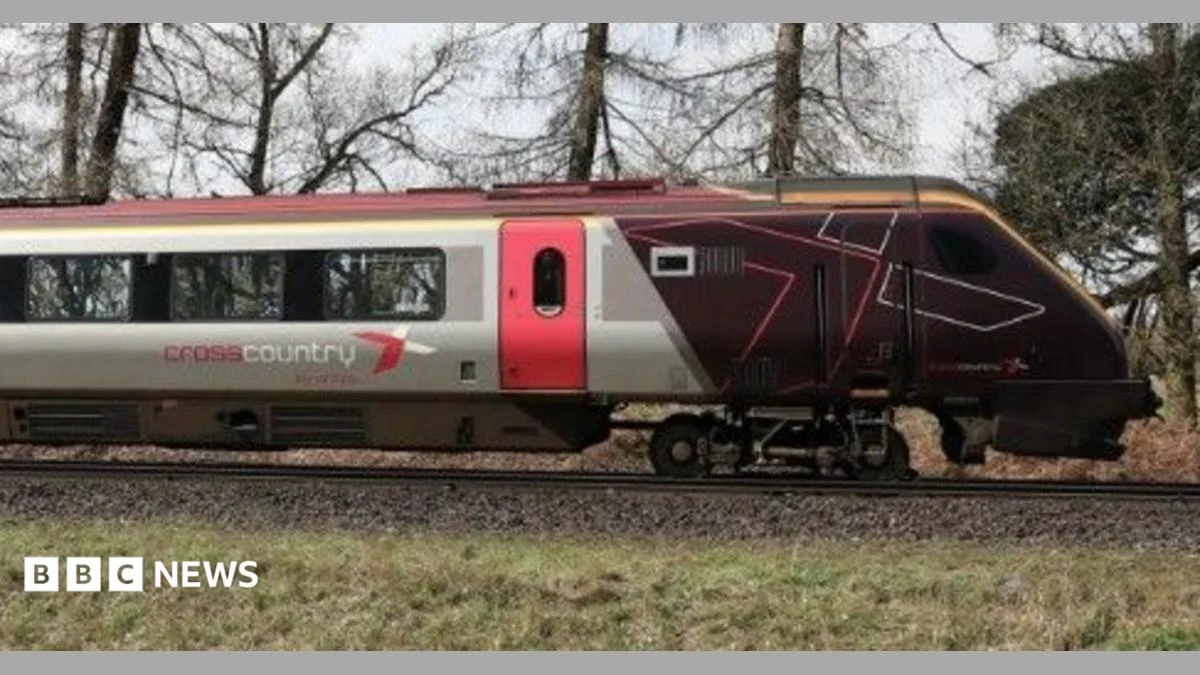
The repercussions of the power failure were immediate and severe, affecting virtually every route operated by CrossCountry. From the bustling termini of Glasgow in the north to the scenic coastal towns of Penzance in the far southwest, and from the vibrant hubs of Leeds to the critical junctions of Manchester, cancellations became the norm. The operator announced that services would remain suspended "until further notice," citing "significant and unforeseen disruption" as the cause. This incident marks a particularly challenging moment for CrossCountry, an operator that was, as recently as June, controversially ranked as Britain’s worst rail operator, a distinction that now casts a long shadow over its ability to manage crises and maintain passenger trust.
The scope of the affected routes underscores the pivotal role CrossCountry plays in connecting diverse regions of the UK. Major intercity connections between Manchester and Birmingham, which traverse key industrial and urban centres such as Stoke-on-Trent, Coventry, and Wolverhampton, were all suspended. Similarly, vital links from Leeds to York, Cheltenham to Cardiff, and Glasgow to Edinburgh, crucial for both commuters and leisure travellers, ceased to operate. This extensive network paralysis has not only disrupted planned journeys but has also created a logistical nightmare for passengers attempting to navigate the sudden absence of a primary national rail provider.
The impact on passengers has been profound, with social media platforms becoming an immediate outlet for widespread frustration and anger. Travellers described the situation as a "worst-case scenario," particularly acute on a weekend when many journeys are for leisure, family visits, or attendance at events. One exasperated passenger, posting on X (formerly Twitter), encapsulated the sentiment: "A massive thank you to Cross Country Trains for cancelling my train this morning to Birmingham. You are truly not fit for service. You have also cancelled my train coming back but that is immaterial. Useless. Utterly useless." Such sentiments were echoed by countless others, who recounted tales of missed appointments, ruined plans, and the arduous task of finding alternative transport.
Many travellers found themselves resorting to coaches, often at additional expense and with significantly extended travel times, before attempting to resume their rail journey with another, unaffected operator. This patchwork approach to travel not only added financial burden but also hours of unexpected delays to journeys that should have been straightforward. For those with time-sensitive commitments, such as attending weddings, family emergencies, or critical business meetings, the disruption proved devastating.
The timing of the power cut also coincided with a busy weekend for sporting events, particularly football fixtures. Fans travelling to matches in Manchester, Liverpool, and Newcastle were explicitly warned that any remaining services, or those operated by other companies, would be "extremely busy." This caution underscored the potential for further overcrowding and discomfort, even for those fortunate enough to find an alternative means of transport. The ripple effect extended beyond football, impacting attendees of concerts, theatre performances, and other cultural events across the country, all of whom relied on CrossCountry’s extensive network.
At the heart of the crisis lies the disruption to CrossCountry’s central control systems. These systems are not merely administrative tools; they are the sophisticated digital backbone that enables the safe and efficient operation of a modern railway. They include advanced signalling systems, real-time train dispatch and routing software, crew rostering and management platforms, live passenger information feeds, and critical communication channels between control centres, train drivers, and station staff. When these systems become unavailable, the railway effectively becomes blind and deaf, making it impossible to coordinate movements, ensure safety, or provide accurate information to the public.
A power cut at a single, centralized control centre can indeed have such a devastating, nationwide impact due to the highly integrated and centralized nature of modern railway operations. While backup generators are typically in place for critical infrastructure, their failure or inadequacy in this instance suggests either an unforeseen scale of the outage, a malfunction in the backup systems themselves, or an issue with the external power supply that overwhelmed redundant measures. Recovery efforts would involve not just the restoration of power but also the careful rebooting and integrity checks of complex IT systems, a process that can take many hours or even days to ensure data consistency and operational safety before services can resume. Engineers from CrossCountry, in conjunction with Network Rail and local power utility companies, would be working tirelessly to diagnose the root cause of the power failure and restore full functionality.
Beyond the immediate travel chaos, the incident carries significant broader implications. Economically, CrossCountry faces substantial losses in revenue from cancelled tickets, along with the costs associated with managing the crisis, compensating passengers, and potentially chartering alternative transport. The ripple effect extends to businesses reliant on weekend tourism and travel, facing reduced footfall and missed opportunities. Reputational damage to CrossCountry, already reeling from its ‘worst operator’ ranking, is likely to be profound. This incident further erodes public trust in the reliability of rail services and could prompt renewed scrutiny from regulatory bodies such as the Office of Rail and Road (ORR). The ORR might launch an investigation into the incident, examining CrossCountry’s resilience plans, backup systems, and crisis management protocols to prevent similar widespread disruptions in the future.
The incident also sparks a broader conversation about the resilience of critical national infrastructure. In an increasingly digital and interconnected world, the vulnerability of centralized control systems to power failures or cyber-attacks becomes a pressing concern. Discussions around decentralization, enhanced backup systems, robust disaster recovery plans, and proactive maintenance will undoubtedly gain traction in the wake of such a widespread and impactful service failure.
For passengers currently affected, the advice remains consistent: check before travelling. While CrossCountry’s services are largely suspended, National Rail Enquiries and the websites of other train operators remain the primary sources for information on alternative routes and services. Passengers are also reminded of their rights to compensation under the ‘Delay Repay’ scheme, although the sheer volume of claims from this incident is likely to present another administrative challenge for the operator. CrossCountry’s official website and social media channels are expected to provide the most up-to-date information on the evolving situation and when services might tentatively resume. Until then, the vast network of CrossCountry, a vital artery of UK travel, remains largely dormant, a stark reminder of how a single point of failure can bring a complex system to its knees.




 Roy Suryo
 George Anjay
 Ramos Leo