
 George Anjay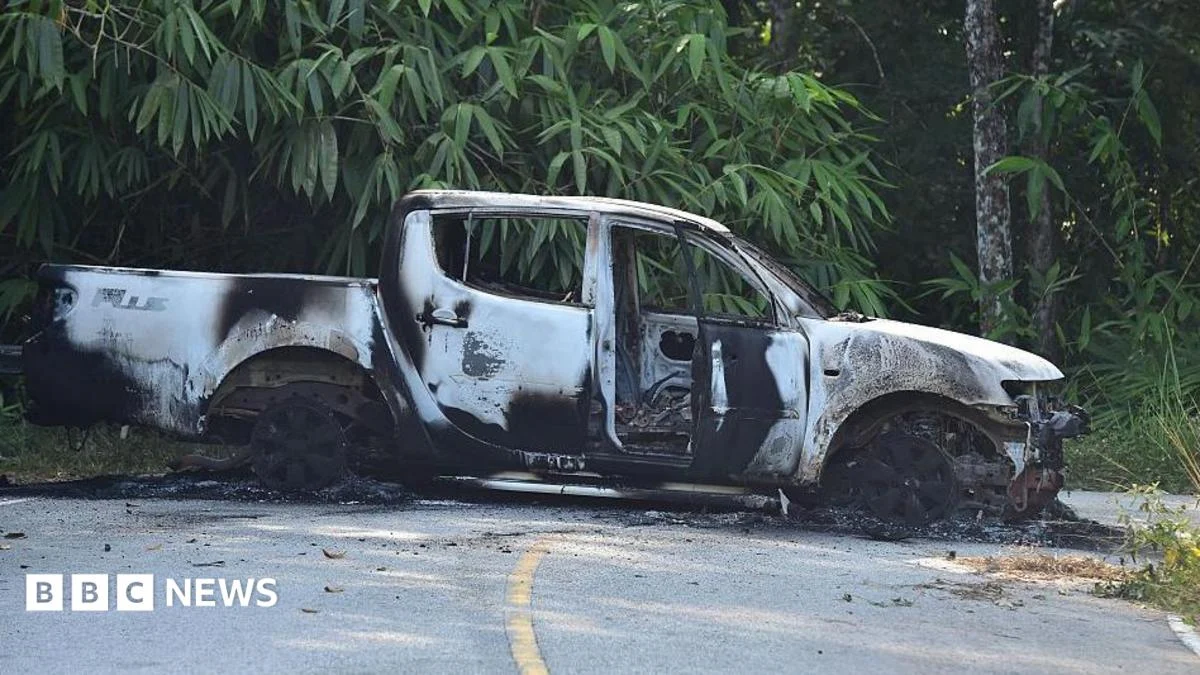
The immediate aftermath of the attacks revealed a pattern of targets designed to disrupt daily life and sow panic. At least two individuals sustained injuries in the ensuing chaos, underscoring the dangerous and indiscriminate nature of these incendiary acts. Among the significant casualties of this synchronized assault were a local government office building, a vital hub for community services; a popular convenience store, a staple of neighborhood commerce; and a vehicle that had been stolen, indicating a level of resourcefulness and premeditation by the perpetrators. The choice of these targets was not random; they represent symbols of authority, daily convenience, and the potential for further disruption.
The precise timeline of these destructive events was meticulously documented by the military’s Internal Security Operations Command. The onslaught commenced around 20:00 local time (13:00 GMT) and persisted until midnight on Saturday, a concentrated window of destruction that allowed for maximum impact and psychological leverage. This synchronized timing across a wide geographical area is a hallmark of sophisticated planning, aiming to overwhelm security forces and maximize the feeling of vulnerability among the populace. The statement issued by the Internal Security Operations Command emphasized the deliberate intent behind these acts, explicitly stating they were "aimed at creating unrest," a chilling acknowledgment of the psychological warfare component of the insurgency.
The epicenter of this widespread violence was overwhelmingly concentrated in Narathiwat province, a region that has historically borne the brunt of the protracted insurgency. However, the insidious reach of the attacks extended to neighboring Yala and Pattani provinces, demonstrating a deliberate strategy to create a pervasive sense of insecurity across the entire southern border region. This expansion of the attack zone suggests a deliberate effort to test and stretch the capabilities of security forces, forcing them to divide their attention and resources. The geographical spread is not merely logistical; it is a strategic maneuver to project an image of omnipresent threat.
Further details emerging from the affected areas painted a grim picture of the human cost. According to reports from the reputable Bangkok Post, two women suffered injuries when a bomb detonated in Muang district, a busy urban center within Narathiwat province. This specific incident highlights the grave danger posed to innocent civilians caught in the crossfire of this brutal conflict. The use of explosives in conjunction with arson attacks indicates a multi-pronged approach to violence, designed to inflict both physical damage and terror. The targeting of civilians, even indirectly, is a tactic designed to maximize fear and potentially alienate local populations from the authorities.
In a chilling testament to the insurgents’ intent to cripple essential infrastructure and sow further alarm, telecommunication towers were deliberately set ablaze in multiple locations. These towers are vital for communication, economic activity, and emergency response, and their destruction represents a significant blow to connectivity and public safety. In response to this escalating threat, security officials issued urgent warnings to residents, imploring them to exercise extreme caution and refrain from touching any suspicious objects. This advisory underscored the potential for unexploded devices or secondary threats, further amplifying the sense of danger and uncertainty. The targeting of communication infrastructure is a strategic move to isolate communities, hinder intelligence gathering, and disrupt the flow of information.
In a decisive measure to contain the escalating violence and prevent further attacks, authorities swiftly imposed an overnight curfew in Narathiwat province. This measure, a clear indication of the severity of the security situation, was implemented to restrict movement and allow security forces to conduct sweeps and gather intelligence. Thankfully, the curfew appeared to have had its intended effect, as no further attacks had been reported by Sunday morning. The lifting of the curfew on Sunday morning brought a temporary reprieve, but the underlying tensions and the threat of renewed violence remain palpable in the region. The imposition of a curfew, while necessary for security, also highlights the extent to which daily life has been disrupted by the persistent conflict.
The southern border provinces of Thailand, a region with a complex history and a deeply entrenched separatist movement, have been grappling with a protracted insurgency for decades. The current wave of co-ordinated arson and incendiary attacks represents a significant escalation in the conflict, demonstrating a renewed determination and capacity by insurgent groups to inflict damage and destabilize the region. The attacks are not isolated incidents but part of a broader, ongoing struggle for influence and control. The historical context of the insurgency, rooted in grievances over autonomy and cultural identity, provides a backdrop to understanding the motivations behind such acts of violence.
Experts on the conflict suggest that these attacks are likely orchestrated by a network of loosely affiliated militant groups operating in the region, often referred to collectively as the Barisan Revolusi Nasional (BRN) or similar factions. These groups have historically sought greater autonomy or outright independence for the predominantly Malay-Muslim population of the southern provinces. While the specific perpetrators of Saturday night’s attacks are yet to be definitively identified, the pattern of co-ordination and targeting strongly points towards these established insurgent entities. The complexity of the insurgent landscape, with its various factions and shifting alliances, makes attributing responsibility a challenging but crucial task for intelligence agencies.
The economic impact of these attacks is also a significant concern. The destruction of businesses, government buildings, and infrastructure not only disrupts daily life but also deters investment and hinders economic development in an already economically disadvantaged region. The convenience store, a symbol of local commerce, and the government office, representing public services, are tangible indicators of the disruption to the economic fabric of these communities. The ongoing cycle of violence has created a climate of fear that can stifle entrepreneurial activity and drive away businesses seeking stability.
The psychological toll on the residents of the southern provinces cannot be overstated. Years of living under the shadow of violence, punctuated by sudden and devastating attacks, have created a pervasive sense of anxiety and insecurity. The deliberate targeting of symbols of daily life and public order, as seen in the arson attacks, is designed to maximize this psychological impact, fostering a sense of vulnerability and powerlessness. The constant threat of violence erodes social cohesion and makes it difficult for communities to heal and move forward.
The Thai government and security forces have been engaged in a long-standing counter-insurgency campaign, employing a combination of military operations, development initiatives, and peace talks. However, the persistent nature of the violence suggests that these efforts have not fully resolved the underlying issues driving the conflict. The current wave of attacks serves as a stark reminder that the path to lasting peace in southern Thailand remains fraught with challenges. The complex interplay of historical grievances, political aspirations, and security concerns requires a multi-faceted and sustained approach that goes beyond purely military solutions.
Moving forward, the focus will undoubtedly remain on identifying and apprehending those responsible for Saturday night’s co-ordinated attacks, as well as on strengthening security measures to prevent future incidents. However, a sustainable resolution to the insurgency will likely require a renewed commitment to addressing the root causes of the conflict, including fostering greater dialogue, promoting economic development, and ensuring the rights and cultural identity of the region’s diverse population are respected. The cycle of violence can only be broken through a comprehensive strategy that addresses both the symptoms and the underlying causes of the protracted conflict in Thailand’s southern border provinces. The resilience of the communities affected by these attacks will be tested, but their determination to seek peace and stability remains a beacon of hope.




 atisusanti
 Ramos Leo
 Roy Suryo
 Nana Banana
 Nakalama John